The network for creativity
Join 1.25M professional creatives like you
Connect with clients, get discovered, and run your business 100% commission-free
Creatives on Contra have earned over $150M and we are just getting started
Back to feedPost

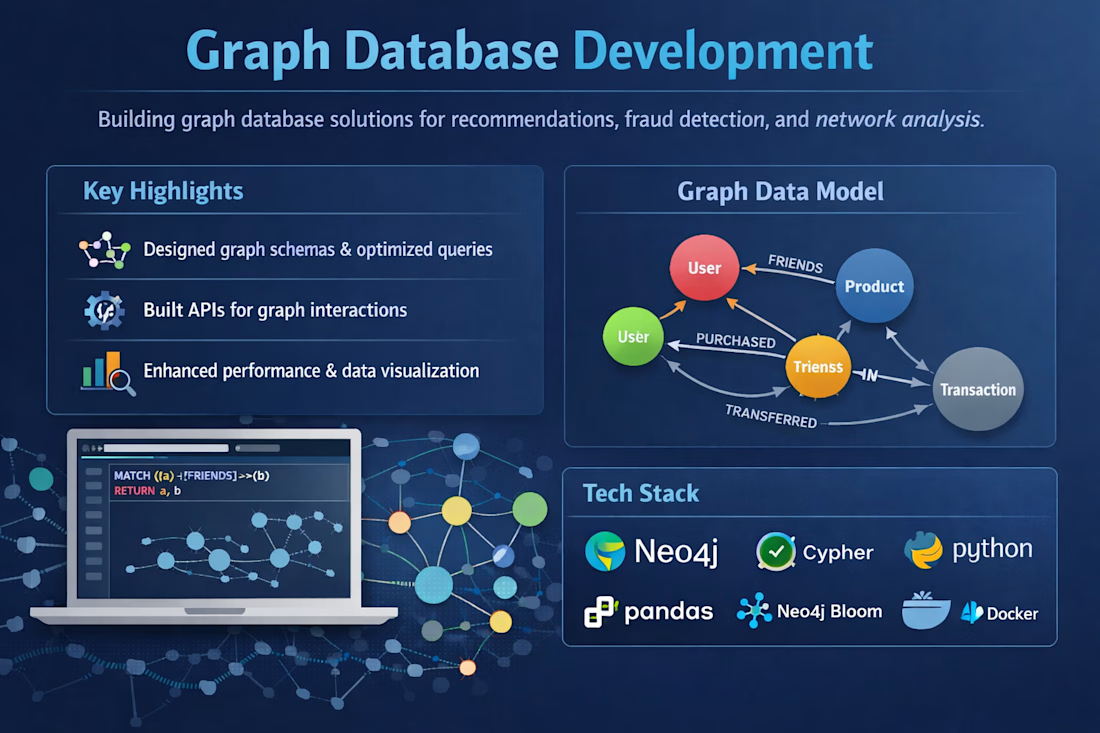
I’ve worked on building graph database solutions to handle complex, highly connected data that traditional relational databases struggle with. The main goal was to model relationships more intuitively and enable faster, more meaningful queries—especially for use cases like recommendations, fraud detection, and network analysis.
Tech Stack
✔Graph Databases: Neo4j
✔Query Language: Cypher
✔Backend: Python (FastAPI / Flask)
✔Data Processing: Pandas
✔Visualization: Neo4j Bloom / D3.js
✔Cloud & Deployment: AWS / Docker


The network for creativity
Join 1.25M professional creatives like you
Connect with clients, get discovered, and run your business 100% commission-free
Creatives on Contra have earned over $150M and we are just getting started





Related posts

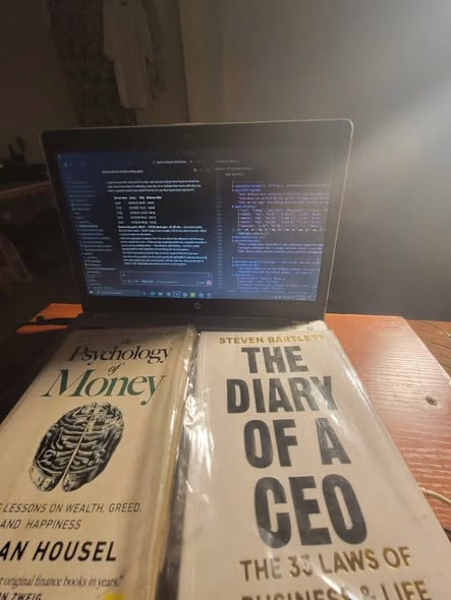
Another late night. Building a quant trading system an agentic model where different AI agents handle research, testing and risk, and none of them is allowed to place a trade on its own.
The hardest part so far? Being honest when the results say "not yet." Most strategies I've tested failed once real costs were included. That's exactly what testing is for.
Keeping The Psychology of Money and The Diary of a CEO close while I figure it out. What are you reading these days?


Curious how you’ve separated the agents from execution. When you say none can place a trade on its own, is that enforced through a separate execution service with fixed risk checks, human approval or both? I’d love to understand where the agent's decision-making ends and the hard rules take over.


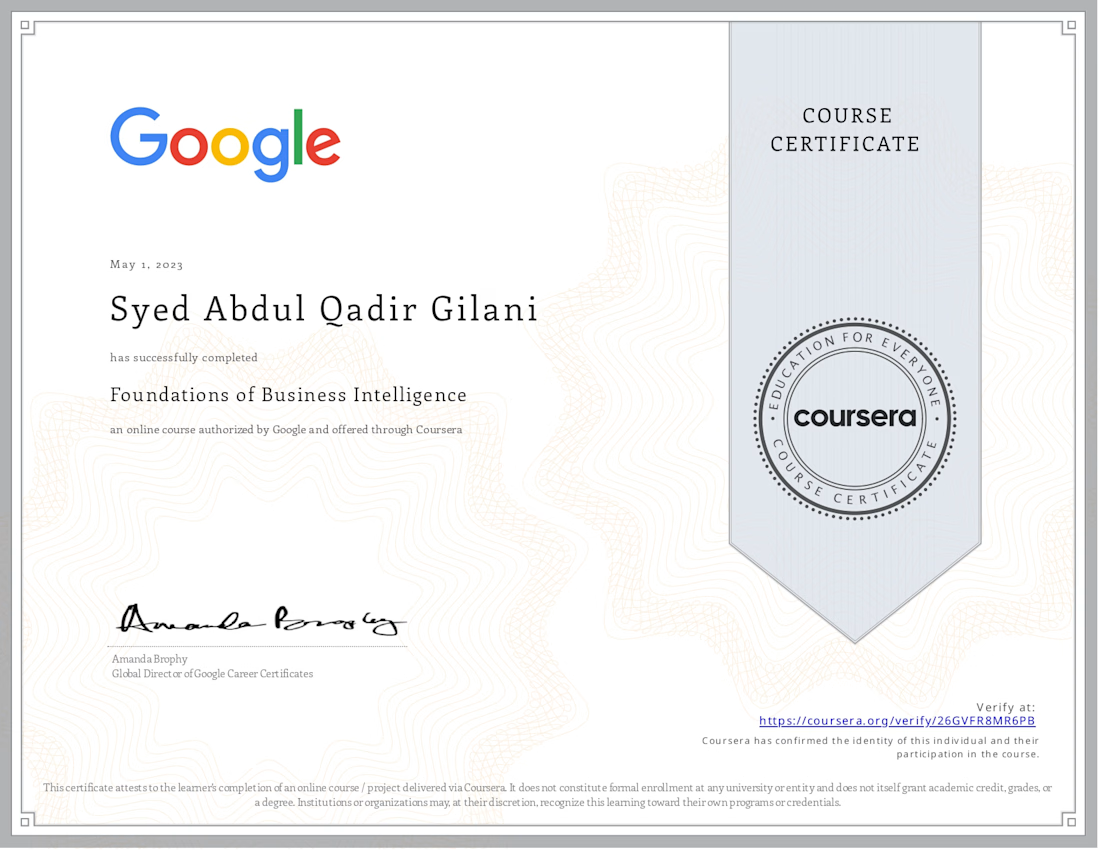
Completed Google's Foundations of Business Intelligence course through Coursera, covering core BI concepts, data-driven decision making, and how businesses turn raw data into actionable insights. This builds directly into my data analysis work with Python and R, helping me structure reports and dashboards the way real business teams actually use them.



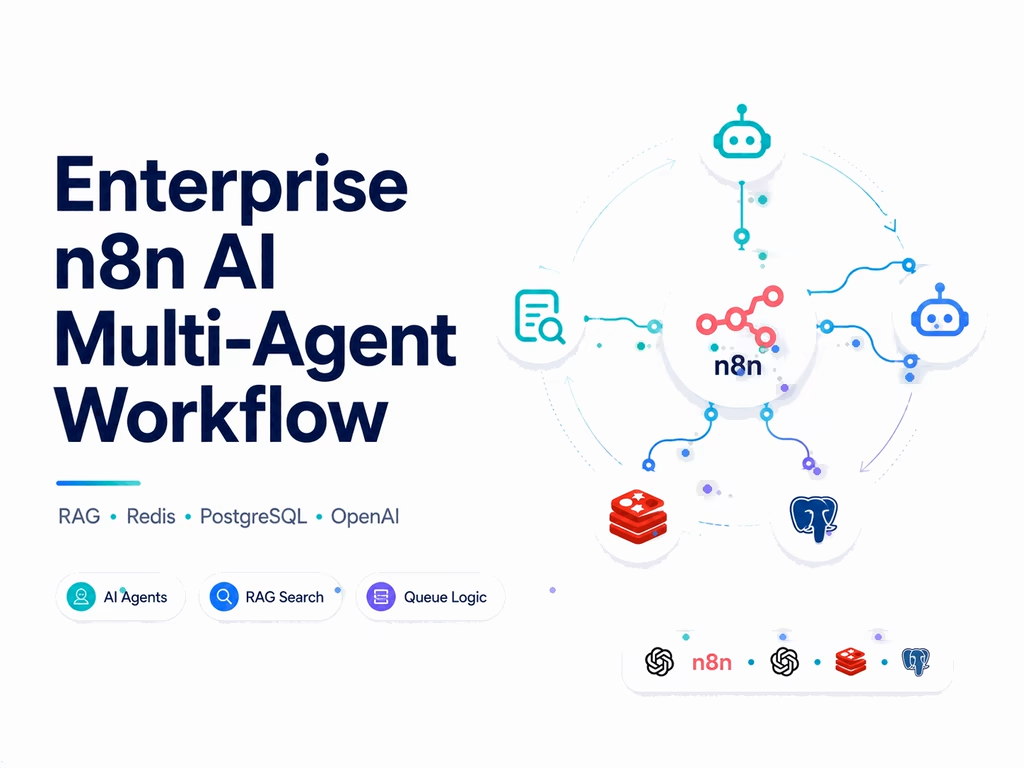
I designed and built an enterprise AI automation system using n8n, AI agents, RAG, Redis, and PostgreSQL to automate complex business workflows, improve decision-making, and create scalable AI-powered operations.
The system uses n8n as the automation orchestration layer, where incoming business events trigger workflows that route tasks to specialized AI agents. A RAG pipeline retrieves relevant knowledge from business data sources, allowing AI agents to generate accurate, context-aware responses and decisions. Redis handles queue-based processing for high-volume tasks, while PostgreSQL stores structured data, workflow history, and audit records.
The automation architecture connects multiple technologies including n8n, OpenAI API, AI Agents, RAG pipelines, Vector Databases, Redis, PostgreSQL, APIs, Webhooks, Slack integrations, Docker, and Python services to create reliable enterprise workflows.
The solution helps businesses reduce manual operations, automate repetitive processes, improve response times, maintain better data accuracy, and scale AI workflows securely. It includes monitoring, validation, error handling, and human approval flows to ensure reliable production usage.
Tech Stack: n8n, OpenAI, AI Agents, RAG, LangChain, Redis, PostgreSQL, Qdrant, Python, FastAPI, Docker, APIs, Webhooks, Slack.