The network for creativity
Join 1.25M professional creatives like you
Connect with clients, get discovered, and run your business 100% commission-free
Creatives on Contra have earned over $150M and we are just getting started
Back to feedPost

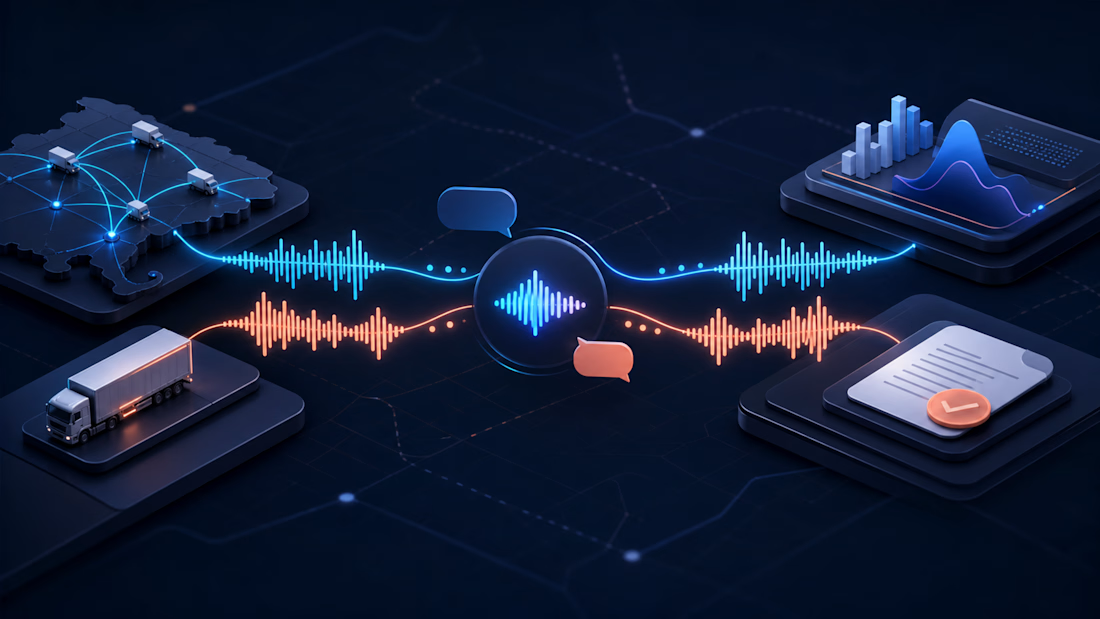
Voice AI Carrier-Rate Negotiation Assistant
Designed and built a working prototype that combines conversational voice AI, pricing logic, and workflow automation to support freight-rate negotiations. The system demonstrates how structured guardrails and real-time context can turn a manual call workflow into a repeatable AI-assisted process.

The network for creativity
Join 1.25M professional creatives like you
Connect with clients, get discovered, and run your business 100% commission-free
Creatives on Contra have earned over $150M and we are just getting started





Related posts


When buyers compare your plans, they need to know what changes the bill and which limits matter. If pricing needs a conversation, explain why and what goes into the quote. Give them enough context to decide whether that conversation is worth having.

Made this 31-second launch video for ProducerSpark.
Most companies never make a video like this. The quote comes back at $5,000 and a month of meetings, so the idea dies in a Slack thread.
Their product is two agents that build an insurance producer's pipeline. One finds the prospects, one reaches out to them. That's a lot to explain on a website. So I put it in a video you can watch before your coffee cools.
People book a demo when they understand what you do. A 30-second video gets them there before they've finished scrolling your homepage.


So cute! and great job :)

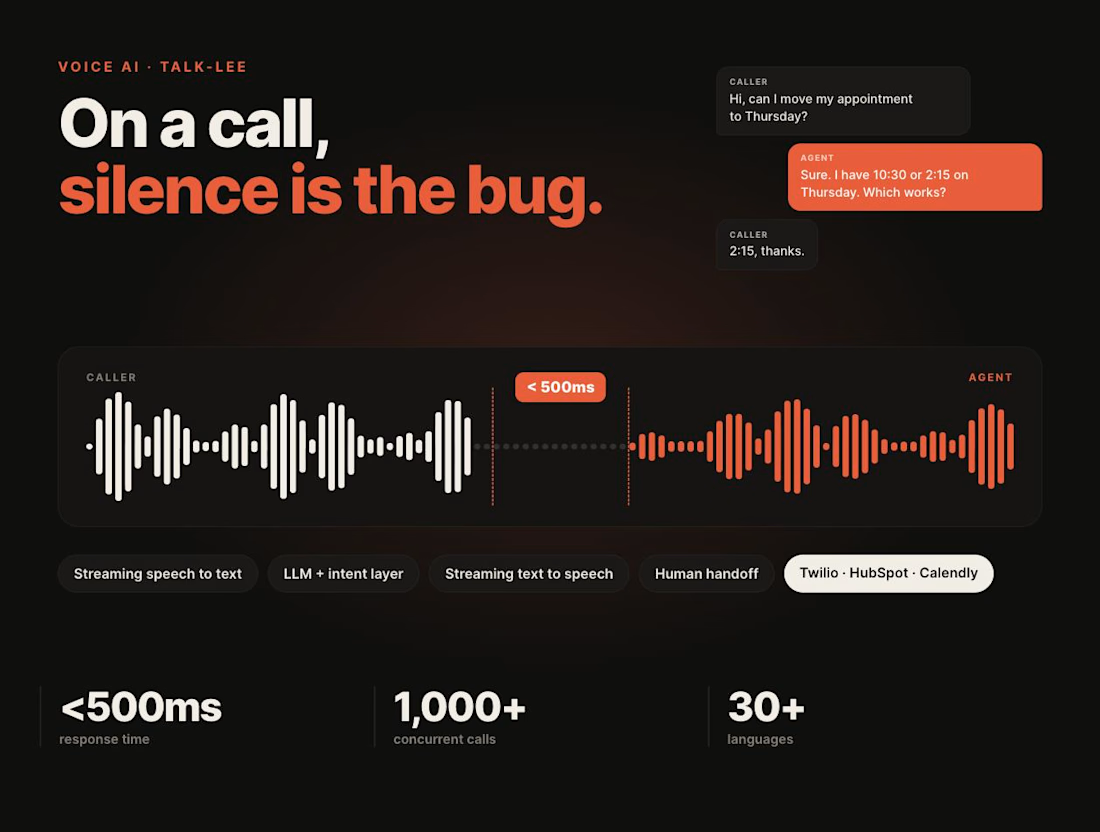
On a phone call, silence is the bug.
A text chatbot can take three seconds to reply and nobody minds. A voice agent can't. Leave a caller in silence for a beat too long and they say "hello?", start talking over it, or hang up.
That one fact shaped everything we built on Talk-Lee, an AI voice agent that answers business calls for healthcare, real estate and finance teams. Scheduling, support, lead qualification, around the clock.
The goal was a reply in under 500ms. You don't get there with a faster model. You get there by making sure nothing waits for anything else.
→ Speech to text streams while the caller is still talking
→ An LLM and intent layer keeps track of what they actually want
→ Text to speech streams back, so the agent starts talking before the whole answer is ready
→ An orchestrator decides in real time whether to answer, book or hand off to a person
Then it has to do something useful. It books into Calendly, logs the lead in HubSpot, and passes the hard calls to a human with the context already attached.
Where it landed. Under 500ms responses, 1,000+ concurrent calls, 30+ languages, GDPR and TCPA compliant.
Third project in a row with the same lesson. The model is the easy part. The plumbing around it decides whether anyone keeps using it.