The network for creativity
Join 1.25M professional creatives like you
Connect with clients, get discovered, and run your business 100% commission-free
Creatives on Contra have earned over $150M and we are just getting started
Back to feedPost

A lot of businesses still see CRM and email marketing as “overhead.”
But run the math for a second.
If your average customer is worth $1,000 a year and better follow-ups help you close just one extra sale per month, that alone is $12,000 in annual revenue. Most CRM + email design services cost less than a single missed sale.
Now add retention. If consistent email increases customer lifetime by even 10–15%, that’s pure profit — no extra ad spend, or other acquisition costs.
This is the part people miss: CRM and email don’t just create revenue, they protect it. They reduce leaks, shorten sales cycles, and make results repeatable.
So the real question isn’t “Is CRM worth the investment?”
It’s “How much money are we quietly losing without it?”

The network for creativity
Join 1.25M professional creatives like you
Connect with clients, get discovered, and run your business 100% commission-free
Creatives on Contra have earned over $150M and we are just getting started





Related posts

More leads isn’t always the answer.
Especially in financial services.
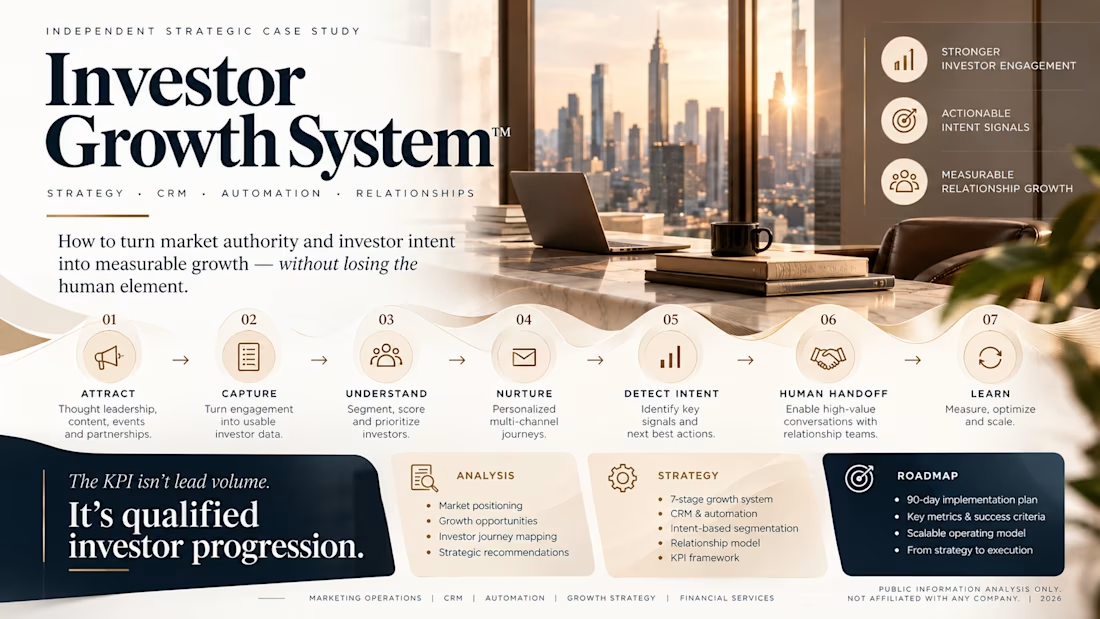
You can have great research, strong thought leadership, webinars, events, website traffic — and still lose valuable opportunities somewhere between interest and an actual relationship.
I’ve been thinking a lot about this lately and built an independent strategic case around a simple question:
How do you connect content, investor intent, CRM, automation and human relationships into one measurable growth system?
My answer became a 7-stage framework:
Attract → Capture → Understand → Nurture → Detect Intent → Human Handoff → Learn
The idea I kept coming back to was this:
Automation should prepare the conversation — not replace the relationship.
Technology can help identify signals, organize information, prioritize opportunities and trigger the right next step.
But especially in trust-driven industries, the most valuable moments still belong to people.
The KPI isn’t simply how many leads entered the funnel.
It’s whether the right people are actually progressing toward a meaningful business relationship.
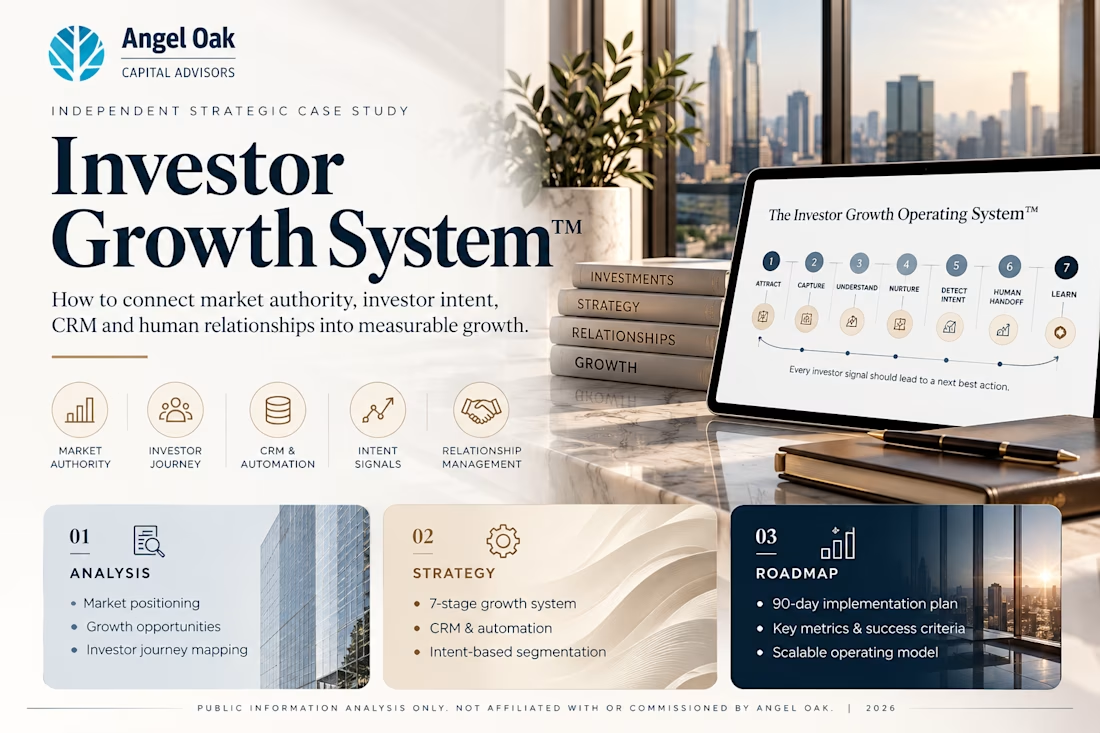
I turned the thinking into a full Investor Growth System case study, including the operating model, CRM and intent framework, measurement approach and a 90-day roadmap.
I’ve added the project to my LinkedIn profile for anyone interested in seeing the framework.
Curious how other marketers think about this:
Where should automation end and human relationship-building begin? https://www.linkedin.com/in/vera-b-672185171/details/projects/


CRM Dashboards for Small Businesses and Real Estate Agents
The idea
Many freelancers, small businesses and real estate agents pay monthly for CRM software they barely use, or keep client details scattered across spreadsheets and notes. I designed and built two complete CRM dashboards that open in any browser and work fully offline.
1. ClientDesk CRM: for freelancers and small businesses
Dashboard with clients, open pipeline, unpaid invoices, income and net profit at a glance
Client, lead, project, task and invoice tracking, with automatic overdue flags
Budget tracker for income and expenses
Calendar combining tasks, invoice due dates, project deadlines and follow-ups
Reports with cash-flow charts, top clients and win rate
2. EstatePilot CRM: for real estate agents
Buyer and seller CRM, lead pipeline and property listings
Showings, open houses, offers, escrow and a closing checklist
Document tracker and a combined calendar of closings, showings and follow-ups
Commission tracker that calculates your net commission after your split
Built-in mortgage and ROI calculators, rental portfolio, marketing campaigns and vendor directory
Shared features
One HTML file, nothing to install, and no monthly fees
Works offline on desktop, tablet and phone
Private: data is stored in the user's browser and never uploaded
Search, add, edit and delete on every section
CSV export, print to PDF, and JSON backup and restore
Light and dark themes, plus editable business name and currency


Proud of what we built together on this one 🙌 The part I like most is how the pipeline and follow-ups sit right next to the money side, so nothing slips through. Happy to answer any questions about how it works!
Hot take: most businesses don’t need more marketing.
They need fewer leaks.
More leads won’t fix a broken follow-up process.
More content won’t fix a disconnected customer journey.
More AI tools won’t fix a workflow nobody understands.
And more automation won’t fix a bad process — it will just make the bad process run faster.
The work I enjoy most starts with a different question:
Where is the system actually breaking?
Sometimes it’s between marketing and sales.
Sometimes it’s inside the CRM.
Sometimes nobody owns the next step.
Sometimes valuable intent is there — but no one is recognizing it.
That thinking is behind a lot of the work I’ve been building lately: marketing operations, CRM workflows, automation systems, investor/customer journeys, event marketing, and digital growth.
I recently added several new projects and strategic case studies to my Contra portfolio — including an Investor Growth System exploring how content, intent signals, CRM, automation, and human relationships can work as one system.
My favorite principle from the project:
Automation should prepare the conversation — not replace the relationship.
If you work in marketing, operations, or growth, I’m curious:
What’s the biggest “leak” you see inside businesses today?
#MarketingOperations #MarketingStrategy #CRM #MarketingAutomation #GrowthStrategy #BusinessOperations #FinancialServices