The network for creativity
Join 1.25M professional creatives like you
Connect with clients, get discovered, and run your business 100% commission-free
Creatives on Contra have earned over $150M and we are just getting started
Back to feedPost

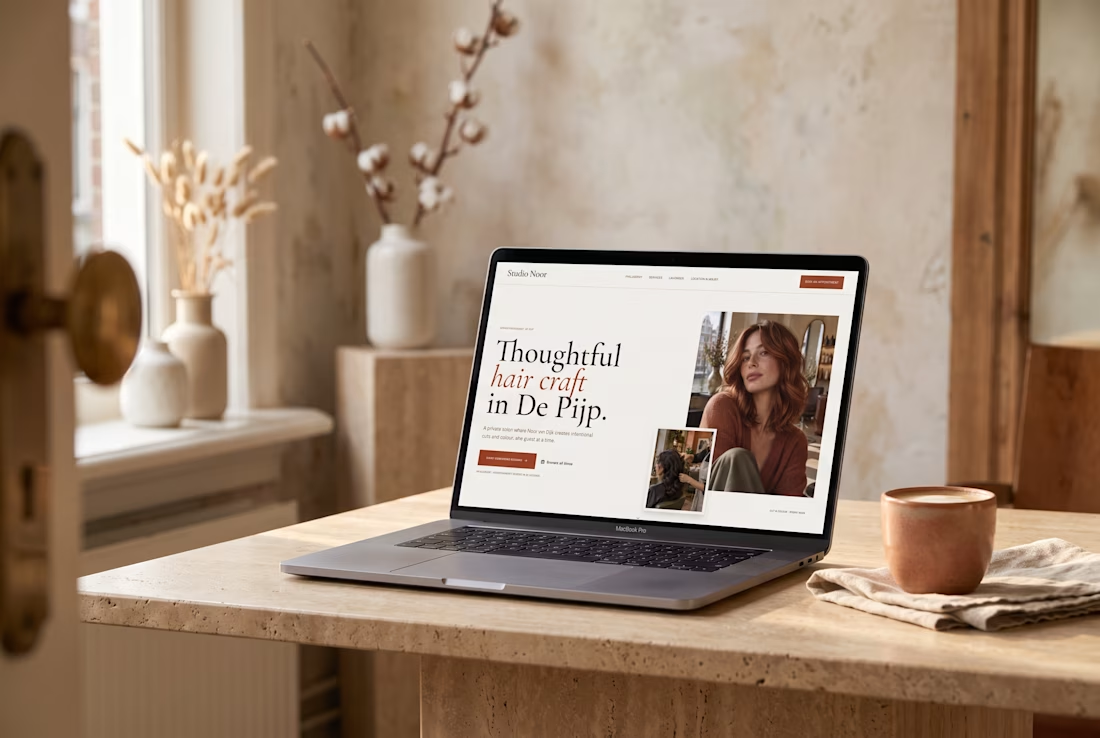
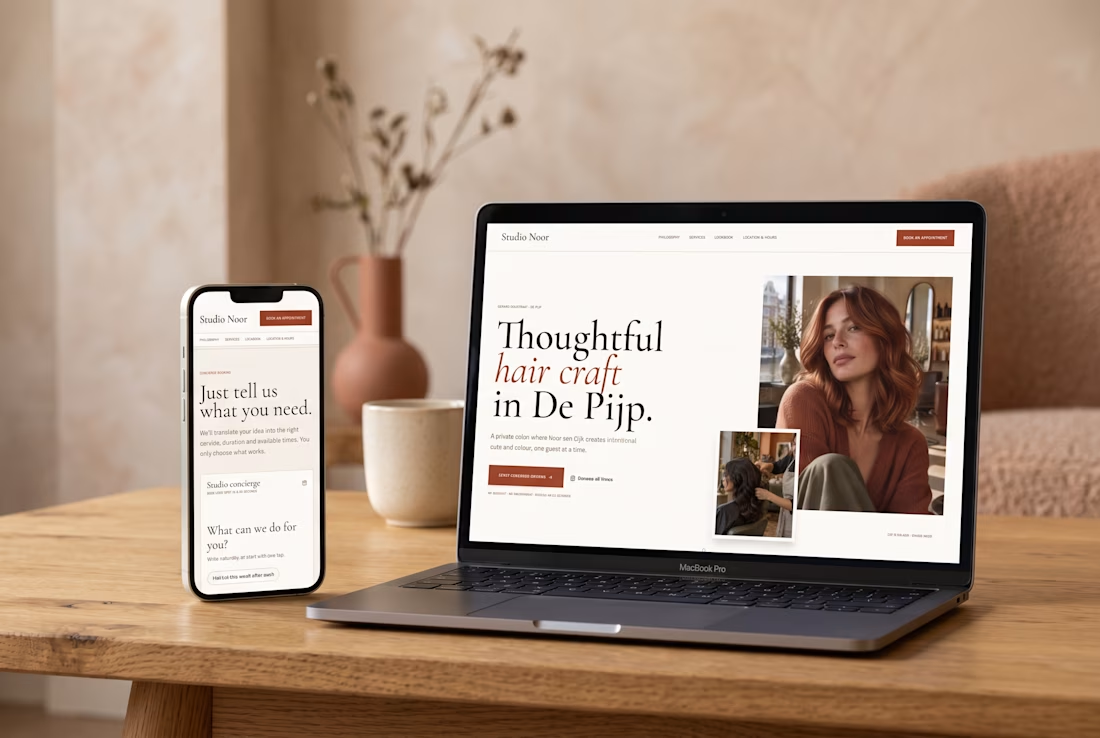
Studio Noor is a high-end solo hair sanctuary founded by stylist Noor van Dijk in Amsterdam, offering bespoke one-on-one appointments with an unhurried, quiet-luxury ethos.
The Problem:
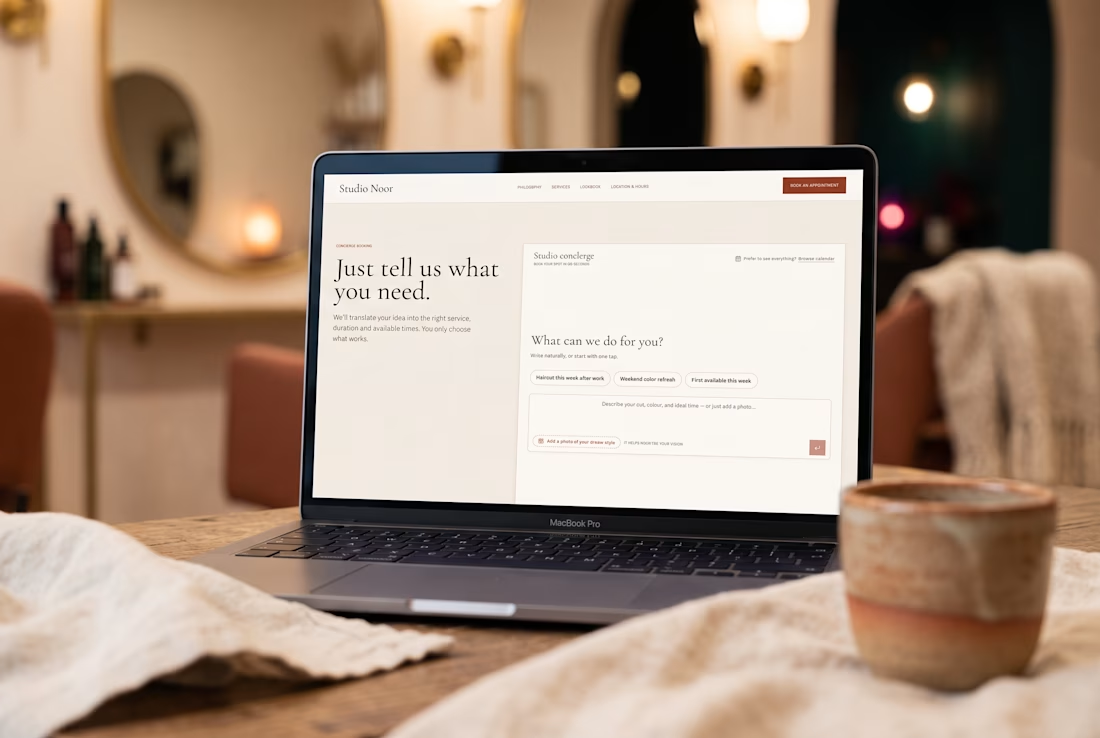
In hair styling, a cut takes 45 minutes while a dimensional balayage takes nearly three hours. Standard booking systems have zero visual context on what clients actually want, forcing customers to guess service names from a rigid drop-down, resulting in mismatched time blocks, blown schedules, and hours of chaotic DM consultations for small salon owners. We want to make it easier for customers to get exactly what they need in a zero-friction experience.
The Solution:
Studio Noor solves this with a multimodal AI concierge that supports customers and salon owners: clients simply drop in a conversational request or even an inspiration photo. The system identifies the required treatment, locks in the exact time block needed, books with just a name and email in 30 seconds, and delivers a complete stylist prep brief before the client ever sits in the chair.
The network for creativity
Join 1.25M professional creatives like you
Connect with clients, get discovered, and run your business 100% commission-free
Creatives on Contra have earned over $150M and we are just getting started
Related posts

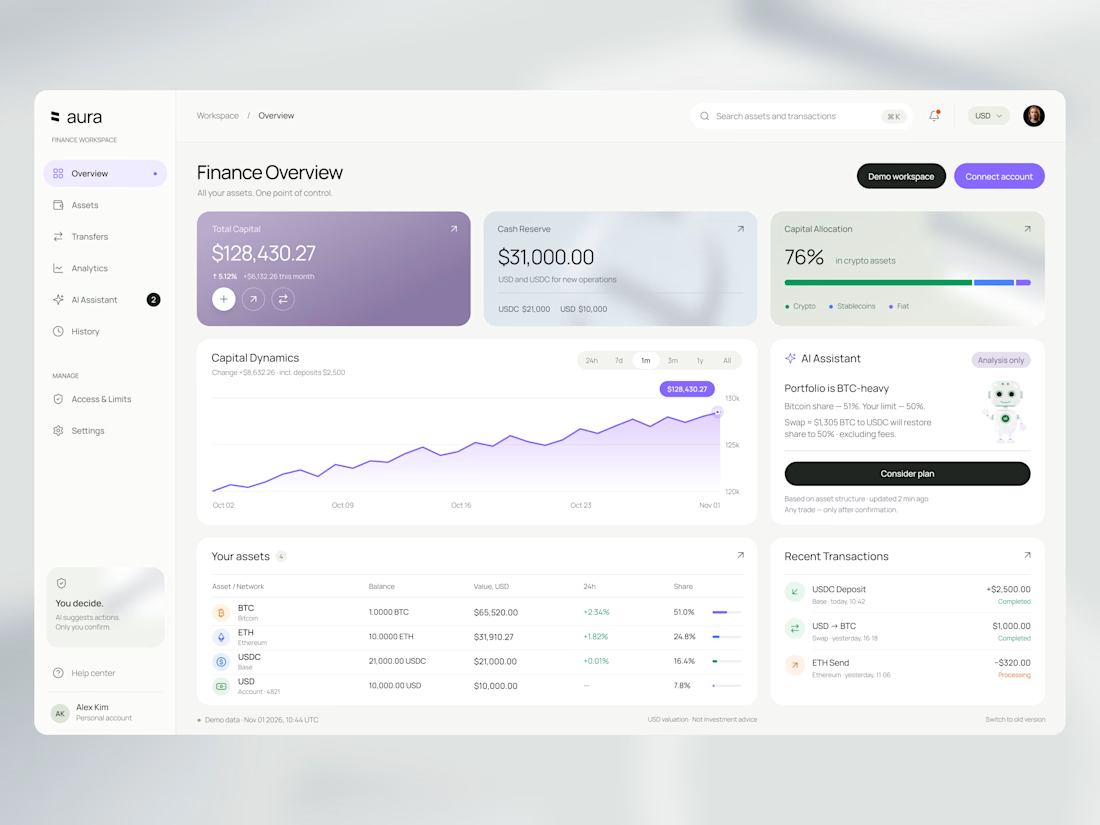
This is officially my first interface designed not with my hands, but with my voice.
We talk a lot about AI changing our workflows, but experiencing it firsthand shifts your entire perspective. I wanted to see how far I could push a pure AI-to-UI pipeline for a complex digital asset management workspace, prioritizing LLM logic and voice commands over manual pixel manipulation.
Here is how this hybrid process actually played out:
01 / The Logic: Instead of sketching, I started by mapping out the structural architecture and edge cases in Claude, generating a solid low-fidelity blueprint.
02 / The Voice: This was the wild part. Armed with detailed usability specs and moodboards, I used voice prompts in Figma AI to establish the high-fidelity visual foundation. I literally spoke the core UI into existence.
03 / The Human Touch: I processed the raw output through Claude again to adjust specific UI parameters, and then finally stepped in for a strict manual polish. Perfect grid alignment and sharp visual hierarchy still require a designer's eye.
04 / The System: To wrap it up, I reverse-engineered the polished interface back through Claude to automatically construct a fully scalable atomic design system, complete with defined components and local variables.
The role of a product designer is fundamentally shifting. We are spending less time executing and more time directing architectural logic and curating systems.
I would love to hear how you all are integrating these new AI pipelines into your daily sprints. Let's discuss in the comments.
#ProductDesign #Claude




AI-Powered Physiotherapy Clinic Dashboard | Smart Appointment Scheduling
A modern AI-powered dashboard concept designed for physiotherapy clinics to simplify appointment scheduling, therapist management, and daily operations. The interface focuses on improving workflow efficiency with an intuitive calendar, smart booking experience, patient scheduling, and a clean visual system.
The design features an elegant and minimal UI, helping healthcare professionals manage appointments, therapists, and patient availability with ease. Every screen is crafted to deliver a fast, accessible, and user-friendly experience while maintaining a premium SaaS aesthetic.

so nice work