The network for creativity
Join 1.25M professional creatives like you
Connect with clients, get discovered, and run your business 100% commission-free
Creatives on Contra have earned over $150M and we are just getting started
Back to feedPost

🚨 Introducing RESQ AI — Predict. Respond. Protect.
What if emergency response planning could be smarter, faster, and more interactive?
For the #Base44Challenge, I built RESQ AI, an AI-powered emergency management and crisis simulation platform designed to explore how intelligent automation can support emergency preparedness.
The idea was simple: transform complex emergency scenarios into actionable insights and interactive training experiences.
What I built:
🧠 AI Incident Intelligence — Transforms natural-language incident reports into structured information, identifies priorities, and recommends response resources.
🚑 Smart Dispatch — Matches simulated incidents with suitable emergency units based on capabilities, availability, and location.
🗺️ Interactive Operations Map — Visualizes incidents, animated vehicle movements, dispatch routes, and response progress.
🌍 Real-Time Intelligence — Integrates live weather data from Open-Meteo and earthquake information from USGS.
⚡ Interactive Crisis Simulation — Allows users to dispatch emergency units, monitor simulated response times, control mission speed, and review mission outcomes.
📊 Command Center & Analytics — Brings operational information, resource availability, and mission insights into one dashboard.
The development process
I used Base44 to turn an ambitious concept into a published, responsive web application, combining AI-assisted development, API integrations, simulation logic, and iterative testing.
One of the biggest challenges was building an interactive experience that remains functional without relying on continuous AI calls. The solution was a client-side simulation engine that allows visitors to explore emergency missions directly in their browsers.
Why RESQ AI?
Because technology shouldn’t just display information. It should help people understand situations, explore decisions, and prepare for what comes next.
RESQ AI is a demonstration and training platform, not a live emergency dispatch service.
A quick note about the live demo:
During development, I reached the integration credit limit on my Base44 plan. As a result, some AI-powered features cannot currently be demonstrated live.
However, the application remains publicly accessible, and the interactive emergency simulations, animated maps, and real-time weather and earthquake integrations can still be explored.
The AI workflows have already been implemented and tested, but their live execution is temporarily limited by the available integration credits.
I wanted to be transparent about this, especially for the judges reviewing my submission.
Thank you, @Base44, for the opportunity to build and showcase this project!
#Base44Challenge #Base44 #AI #Automation #BuildInPublic
🔗 Explore the app: https://resq-command-core.base44.app
🎬 Watch the video walkthrough below.
Built with @Base44.
RESQ AI — Predict. Respond. Protect.
#Base44Challenge #Base44 #ArtificialIntelligence #EmergencyManagement #AI #Automation #BuildInPublic

The network for creativity
Join 1.25M professional creatives like you
Connect with clients, get discovered, and run your business 100% commission-free
Creatives on Contra have earned over $150M and we are just getting started






Related posts

I built my entire portfolio website with AI. This is what it feels like to use it.
In 77 seconds, I scroll through the homepage, open the Attack Map case study, and show how the gallery and hover states work. The last stop is the About page.
I design B2B SaaS and cybersecurity products. If you have a workflow that's hard to use or an idea you'd like to test in a working prototype, send me a message here on Contra.

Congrats on the new portfolio!

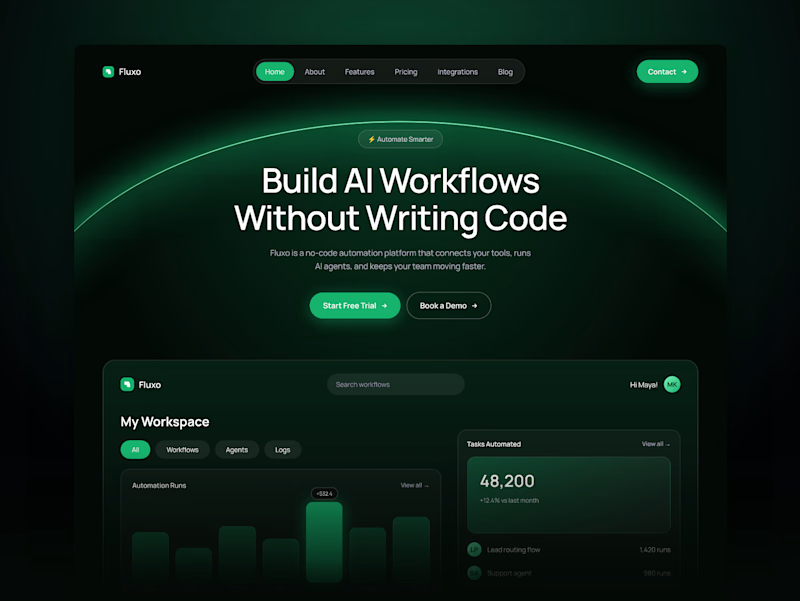
One AI automation hero. Two accent colors.
Blue feels dependable and familiar, the color of tools you trust.
Green feels active and fresh, like a workflow that’s running smoothly.
Vote in the comments: 💙 or 💚


1 voted
33%
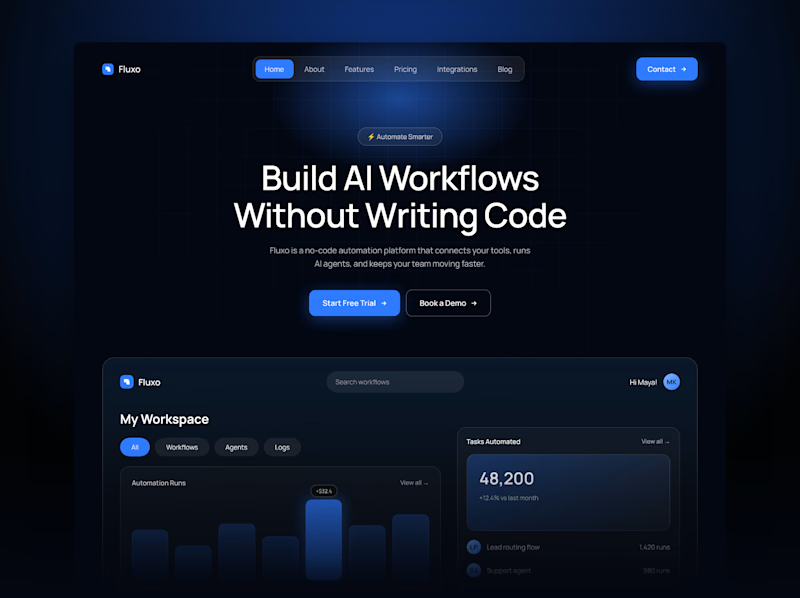
2 voted
67%
3 votes
Closed

Deep 🔥

What if your finance dashboard caught the money you paid twice? 👀
This is Plug, a product I designed and built.
It scans every vendor payment, flags duplicates and overpayments, and shows exactly why: same invoice, same amount, paid 2 days apart. One click starts the recovery, with approvals and an audit trail.
The design rule I followed: never let AI act without showing its evidence first.
Would you trust an AI to flag your payments? 👇
Showing why it was flagged is smart.