The network for creativity
Join 1.25M professional creatives like you
Connect with clients, get discovered, and run your business 100% commission-free
Creatives on Contra have earned over $150M and we are just getting started
Back to feedPost
I built an AI-powered sales system for a local anime figures business in Vizag.
The business was doing okay on Instagram, but the owner was manually handling every single customer inquiry on WhatsApp and DMs. No website. No lead system. Just pure manual work.
After understanding his pain points, I built the following using Base44 for the Give It A Glow challenge:
What I built:
Storefront Clean landing page + dynamic Shop page with masonry grids Categories, New Arrivals, and Grail flags
CollectiX Closer (AI Sales Agent) Triggered when user clicks "Buy Now" Works via WhatsApp Real-time product data access (price, stock, availability) Classifies customer intent into Exploring / Likely to Buy / Want to Buy Creates leads with full conversation summaries Handles sold-out cases + Notify Me flow
Admin Dashboard Full product management (CRUD + media + stock flags)
Leads pipeline sorted by intent priority AI-generated conversation summaries WhatsApp quick links + status tracking (Contacted / Closed).
Auto-notify system when restocking items Insights dashboard (inventory trends + lead intent) The biggest win?
The owner no longer has to reply to every message.
He can now focus only on serious buyers.
This was one of the most useful builds I’ve done recently. Live site + walkthrough.

Update on my Give It A Glow submission
I built a full website + AI-powered sales system for a local anime figures business in Vizag using Base44.
Before:
Business was running only on Instagram and WhatsApp
Owner manually handling every customer inquiry
No website or proper lead system
The network for creativity
Join 1.25M professional creatives like you
Connect with clients, get discovered, and run your business 100% commission-free
Creatives on Contra have earned over $150M and we are just getting started



Related posts

A purchase order lands in your inbox. Everything looks right until one part number doesn’t match your catalog. What should your automation do next?
In TechFoundry IMS, we built that exception into the workflow. The system reads the emailed PO and checks each line against the catalog. When a part doesn’t match, it flags that line so someone on the order desk can inspect it, find the right item, and link it before fulfillment moves forward.
If you’re considering automating a workflow, start with the last order that got stuck. What did someone have to check, and what information did they need to make the call? That’s a good place to decide where automation helps and where your team needs a review step.
What sends your team back to the inbox most often: a part mismatch, a missing approval, or an invoice discrepancy? If you’re trying to fix one of those, message me here on Contra with an example. I’d be happy to talk through where to start.

I built an invoicing app that does not send your invoices for you. That was on purpose.
When I started building Invoping, the obvious feature was automatic sending. The app creates the invoice and fires it off to your client on WhatsApp.
But WhatsApp is where people talk to their clients. It's where they say hello, negotiate, and follow up. A message that arrives without you touching it feels like a bot, not like you.
So Invoping opens a WhatsApp message that's already filled in with the invoice link. You read it, change a word if you want, and press send yourself.
It's one extra tap, and the message still comes from you.
A few other small decisions followed the same idea. Your client can open the invoice without making an account. You can record partial payments, because real clients often pay in parts. And you can see the balance that's still owed at a glance.
The lesson for me: sometimes the best feature is the one you leave out.
If you're building a tool for people who work through conversations, what would you keep manual on purpose?
You can try Invoping here: https://invoping.vercel.app/

invoping.vercel.app
InvoPing
The simplest invoicing and payment-tracking SaaS for freelancers, contractors, agencies, and small businesses that use WhatsApp.


To your question: I'd keep the payment reminder manual too, since chasing money is the message where tone matters most. Prefilling it with the balance still owed after partial payments would take out most of the awkwardness while the client still hears it from you. Do people edit the prefilled text much, or send it as is?

Your AI has a good track record. What should it be allowed to do next?
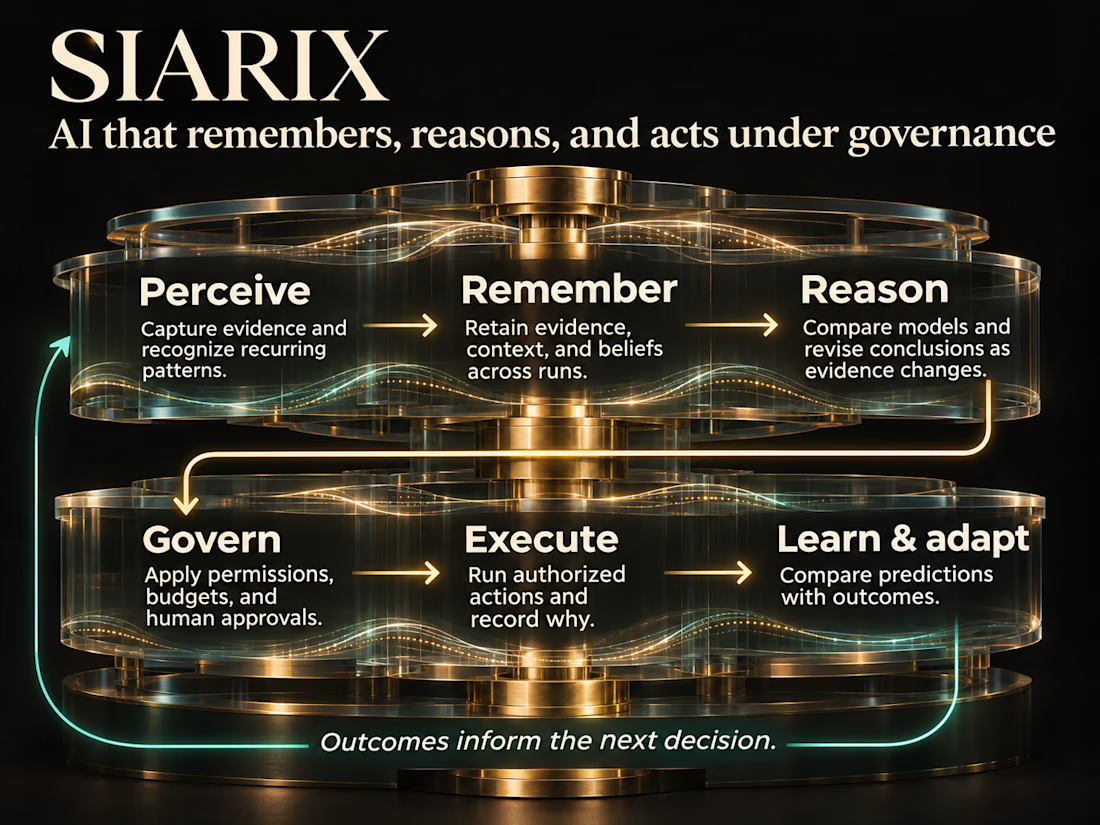
I’m working on Siarix, the software I built to help businesses give AI agents more responsibility without making their teams review every action.
Here’s a question I keep coming back to. If an AI agent correctly reviews 99 invoices, should it be able to change where the 100th payment goes?
Imagine the same agent keeps spotting a mismatch caused by how one supplier formats its invoices. That pattern can improve how it reviews the next batch. A request to change the supplier’s bank details calls for a different decision. The agent can gather the evidence and recommend a response. A person still authorizes the change.
That’s the work I’m doing with Siarix. Its Mind Twin engine carries evidence, patterns, and past outcomes across runs, so new information can change the next recommendation. Its governance layer sets what the agent can access, change, or spend, which actions need approval, and what gets recorded after it acts.
I’m now offering this as a founder-led AI governance assessment. Bring me one workflow your team wants to trust with more responsibility. I’ll help you decide what can run on its own, what still needs a person, and what evidence would justify giving the agent more room.
What’s one task you’d trust an AI agent to handle today? Where would you draw the line?

Bank detail changes would stay with a person for me, no matter how good the track record is. That's exactly what scammers go after