The network for creativity
Join 1.25M professional creatives like you
Connect with clients, get discovered, and run your business 100% commission-free
Creatives on Contra have earned over $150M and we are just getting started
Back to feedPost

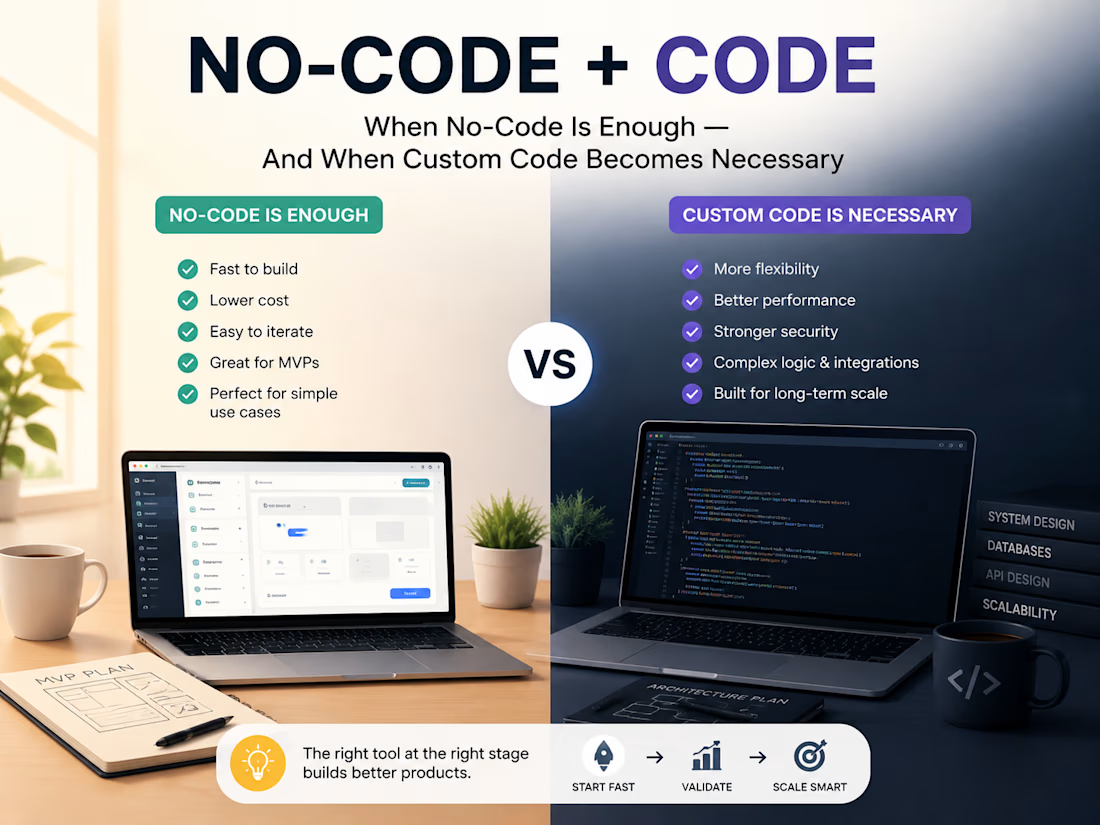
No-Code + Code — When No-Code Is Enough — And When Custom Code Becomes Necessary
No-code tools are great for moving fast.
They help founders build landing pages, MVPs, internal tools, simple apps, and automations without spending too much time or budget. When the goal is to test an idea quickly, no-code can be the smartest first step.
But no-code has limits.
As a product grows, you may need better performance, custom workflows, stronger security, deeper integrations, or more control over the user experience. That is when custom code becomes necessary.
The best approach is not always “no-code or code.”
It is about choosing the right solution for the stage of the product.
Use no-code when speed and validation matter most.
Use custom code when flexibility, scalability, and long-term quality become important.
A smart product does not need to start big.
It needs to start with the right foundation.

I completely agree. The choice isn't really no-code vs. code it's about matching the solution to the product's stage. No-code is excellent for validating ideas quickly, while custom development becomes valuable when scalability and flexibility become priorities.
The network for creativity
Join 1.25M professional creatives like you
Connect with clients, get discovered, and run your business 100% commission-free
Creatives on Contra have earned over $150M and we are just getting started





Related posts

This week I worked on a widget library for a new SaaS product.
On complex products, a widget library can pass 100 widgets fast. Every one needs multiple sizes, empty and error states, permission rules, and has to handle real data that never looks like the mockup. Without a system, each new widget becomes a one off and the product slowly starts to feel stitched together.


Burying your traction on slide 28 is the fastest way to lose a venture partner.
Most founders assume volume equals expertise. They drop a massive rock of information onto venture partners, hoping the investor will dig through it to find a reason to write a check.
But reality works differently. Venture partners review materials on their phones in the back of a cab or between meetings.
If your core growth metric is hidden under a solid wall of text, nobody is going to see it. You lose their attention before they even understand your business model.
Your presentation should be a scalpel, not a sledgehammer.
Cut your deck in half. Leave empty space so your most critical numbers can actually breathe. One clean layout proving your unit economics closes rounds much faster than ten pages of technical documentation and product features.
Open your current pitch deck. How many slides can you delete today without losing the core narrative?




The phone-in-a-cab test is a good one. A quick way to check it is to shrink each slide to thumbnail size: if the key number still reads there, it will survive a phone screen. Do you set a minimum size for metric callouts in your decks?


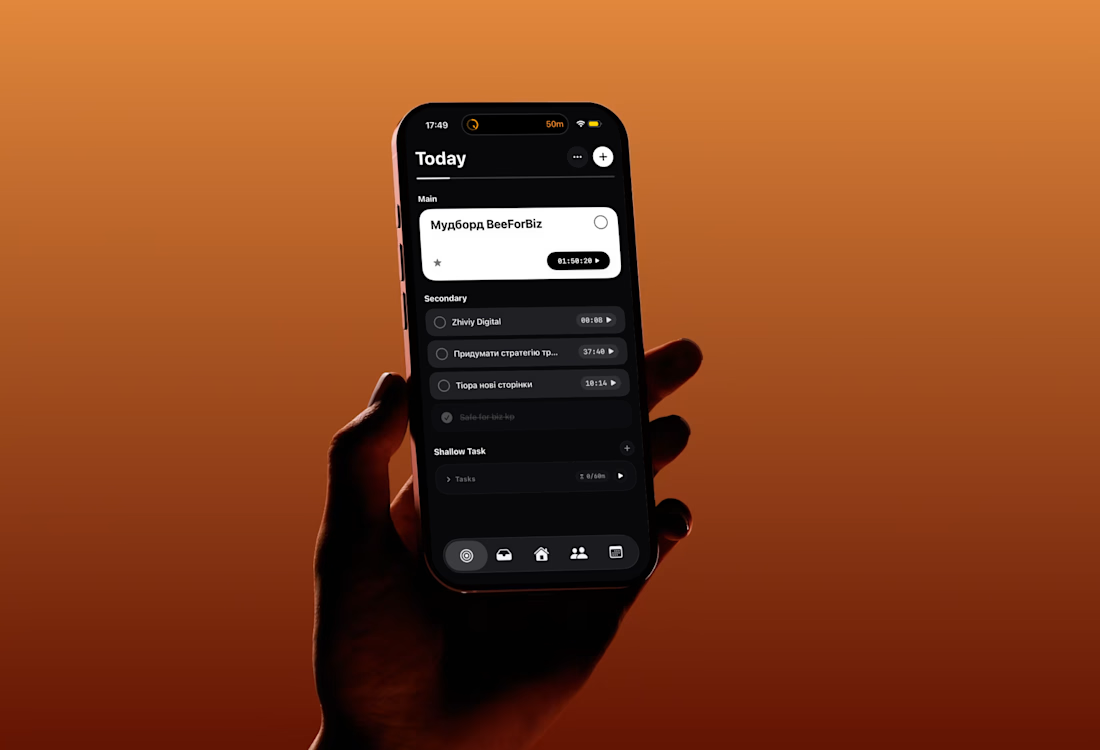
Yeah, I decided to vibe-code yet another task tracker among a thousand others. So what? :)
I noticed that task trackers “help” you organize your life and routines, giving you the impression that you can get everything done.
But I built mine around the opposite idea: you definitely won’t get everything done, so spreading your attention across too many things makes no sense.
My app helps you ruthlessly cut out the unnecessary and focus on what matters.