The network for creativity
Join 1.25M professional creatives like you
Connect with clients, get discovered, and run your business 100% commission-free
Creatives on Contra have earned over $150M and we are just getting started
Back to feedPost

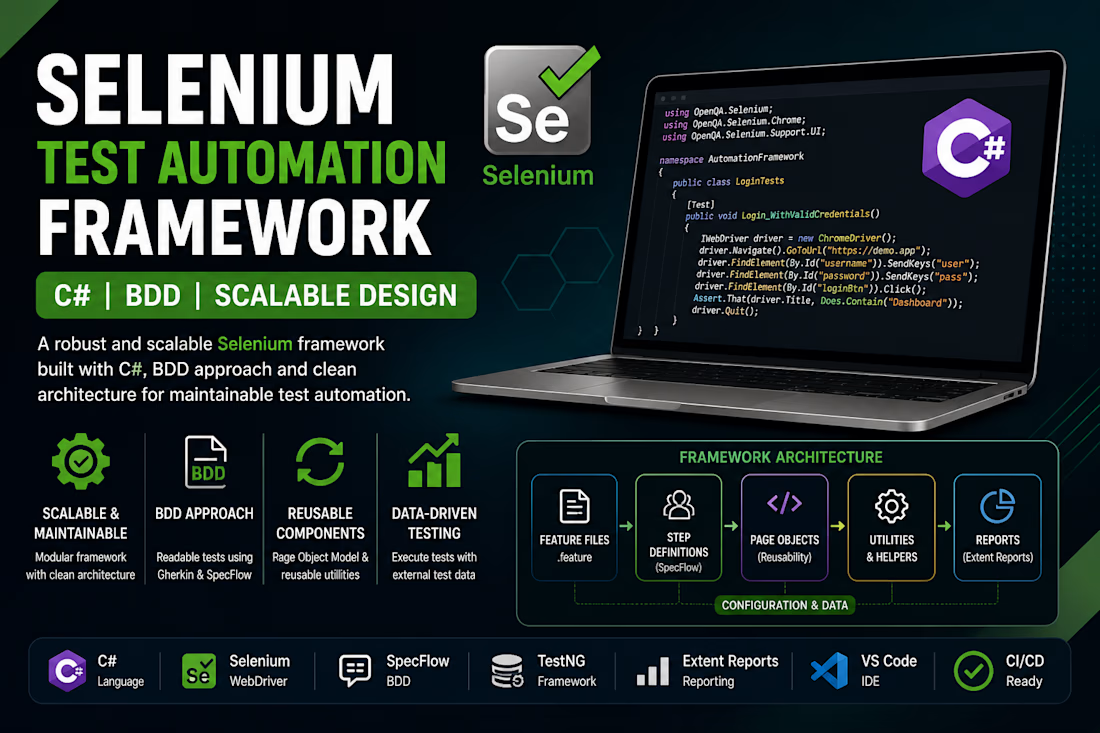
Selenium BDD Framework (C# | Scalable Test Architecture)


The network for creativity
Join 1.25M professional creatives like you
Connect with clients, get discovered, and run your business 100% commission-free
Creatives on Contra have earned over $150M and we are just getting started







Related posts

🧪 Exploring AI for Field-Based Drug Testing
I recently worked on an AI-powered project that explores how Computer Vision and Image Processing can assist with analyzing field drug-test results.
The concept is simple:
📸 Capture the test result
🎨 Analyze the visible colour pattern
🔍 Compare it with a reference colour card
🤖 Use AI to assist with interpretation
📊 Present the result in a simple, easy-to-understand format
The project is focused on making visual test-result analysis more structured and accessible while demonstrating how computer vision can be applied to real-world testing workflows.
Working on this project helped me learn more about AI, Computer Vision, image processing, colour analysis, and practical web application development.
🚀 Another experiment in using technology to solve real-world problems.
#ArtificialIntelligence #ComputerVision #ImageProcessing #MachineLearning #AI #WebDevelopment #Innovation #StudentDeveloper #TechForGood


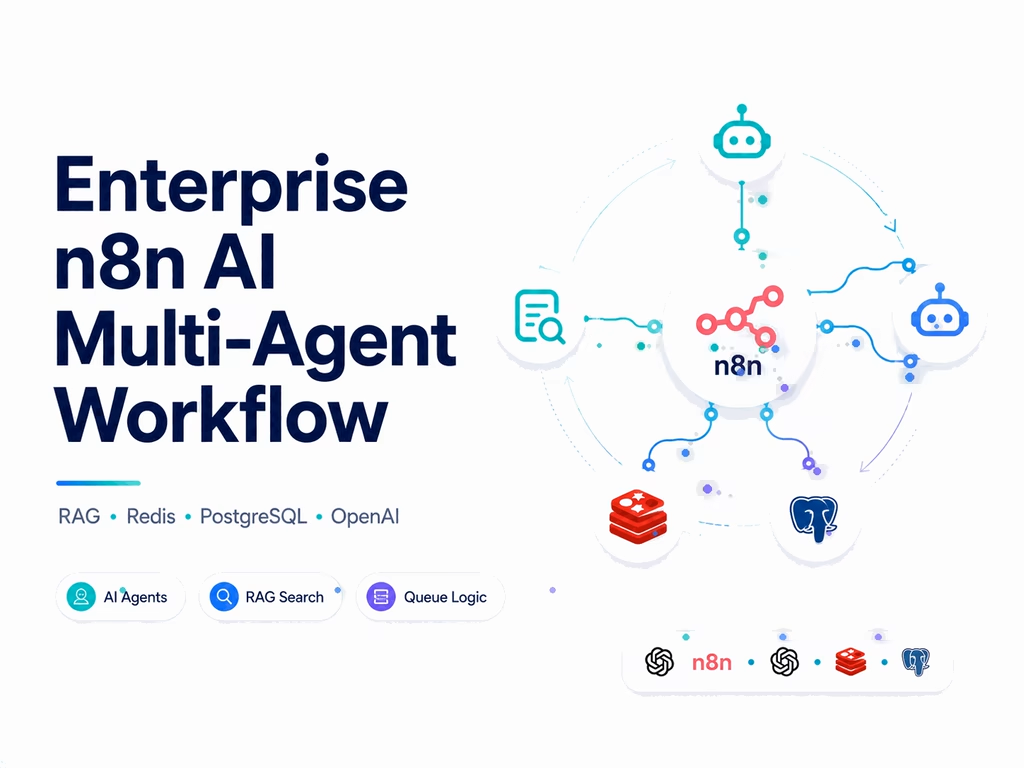
I designed and built an enterprise AI automation system using n8n, AI agents, RAG, Redis, and PostgreSQL to automate complex business workflows, improve decision-making, and create scalable AI-powered operations.
The system uses n8n as the automation orchestration layer, where incoming business events trigger workflows that route tasks to specialized AI agents. A RAG pipeline retrieves relevant knowledge from business data sources, allowing AI agents to generate accurate, context-aware responses and decisions. Redis handles queue-based processing for high-volume tasks, while PostgreSQL stores structured data, workflow history, and audit records.
The automation architecture connects multiple technologies including n8n, OpenAI API, AI Agents, RAG pipelines, Vector Databases, Redis, PostgreSQL, APIs, Webhooks, Slack integrations, Docker, and Python services to create reliable enterprise workflows.
The solution helps businesses reduce manual operations, automate repetitive processes, improve response times, maintain better data accuracy, and scale AI workflows securely. It includes monitoring, validation, error handling, and human approval flows to ensure reliable production usage.
Tech Stack: n8n, OpenAI, AI Agents, RAG, LangChain, Redis, PostgreSQL, Qdrant, Python, FastAPI, Docker, APIs, Webhooks, Slack.



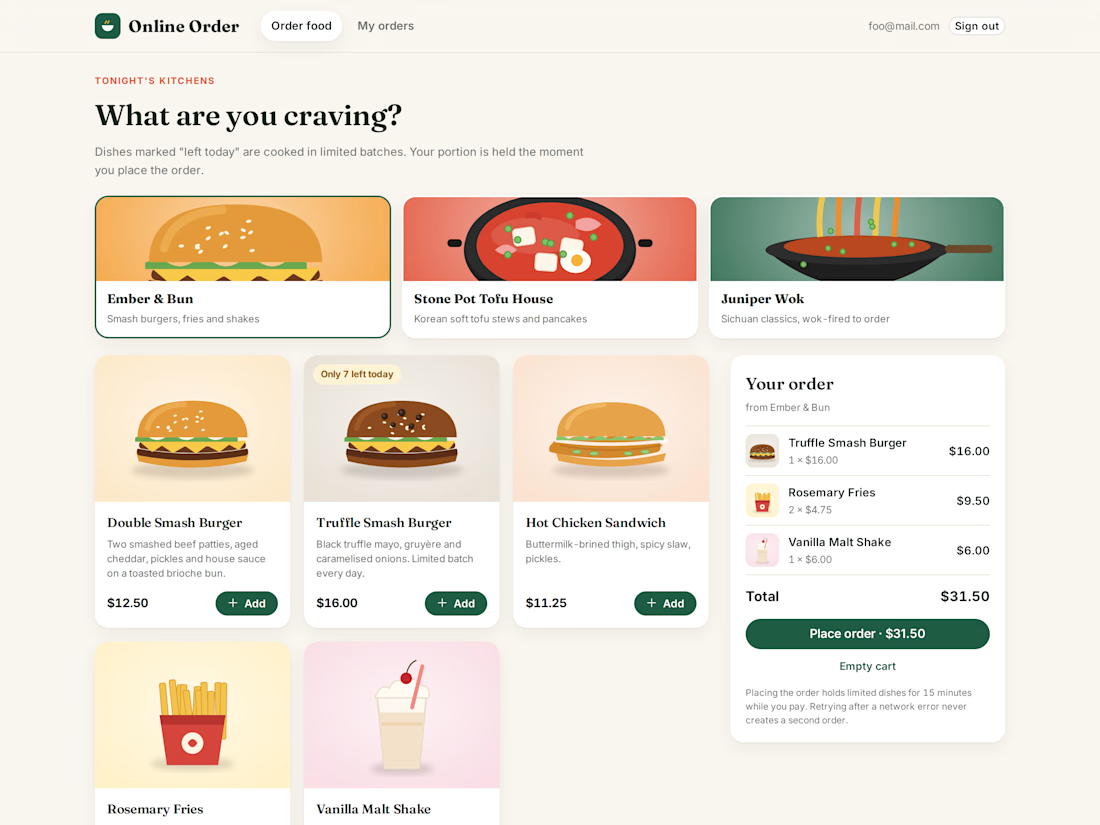
A food-ordering app for customers and kitchen staff: limited daily dishes, live order tracking, and a kitchen board that updates the moment a payment clears. The hard part is staying correct when many people act at once — limited stock is never oversold, a retried checkout never creates a second order, a duplicated payment webhook never charges twice, and every cent moves through a double-entry ledger. Each of those guarantees has an integration test against a real PostgreSQL database.
Spring Boot 3 (Java 21), React, PostgreSQL. The restaurants are fictional and payments go through a simulated card processor.
Code: github.com/Rolinmuuu/Online-Order