The network for creativity
Join 1.25M professional creatives like you
Connect with clients, get discovered, and run your business 100% commission-free
Creatives on Contra have earned over $150M and we are just getting started
Back to feedPost

Most B2B cold outreach strategies focus heavily on copywriting, offer angles, and personalization.
While those elements matter, they are completely secondary to a more fundamental challenge: email deliverability.
The main risk with cold outreach is that when your infrastructure degrades, you rarely get an explicit warning. Your open rates simply drop, your pipeline thins, and you are left guessing where the breakdown occurred.
Google Postmaster Tools removes that guesswork.
For any business relying on outbound systems, it serves as a critical diagnostic dashboard to monitor how Gmail evaluates your sending footprint. Given Google’s strict 0.3% spam complaint threshold, maintaining visibility into these metrics is no longer optional for serious growth teams.
Here is how it strategically optimizes an outreach program:
1. Proactive Risk Mitigation
The platform monitors your exact user-reported spam rate. If your complaints begin creeping toward the 0.1% threshold, it provides an early warning. This allows you to pause campaigns, refine your targeting, or clean your data lists before permanent domain damage occurs.
2. Data-Driven Volume Scaling
Google assigns your domain a reputation grade from High to Bad. If your score dips to Medium or Low, your messages will routinely bypass the inbox. Tracking this metric in real-time tells you exactly when your technical infrastructure is healthy enough to scale volume, and when you need to pause and focus on domain rehabilitation.
3. Infrastructure Verification
Cold outreach requires an airtight technical setup across SPF, DKIM, and DMARC protocols. Postmaster Tools tracks your pass/fail rates for these configurations over time, ensuring that minor technical glitches do not quietly derail your entire outbound budget.
Ultimately, scalability requires predictability.
Relying on proxy metrics like open rates to guess your deliverability health introduces unnecessary risk into your sales pipeline. Utilizing direct data from Google ensures your technical foundation can actually support your revenue goals.
How is your team currently auditing domain health across your outbound infrastructure? Let me know your thoughts below.
The network for creativity
Join 1.25M professional creatives like you
Connect with clients, get discovered, and run your business 100% commission-free
Creatives on Contra have earned over $150M and we are just getting started

Challenges
View all


Related posts

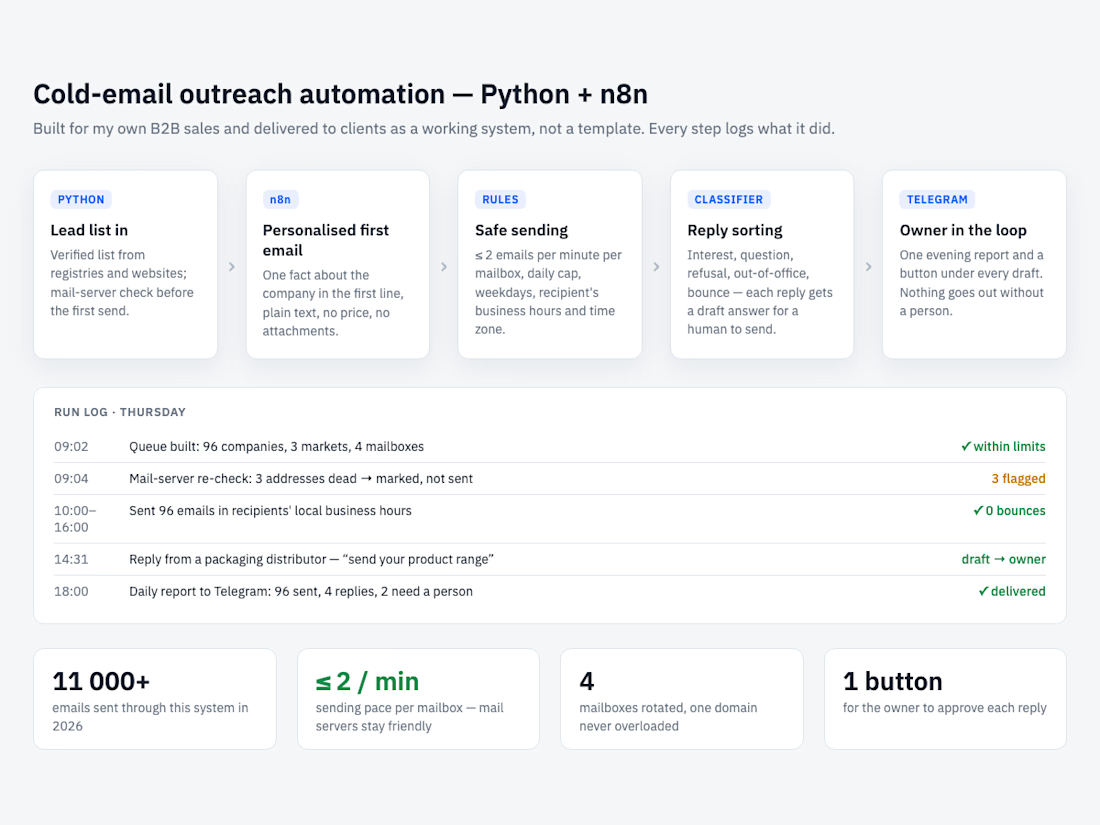
Cold-email outreach automation on Python + n8n: verified list in, personalised first email, safe sending limits, reply sorting with a draft answer, owner approves every reply with one button in Telegram.


Created an AI-powered lead generation and outreach tool for finding and converting local business leads.
The system scrapes Google Maps, analyzes business websites with Gemini AI, and generates personalized pitch emails automatically.
I built the complete pipeline from scraping to AI analysis and outreach.
Tech: Node.js, Puppeteer, Gemini AI, Express, Next.js
🎥 Project demo: Reel attached below.


good job

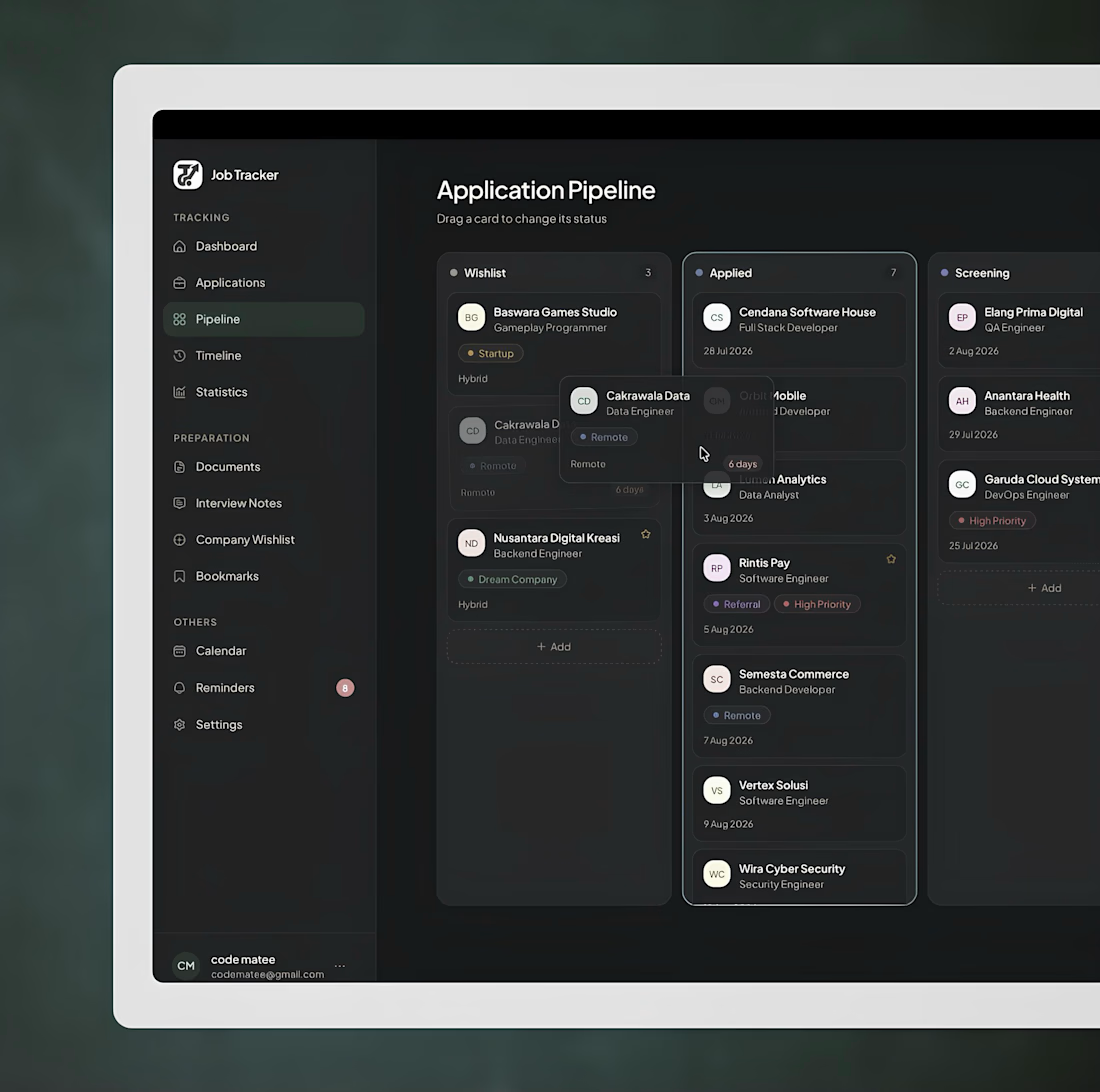
Tracking Application – Production-Grade Job Application Tracker & SaaS Pipeline
A production-grade job tracking web application engineered to replace messy spreadsheets with an automated, 11-stage Kanban pipeline. Built with React 19, Express 5, and Drizzle ORM, featuring zero-friction Google OAuth (officially verified), secure document storage via Cloudflare R2 presigned URLs, and automated background email jobs. Hardened through 90+ automated tests and full-repo security reviews.