The network for creativity
Join 1.25M professional creatives like you
Connect with clients, get discovered, and run your business 100% commission-free
Creatives on Contra have earned over $150M and we are just getting started
Back to feedPost

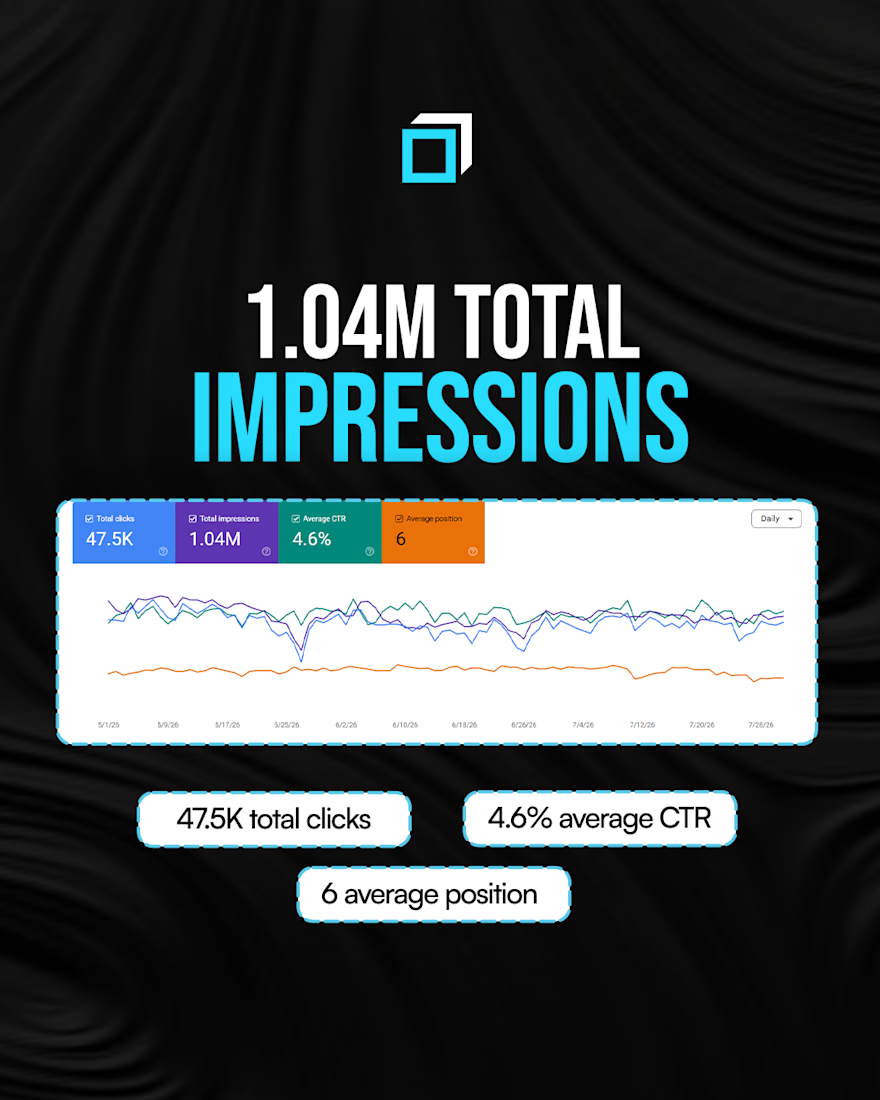
An SEO project delivered with my team at GFX Square, focused on helping a client’s website reach relevant customers through organic search.
During the reporting period shown, Google Search Console recorded:
• 47,500 organic search clicks
• 1.04 million search impressions
• 4.6% average click-through rate
• Average search position of 6
These results show the website’s visibility in Google Search and the traffic it attracted during the period. The attached report provides a snapshot of that performance.


The network for creativity
Join 1.25M professional creatives like you
Connect with clients, get discovered, and run your business 100% commission-free
Creatives on Contra have earned over $150M and we are just getting started




Related posts

Strategic SEO & High-Quality Backlink Building
"Executed a comprehensive link-building campaign to secure high-authority backlinks for the client's website. Focused on driving organic traffic, improving search engine rankings, and boosting domain authority through white-hat SEO strategies."
Live Backlink Deliverables:
Blog / Article (Medium):
Business Directory (Sulekha):
Sulekha Business https://share.google/oGVxExA2rkWWbWGN4
Events Platform (AllEvents):
Q&A Platform (Quora):

medium.com
Unlocking Team Potential: How Escape Rooms Are Redefining Corporate Bonding in Bangalore
In today’s fast-paced business landscape, workplace dynamics have transformed dramatically. Traditional corporate team-building exercises…

Wrote an SEO-optimized Islamic blog post exploring the benefits and significance of Surah Waqiah. The article was structured with clear headings, engaging content, and search-focused information to make the topic easy to understand for readers.




More content would have made this SEO problem worse
When organic traffic is low, the obvious reaction is often: “We need more pages and more content.”
In this project, that would have been the wrong move.
The website was new, looked professional and had plenty of room to grow, but only 2 pages were indexed. Important product categories were difficult for search engines to discover because of the way the subdomain and JavaScript navigation were implemented.
We also found canonical conflicts, weak metadata, redirect issues, slow performance, missing structured data and several content problems.
If the client had started publishing 20–30 new pages immediately, we would simply have created more URLs inside a system that was already struggling to index the existing ones.
So we worked in a different order: first technical accessibility, then metadata and page structure, then schema and content improvements.
After implementation, organic clicks grew by 500–700%, impressions by 300–500%, and CTR reached 8.8%.
This is why I always separate two questions before building a content plan:
Do we have enough search demand?
Can the existing website actually capture that demand?
Content can scale SEO. But only after the foundation is ready to support it.
If your team is planning to invest heavily in new SEO content, send me the website. I’ll tell you what I would check before increasing the content budget.
#SEO #SEOAudit #TechnicalSEO #ContentStrategy #OrganicGrowth