The network for creativity
Join 1.25M professional creatives like you
Connect with clients, get discovered, and run your business 100% commission-free
Creatives on Contra have earned over $150M and we are just getting started
Back to feedPost

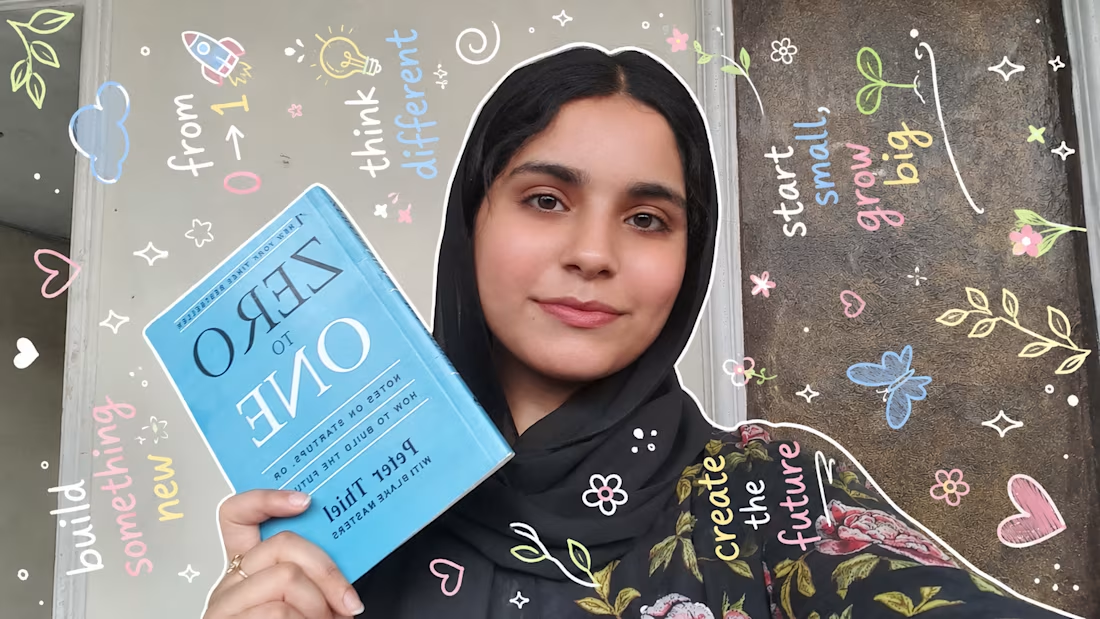
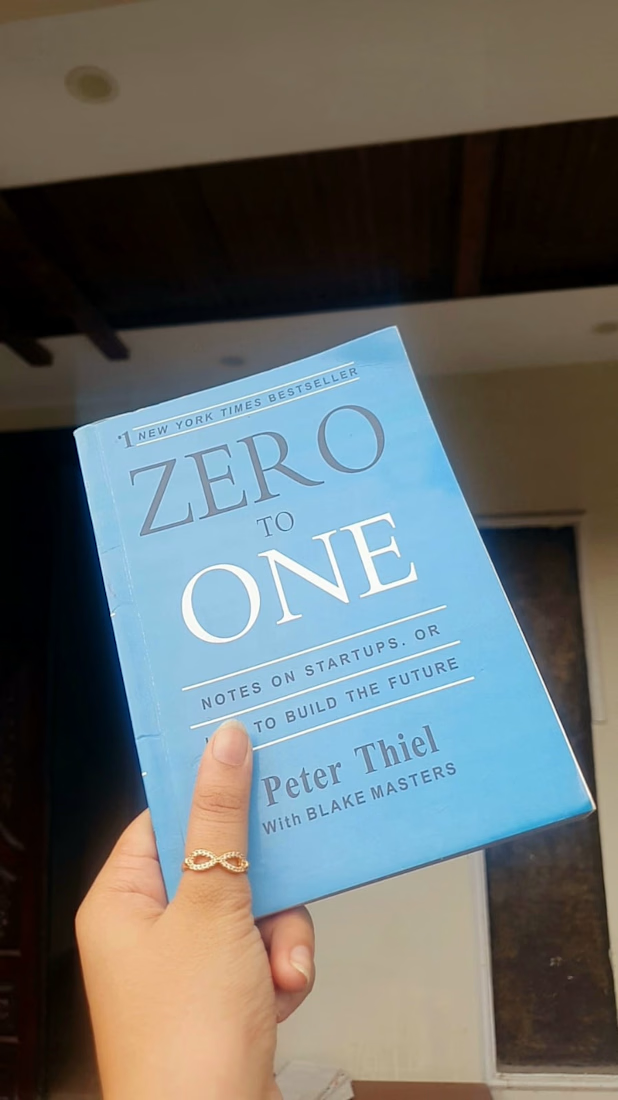
Started reading "𝐙𝐞𝐫𝐨 𝐭𝐨 𝐎𝐧𝐞." today by Peter Thiel
Haven’t gone far. Just a few pages in.
But something is interesting about books that don’t try to teach you immediately…
They challenge you first.
This one starts with a question:
“𝐖𝐡𝐚𝐭 𝐢𝐦𝐩𝐨𝐫𝐭𝐚𝐧𝐭 𝐭𝐫𝐮𝐭𝐡 𝐝𝐨 𝐯𝐞𝐫𝐲 𝐟𝐞𝐰 𝐩𝐞𝐨𝐩𝐥𝐞 𝐚𝐠𝐫𝐞𝐞 𝐰𝐢𝐭𝐡 𝐲𝐨𝐮 𝐨𝐧?”
And it lingers.
Because if we’re honest, most of us don’t operate on “truths” we discovered ourselves.
We operate on accepted ideas.
The world often tells us:
"𝘛𝘢𝘬𝘦 𝘸𝘩𝘢𝘵 𝘢𝘭𝘳𝘦𝘢𝘥𝘺 𝘦𝘹𝘪𝘴𝘵𝘴, 𝘳𝘦𝘧𝘪𝘯𝘦 𝘪𝘵, 𝘪𝘮𝘱𝘳𝘰𝘷𝘦 𝘪𝘵, 𝘢𝘥𝘥 𝘢 𝘧𝘦𝘢𝘵𝘶𝘳𝘦… 𝘢𝘯𝘥 𝘭𝘢𝘶𝘯𝘤𝘩."
And yes, that works. It’s safe. It’s proven.
But these early pages hint at something very different.
That real breakthroughs might not come from refining what’s already there…
But from thinking in a way that doesn’t rely on it at all.
But what if that’s not enough?
What if the real edge comes from seeing something others don’t yet?
-It requires independent thinking.
-Seeing something others don’t.
-Believing something before it’s obvious.
Still early in the book,
but it’s already shifting how I think about progress.
Not 1 -> n.
But 0 -> 1.
Curious to hear!
What’s something you believe that most people would challenge?
I’m still at the beginning…
But already, it feels like this book is less about answers
and more about how you think.
So I’ll leave this here,
What’s a belief you hold that most people don’t agree with?
The network for creativity
Join 1.25M professional creatives like you
Connect with clients, get discovered, and run your business 100% commission-free
Creatives on Contra have earned over $150M and we are just getting started
Related posts

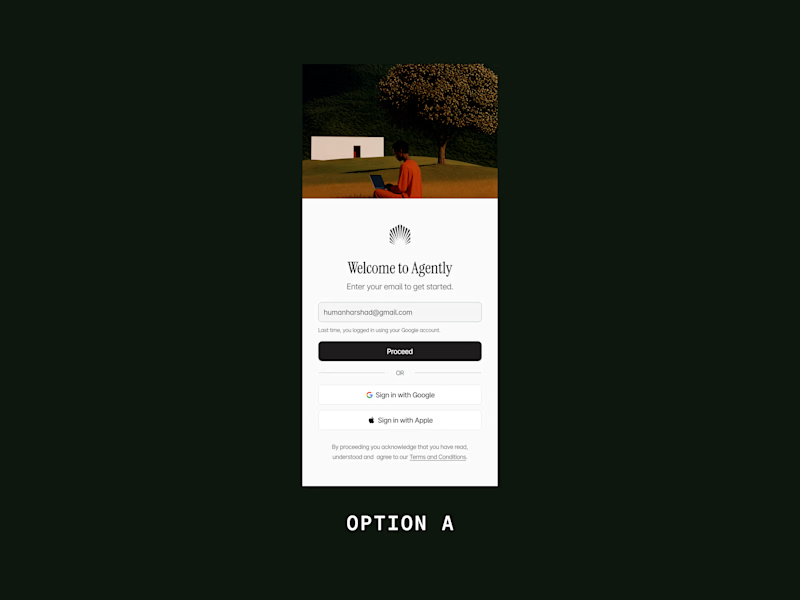
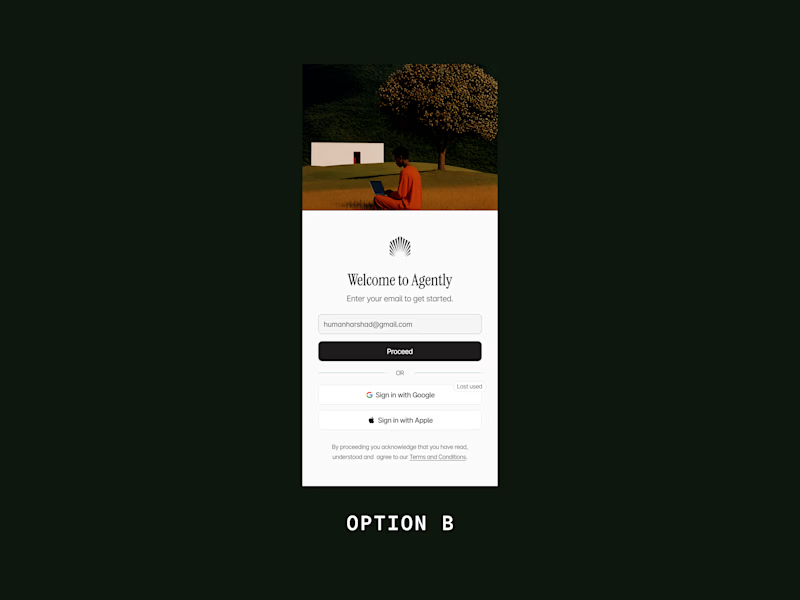
which validation feels better? A or B? 👇

1 voted
33%
2 voted
67%
3 votes
Closed
Client Red flags, AI Edition
🚩 Comes with a full brief made entirely of AI-generated designs.
🚩 Wants a custom brand identity, but only if it looks exactly like the AI images they generated.
🚩 Runs every concept that you created (the professional designer) through AI for "design feedback."
Any AI-related red flags you'd add to the list?

Stating that running your work through AI would void the contract due to copyright infringement and theft feels like a great clause to add to case studies.

Every Lesson Needs One Goal
Don't teach five things in one lesson.
Teach one thing.
Explain it well.
Then move to the next lesson.
Students learn faster when each lesson has one clear goal.



You are right
















Trending

Claude
Claude has entered the design space. How are you using Claude Design?

Contra University
Learn from expert creatives how to earn more using next-gen AI tools.

MagicPath
The canvas is infinite, and exploration is becoming the workflow. How are you using MagicPath?
creativeaiflow
Creative AI workflows are evolving. What tools do you use, and what are their strengths and weaknesses?
freelancerlife
Freelancer life is wins, pivots, and everything in between. What’s yours right now?