The network for creativity
Join 1.25M professional creatives like you
Connect with clients, get discovered, and run your business 100% commission-free
Creatives on Contra have earned over $150M and we are just getting started
Back to feedPost

Interfaces Aren’t Overkill — They’re Future-Proofing Your Code
Early in my Flutter journey, I thought interfaces were just unnecessary ceremony.
“Why create an abstract class when I can just write a service class for API calls and use it directly?” I asked.
Well, I worked under senior devs then, and I followed their guidance, hoping to understand “why” one day. When I started owning/overseeing projects, the "why" became vidvid to me.
In this project, I was using flutter_secure_storage for auth tokens and some simple user data. Everything worked perfectly.
Then the client said: “We need parts of the app to work offline.”
I needed a local database — Hive. Fortunately, I already had a local storage interface. All I had to do was:
Create HiveLocalStorageServiceImpl implementing the interface, "default" it as a dependency in the offline-specific cubits
Zero breaking changes, zero headaches, everything just worked.
I use to understand interfaces like hosting an event with a strict dress code:
Black shoes ✅
White wristwatch ✅
Green face cap ✅
Every guest must follow the rules (the interface), but each guest can choose their own style:
Guest A: Oxford shoes, Rolex, silk cap
Guest B: Nike sneakers, Casio watch, baseball cap
Guest C: Crocs, Apple Watch, vintage cap
All follow the contract, all do their own thing.
In code, it is the same: one view-model uses FlutterSecureStorage for tokens, another uses Hive for offline meter readings. The interface guarantees the contract; the implementation decides the style.
Why this matters:
✅ Flexibility => Swap Hive, Isar, or any storage without touching dependent code
✅ Testing => Mock any implementation and inject it wherever needed
✅ Clarity => The contract is explicit, separate from the implementation
✅ Future-proofing => Requirements change, implementations change, interface stays stable
Interfaces aren’t about being fancy. They are dress codes for your code, saving you headaches as projects grow and external services get involved.
They say: “I don’t care how you do it, but you MUST do these things.”
And yeah, If your app touches the outside world —network calls, local database, sensors, etc, you should hide it behind an interface.
The network for creativity
Join 1.25M professional creatives like you
Connect with clients, get discovered, and run your business 100% commission-free
Creatives on Contra have earned over $150M and we are just getting started





Related posts

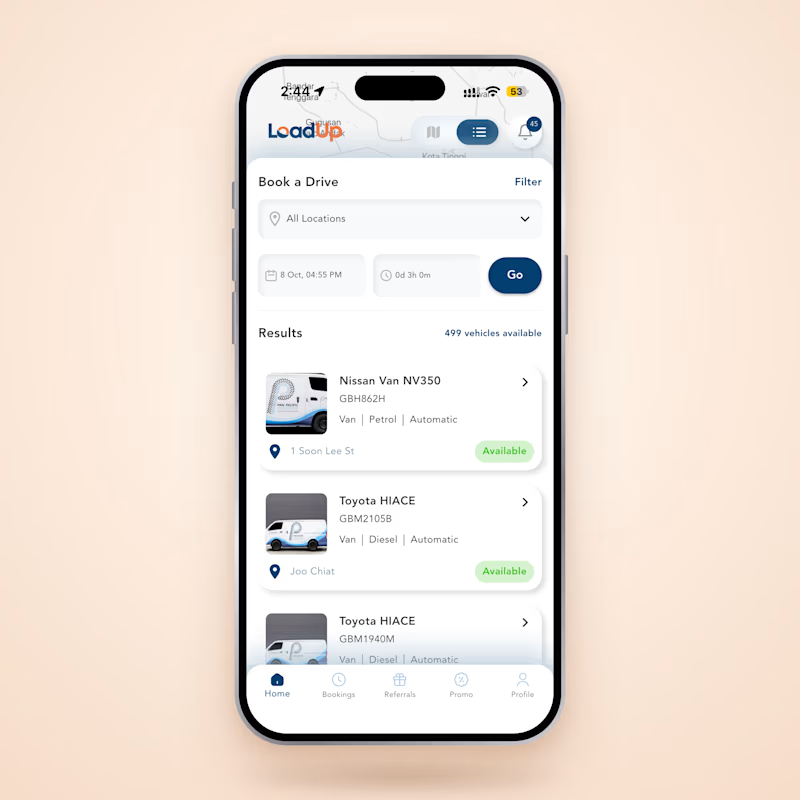
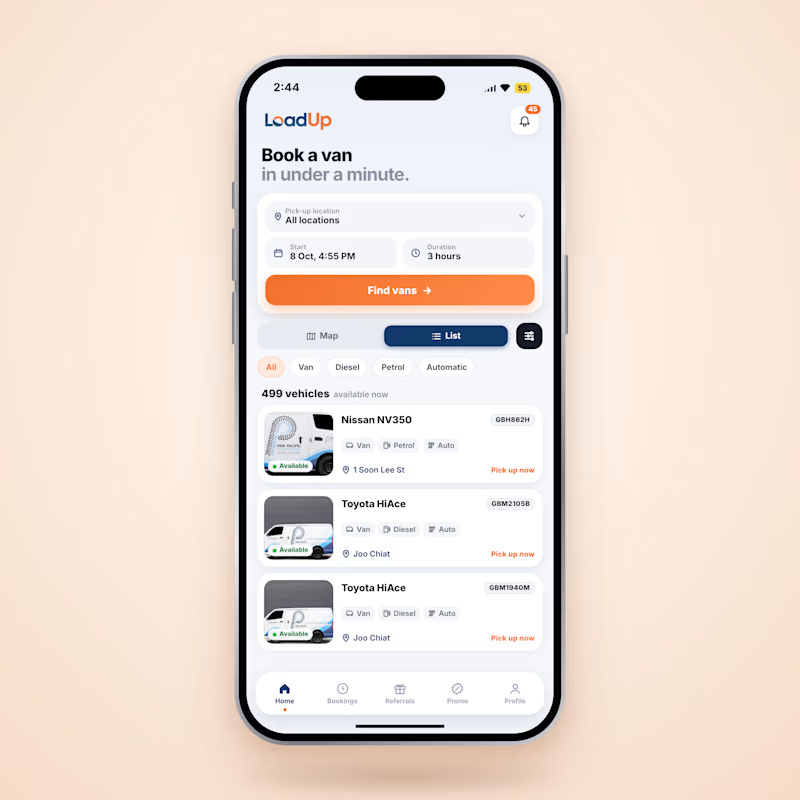
Redesigning the booking screen for LoadUp SG, an on-demand van rental app I built with Flutter.
Left is the current version. Right is a new concept with a clearer search, quick filters and richer van cards.
Which one would you book from?

0 voted
0%
2 voted
100%
2 votes
Closed
Turning a workspace into an atmosphere makes such a difference. ✨
Love the warm lighting, layered details, and cozy mood here. It feels less like a desk setup and more like a space you’d actually want to spend hours creating in. 🔥


What would your workspace look like if you turned it into an ambient little world?
I recreated my actual workstation in Midjourney, with a little extra colour, mood lighting, and cinematic polish.
The warm desk lamp, cooler screen glow, my keyboard, books, and all the little...


Working on apple watch experience. How else do I keep myself from getting bored when there’s interaction design involved? That’s honestly one of my top priorities.
Can’t wait to share the full case study for this project. For now, here’s a little sneak peek at some of the animated screens I’ve been working on for the fitness experience. ⌚️


This deserves only praise. wonderful execution