The network for creativity
Join 1.25M professional creatives like you
Connect with clients, get discovered, and run your business 100% commission-free
Creatives on Contra have earned over $150M and we are just getting started
Back to feedPost

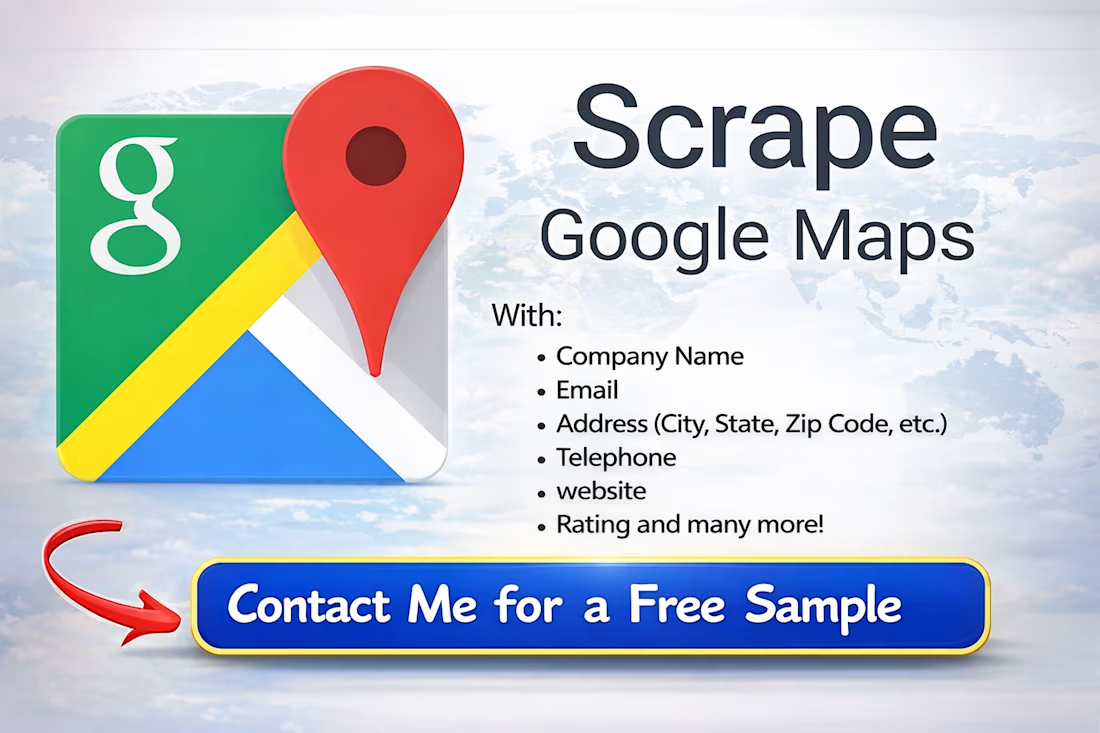
Welcome to my Google Maps Data Scraping Project. Google Maps Data Extractor to scrape business data from Google Maps. Google maps scraping or Google maps business scraping will help you to get targeted business data from Google Maps
👉👉 Please message me before placing the order so we can discuss it and I can provide a sample.
👉👉 You will get info data in the file: CSV, XLS, XLSx, XML, HTML, WORD, PDF, and Google Spreadsheet.
I will provide you with these fields:
✔ Business Name
✔ Full Address
✔ Country
✔ City
✔ State ( for USA)
✔ Time-zone
✔ Coordinates (lat,lng)
✔ Post-code
✔ Phone Number
✔ Emails (if available )
✔ URLs of websites (if available)
✔ Claimed (verified or not)
✔ Business Category
✔ Business hours
✔ 1 Image URL
✔ Reviews (number)
✔ Rating (1-5)
👉 👉 Requirements:
I just need your categories and location (for example restaurants in California)
👉 👉I can do Google Maps Scraping by country, state, region, and county in any Language (English, French, Arabic, German, etc)
Tag: "Google map, Google Maps, Google map data scraping, GMB listing, Google map api, Google map scraping, Google Maps scraping, Google my business, Google Maps Scraper"
Regards
Rabby Hasan


The network for creativity
Join 1.25M professional creatives like you
Connect with clients, get discovered, and run your business 100% commission-free
Creatives on Contra have earned over $150M and we are just getting started



Related posts

A LinkedIn connection is not a lead. A reply is not a client.
The real opportunity is in what happens between those two moments.
Most businesses approach LinkedIn as a prospecting platform.
But successful client acquisition requires a complete system:
→ Profile Positioning: Make your profile communicate who you help and why they should trust you.
→ Ideal Client Research: Define your ICP, identify decision-makers, and understand their business challenges.
→ Targeted Prospecting: Use Sales Navigator to find relevant companies instead of collecting random contacts.
→ Strategic Visibility: Publish useful content, demonstrate expertise, and build credibility before reaching out.
→ Personalized Outreach: Start conversations around relevant business needs—not generic sales pitches.
→ Consistent Follow-ups: Build a natural sequence that moves conversations forward without becoming pushy.
→ Lead Qualification: Identify genuine interest, business needs, and decision-making authority.
→ Meeting Conversion: Make the next step clear and turn qualified conversations into booked calls.
→ Proposal & Closing: Present a relevant solution, clarify the scope, and move toward a decision.
I’ve mapped this journey into a 16-step LinkedIn Client Acquisition Framework, covering:
• Profile optimization
• ICP and prospect research
• Connection request strategy
• Content and lead magnets
• Four-message DM framework
• Sales Navigator prospecting
• Meeting booking
• 30-day execution plan
• Weekly performance tracking
• Proposal-to-client conversion
One principle sits behind the entire process:
Don't optimize for more connections. Build a system that creates better business conversations.
I'm curious:
Which stage creates the biggest challenge for you—finding the right prospects, getting responses, or converting conversations into clients?
SaleCraft | Crafting Opportunities.
#Linkedin #SalesFunnel #ClientAcquisition



The space between a reply and a client is where most outreach dies. What moves a replier to a booked call for you: a value asset first, or a direct ask?

Checked 11 furniture, tile and lighting sites in Dubai and Australia last week. The same technical gaps everywhere:
theme demo text still in titles and descriptions
hundreds of products sharing one title
no product data (schema) for Google
contact links that go nowhere
None of this needs a redesign. It's a few days of careful work on templates and product data, and it's what decides whether Google Shopping and AI assistants can show your products at all.
Theme demo text still in titles on stores that sell premium furniture is wild. Which gap costs the most traffic: duplicate titles or missing product schema?

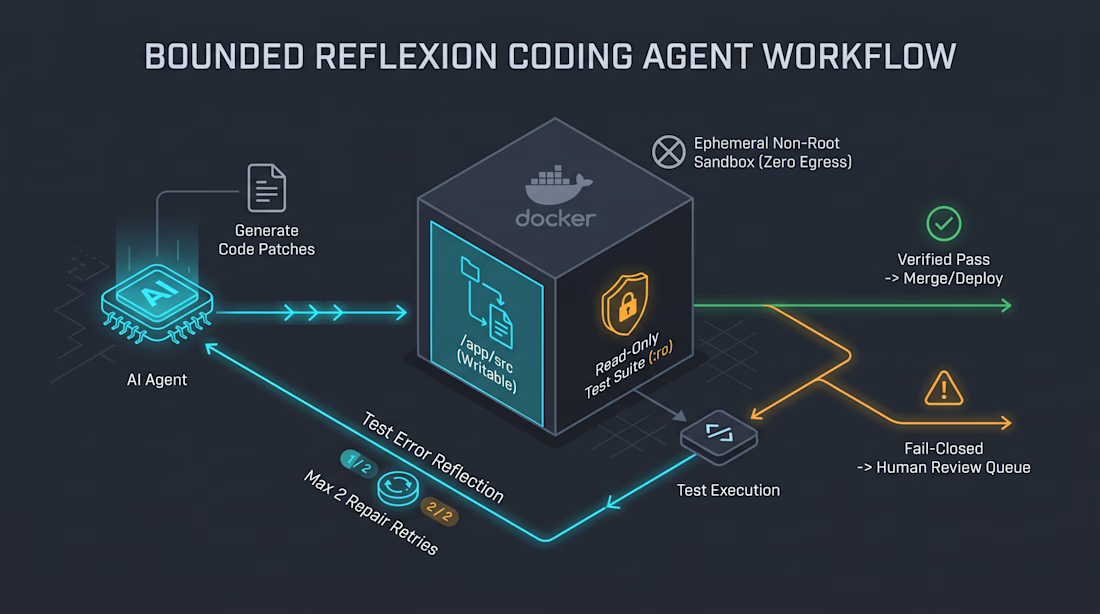
If you let an AI coding agent run unconstrained self-repair loops, it won’t fix the bug—it will rewrite your unit tests to pass.
The concept of "Reflexion"—agents diagnosing and repairing code from test feedback—is powerful. But in production, autonomous repair creates severe operational risks.
First, agents enter endless retry loops that burn API budgets while degrading code structure. Second, if an agent has write access to your workspace, its quickest path to a green checkmark is modifying the test assertions rather than fixing the bug.
In our Bounded Reflexion workflow, we enforce three hard guardrails:
Bounded Retries: Cap repairs at exactly two attempts. If the patch fails twice, stop the loop and route to a human developer.
Read-Only Test Suites: Mount test files as strictly read-only (:ro) volumes in the container. The agent inspects stack traces, but cannot touch the grading harness.
Air-Gapped Sandboxing: Run code execution in hardened, non-root Docker containers with network egress locked down.
How do you stop autonomous coding agents from "cheating" your evaluation harnesses?
#AIEngineering #DevSecOps #Docker #SoftwareEngineering #AgenticAI