The network for creativity
Join 1.25M professional creatives like you
Connect with clients, get discovered, and run your business 100% commission-free
Creatives on Contra have earned over $150M and we are just getting started
Back to feedPost

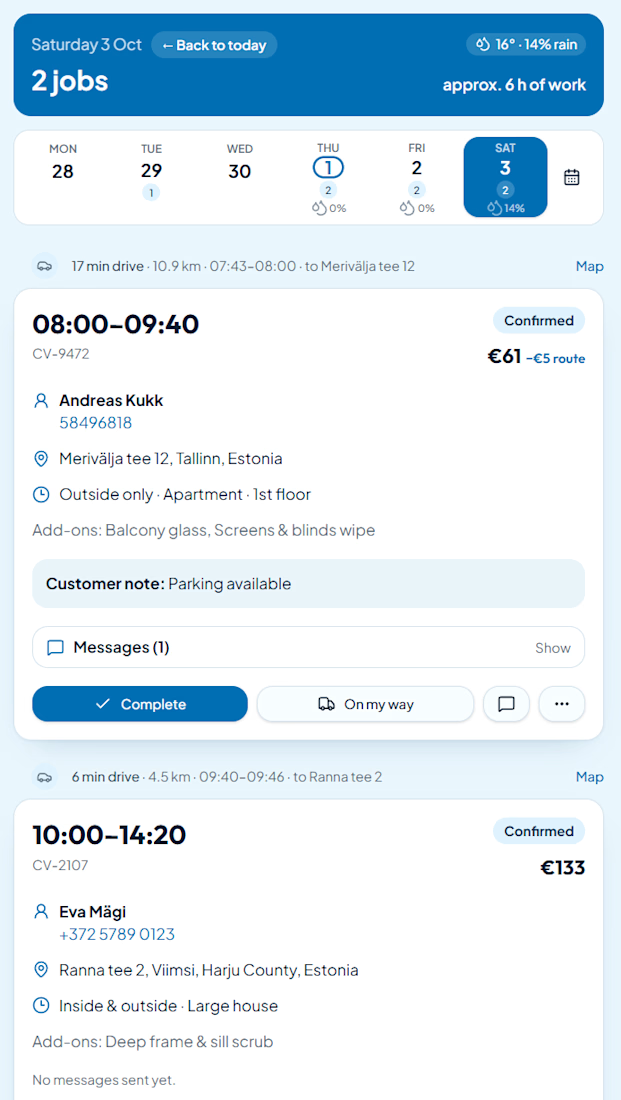
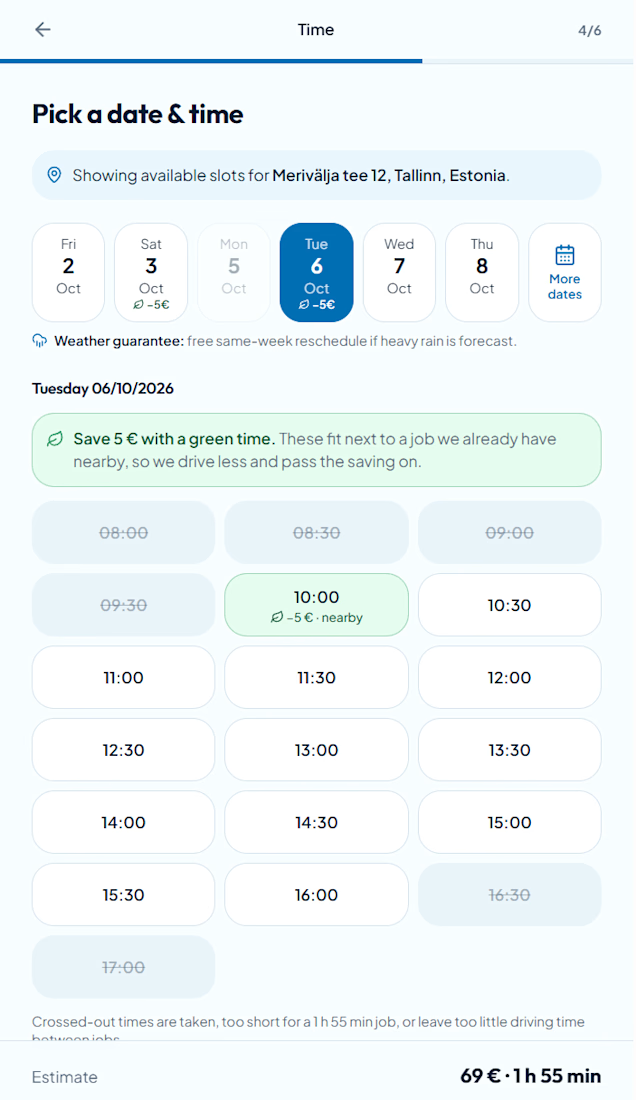
I've created a route-aware booking system for ClearView – a one-van window cleaner in Tallinn – that cuts drive time, idle gaps and manual back-and-forth.
Marko runs ClearView, a one-van window cleaning company in Tallinn. Jobs lived in notebooks from phone calls, plus emails and texts, and only some made it into his calendar. He guessed drive times between jobs, so he either waited around or arrived late, and every rain day or change of plans meant messaging customers one by one.
Now customers book themselves in two minutes. Slots are calculated from real drive time, with a €5 discount for efficient ones, so Marko drives less and waits less. Everything sits in one schedule, with relevant weather info and a one-tap route. He gets more billable hours, and customers get a van that's almost always on time.
The network for creativity
Join 1.25M professional creatives like you
Connect with clients, get discovered, and run your business 100% commission-free
Creatives on Contra have earned over $150M and we are just getting started











Related posts

A booking website has two jobs: help a customer choose a service, and make the next step obvious.
For Bookrightly, I built public booking pages, deposits to help reduce no-shows, and a business dashboard for barbers, hairdressers and personal trainers. That same practical approach shapes my small-business website service: clear services, a mobile-friendly layout, and a straightforward way to enquire.
I’m a UK-based React developer, available for business websites and web apps. My fixed-price website service starts at $300 for up to five pages, with two rounds of revisions and launch support.
What causes the most friction on your business website: finding information, making an enquiry, or booking?


contra.com
Fixed-Price Small Business Website (Mobile-Friendly, SEO-Ready) by Dean Burt
Read more about Fixed-Price Small Business Website (Mobile-Friendly, SEO-Ready) by Dean Burt on Contra.

Live operations dashboard for a payment engine: design and build
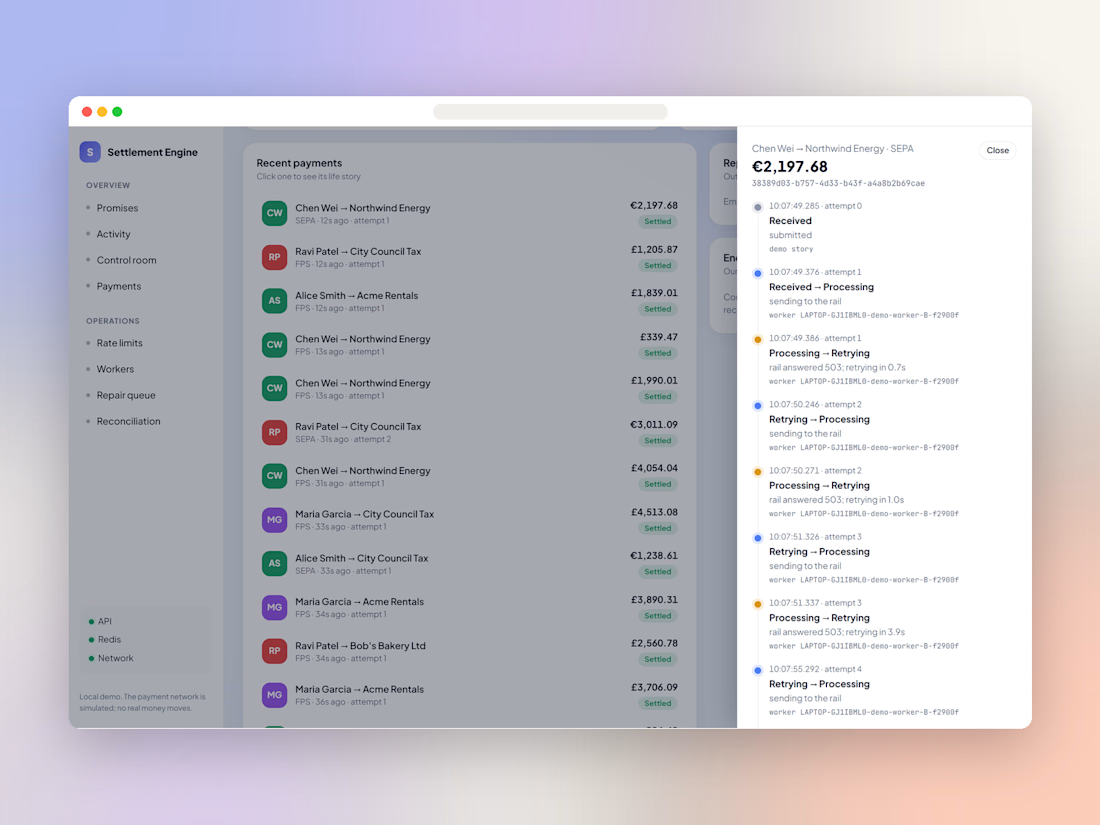
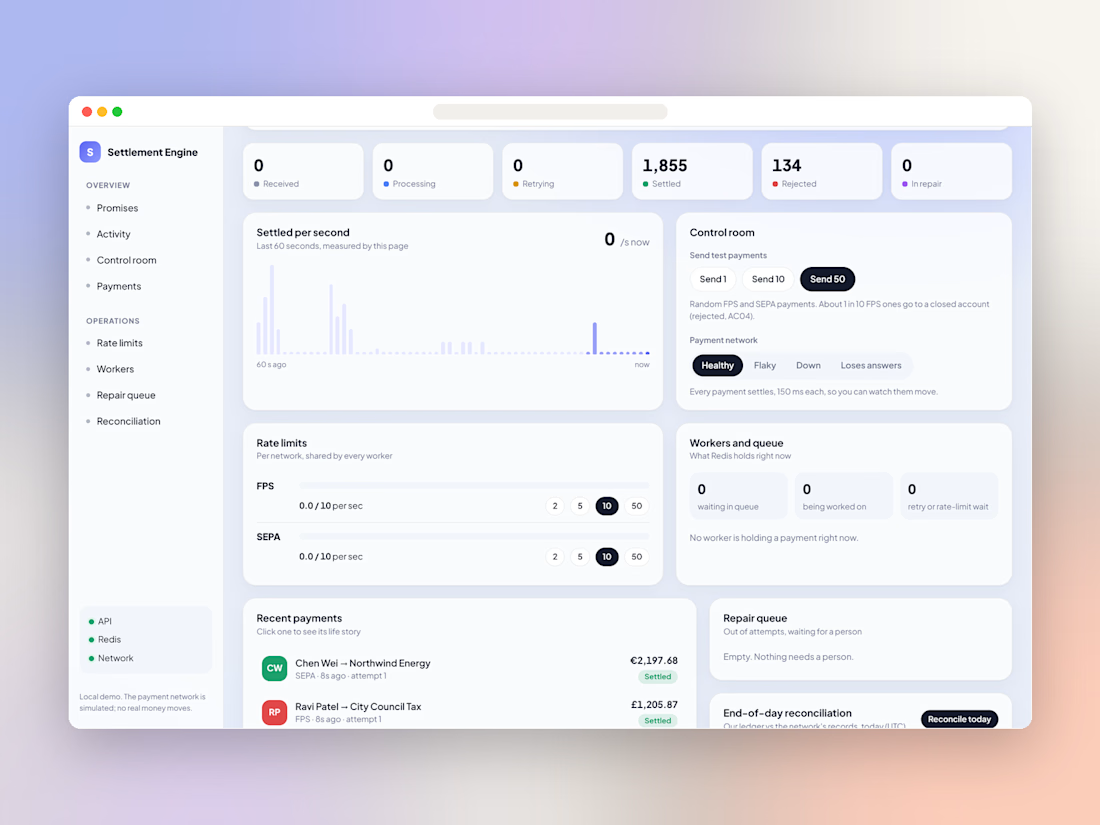
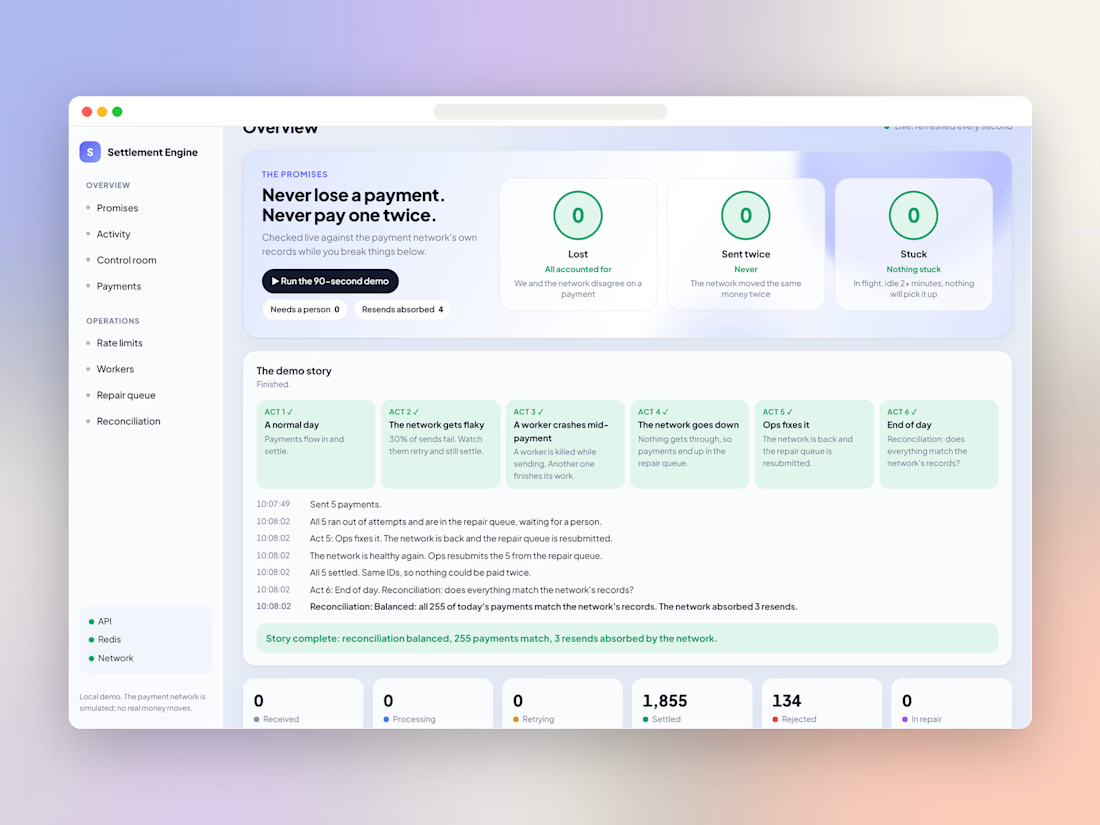
A real-time dashboard I designed and built for a payment system, so a team can see at a glance that no payment is lost or paid twice, even while things go wrong.
Design highlights
A “promises” scoreboard: three big rings (Lost, Sent twice, Stuck) that stay green at 0
A one-click, 90-second demo that plays a story on the live system: the network gets flaky, a worker crashes mid-payment, the network goes down, the team fixes it, and the day ends balanced
A life story for every payment: click any payment to see each retry, who handled it and why
Live charts and a control room to break the network on purpose and watch the system recover
End-of-day reconciliation in one click, checked against the payment network’s own records
Not a mock-up: it’s connected to a working payment engine I also built (Python, FastAPI, PostgreSQL, Redis), so every number on screen is real.
Built with: HTML, CSS and JavaScript, no framework.
🔗 Code: github.com/annastudios/settlement-engine
#DashboardDesign #UIDesign #DataVisualization #Fintech #WebApp #UXDesign #FrontEnd #JavaScript #SaaS #ProductDesign



A self-initiated concept exploring how landlords could manage rent, maintenance, vacancies, and applicants in one connected workspace.
Property management can become a string of small follow-ups: checking rent, chasing a repair, listing a vacant unit, or trying to keep applicant details organized. I wanted to explore what that work might feel like if the pieces lived in one place and if the next useful action was easier to spot.
I started with the brand identity. I developed the visual direction and designed the product experience in Figma before bringing the concept to life in Base44. That gave me a chance to think through the product as a complete experience, from its first impression to the workflows behind the interface.
Landlord HQ brings portfolio signals into one view: rent collected, overdue balances, occupancy, and active leads. A “Needs your attention” section surfaces overdue rent, maintenance, vacancies, and the next rent cycle, while the rent ledger keeps each unit’s status in view.
The Tenant Portal gives renters a place to check their lease and balance, view payment history, and report maintenance issues. On the landlord side, maintenance requests are AI-triaged with a suggested priority and next step.
I also wanted the product to connect vacancy to leasing. Available units appear in a public showcase with AI-assisted listing copy. When someone applies, their income is compared with a 3× rent benchmark, and the lead is organized in a CRM pipeline: New Inquiry, Pre-Qualified Viewing, or Guarantor Required.
The goal wasn’t to add more information to a dashboard. It was to make the rental workflow feel more connected—from the first rent cycle through the next tenant.
Plotvera is a self-initiated concept project with sample data. The public demo’s payment flow is simulated; no money moves, and live reminder-email delivery is turned off.
Explore the live app: Plotvera
If you’re working on a SaaS product and want its identity and product experience to feel like parts of the same system, I’d be happy to talk.

