The network for creativity
Join 1.25M professional creatives like you
Connect with clients, get discovered, and run your business 100% commission-free
Creatives on Contra have earned over $150M and we are just getting started
Back to feedPost

Most Amazon sellers are obsessed with ACoS.
But ACoS alone is lying to you.
Here's what I learned after managing £2M+ in Amazon UK sales in 2025:
Two campaigns can have the exact same ACoS.
One is profitable. One is bleeding money.
The difference? ROAS at the ASIN level — not the account level.
Here's the framework I use:
𝟭. Segment by margin, not just by category
A product with 60% margin and 3x ROAS is more profitable than a product with 25% margin and 5x ROAS. Always map ROAS targets back to actual margin per ASIN.
𝟮. Kill the 'portfolio averaging' trap
High-ROAS hero ASINs often mask 6-8 underperforming ones in the same campaign. Isolate them. Let heroes scale. Cut the dead weight.
𝟯. Bid by intent stage, not just match type
Broad match for discovery. Exact match for conversion. Most accounts I've audited have these budgets completely reversed.
𝟰. ROAS floors, not ROAS targets
A target creates anxiety. A floor creates discipline. Set the minimum acceptable ROAS per product tier and optimise above it — not around it.
Applying this alone helped me improve ROAS while reducing ACoS by 20% — without cutting a single pound of ad spend.
If your ROAS looks fine at account level but margins are shrinking, the problem is almost always in the structure — not the bids.
Happy to break down any of these points further in the comments.
♻️ Repost if this helps someone running Amazon ads today.
#AmazonPPC #AmazonAdvertising #ROAS #SponsoredProducts #AmazonUK #EcommerceGrowth #PPCStrategy #AmazonSeller
The network for creativity
Join 1.25M professional creatives like you
Connect with clients, get discovered, and run your business 100% commission-free
Creatives on Contra have earned over $150M and we are just getting started

Challenges
View all


Related posts

💡 The most profitable 30 minutes of your month? Running the reports nobody wants to open.
I've managed Amazon stores for over three years. The pattern is always the same: sellers track sales and PPC, but ignore the reports where money quietly leaks.
Here's the 5-point audit I run for every client, every 30 days:
Reimbursement Report – Amazon owes you for lost or damaged inventory. Claim it.
Stranded Inventory – unsellable stock still bills storage fees. Fix or remove it.
FBA Fee Preview – dimension errors overcharge you daily. Correct them.
Return Reasons by SKU – your customers are telling you what to fix. Listen.
Inventory Age Report – old stock drains cash. Cut it loose before it costs more.
Time required: 30 minutes. Tools: just Seller Central.
This routine has recovered anywhere from $200 to $2,000+ in a single sitting. No new products. No extra ads. Just plugging leaks that were already there.
The sellers who build this habit stop bleeding money and start compounding their margins. The ones who skip it stay busy and wonder where their profit went.
Which of these five reports will you check this week? And which one have you been avoiding? Let's talk. 👇
#AmazonFBA #ProfitRecovery #FBAAudit #EcommerceTips #AmazonSeller #BusinessHealth

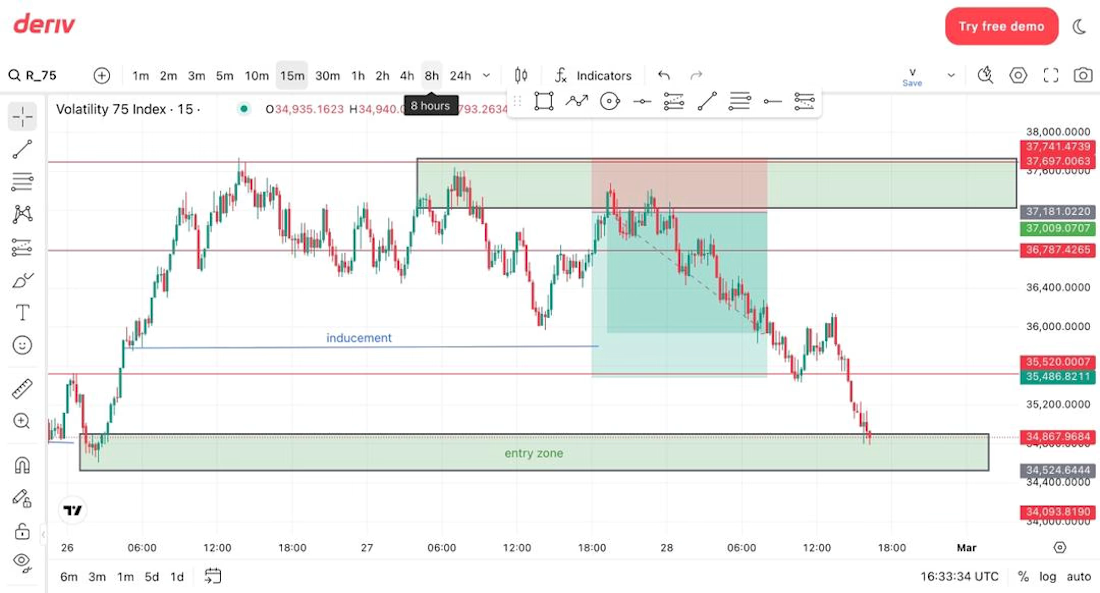
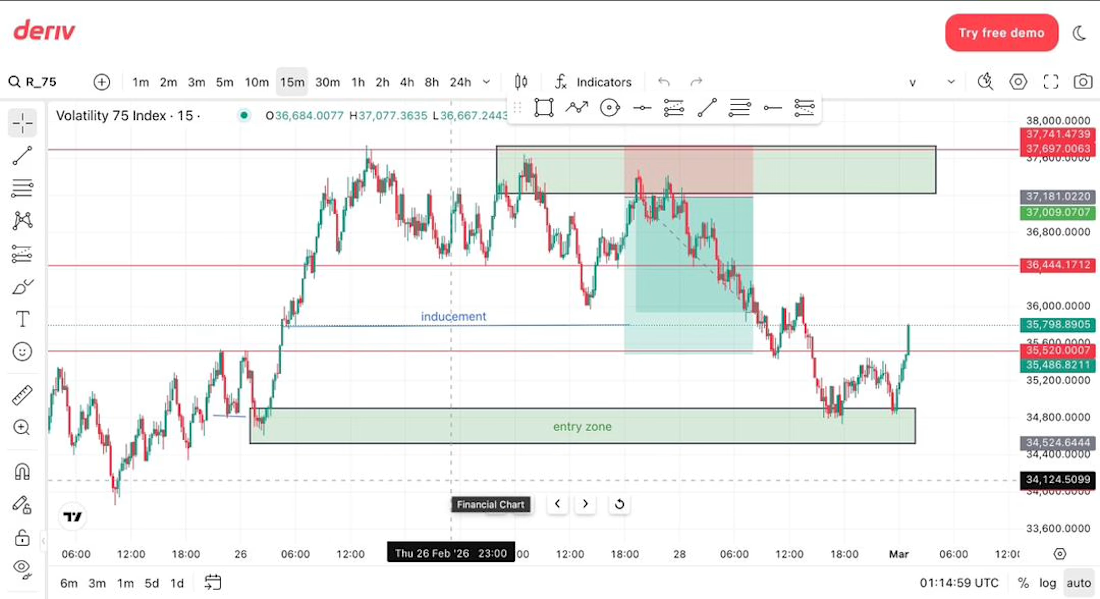
FIRST: Your market structure
SECOND: Current Trend Movement
THIRD: Aoi Map and entry levels ..
Open for collaboration
Inbox 📥

Shopify Analytics will happily tell you revenue and ROAS. It will not tell you if you actually made money after COGS, fees, shipping, returns, and ad spend.
That gap is why I built True Profit Analytics under Reiwa Dev.
You set COGS and costs, import ad spend via CSV, then get a Founder view (P&L waterfall, CM1 to CM2 to net) and an Ads Manager view (POAS and campaign spend). Action cards flag the leaks. You can annotate Shopify Analytics events and export CSV when you need to show someone else the numbers.
Lift adds MCP so Claude, ChatGPT, Cursor, and similar tools can query those Founder and Ads dashboards instead of you screenshotting charts into a chat.
I built it because too many Shopify brands I work with celebrate ROAS while the bank account disagrees. If you only look at top-line vanity metrics, you optimise the wrong thing.
Starts at $12.49/month with a trial. If you run paid ads on Shopify and still argue with your own profit numbers, try it and tell me what is missing.

apps.shopify.com
RWA: True Profit Analytics - True profit after COGS, fees & ads - not vanity... | Shopify App Store
Track true net profit and contribution margin after COGS, fees, and ads. Founder & Ads dashboards, CSV exports, and Lift MCP for AI.