The network for creativity
Join 1.25M professional creatives like you
Connect with clients, get discovered, and run your business 100% commission-free
Creatives on Contra have earned over $150M and we are just getting started
Back to feedPost

During BFCM weekend, the thing that quietly costs brands money isn't usually a big crash — it's small data mismatches that pile up while everyone is busy shipping.
Before I build any automation for a Shopify store, I have them run the same 10-minute morning check I run myself. Three numbers, every morning:
Orders in Shopify vs. charges in your payment gateway. They should match one-to-one. A gap usually means a duplicate charge or an order that never confirmed.
Fulfilled orders vs. actual shipments. The view you want is "paid but not fulfilled" — that is the list that turns into a Monday-morning support ticket.
Refunds and cancellations tracked separately. The moment they get mixed into your normal sales report, your daily revenue numbers stop being trustworthy.
Ten minutes a morning beats spending half the following week reconciling after the fact. No new tools required — just three saved views or a simple spreadsheet.
If anyone is drowning in post-BFCM reconciliation right now, I am happy to help you set up the check. What is the one number that always breaks for you this weekend?


The network for creativity
Join 1.25M professional creatives like you
Connect with clients, get discovered, and run your business 100% commission-free
Creatives on Contra have earned over $150M and we are just getting started



Related posts

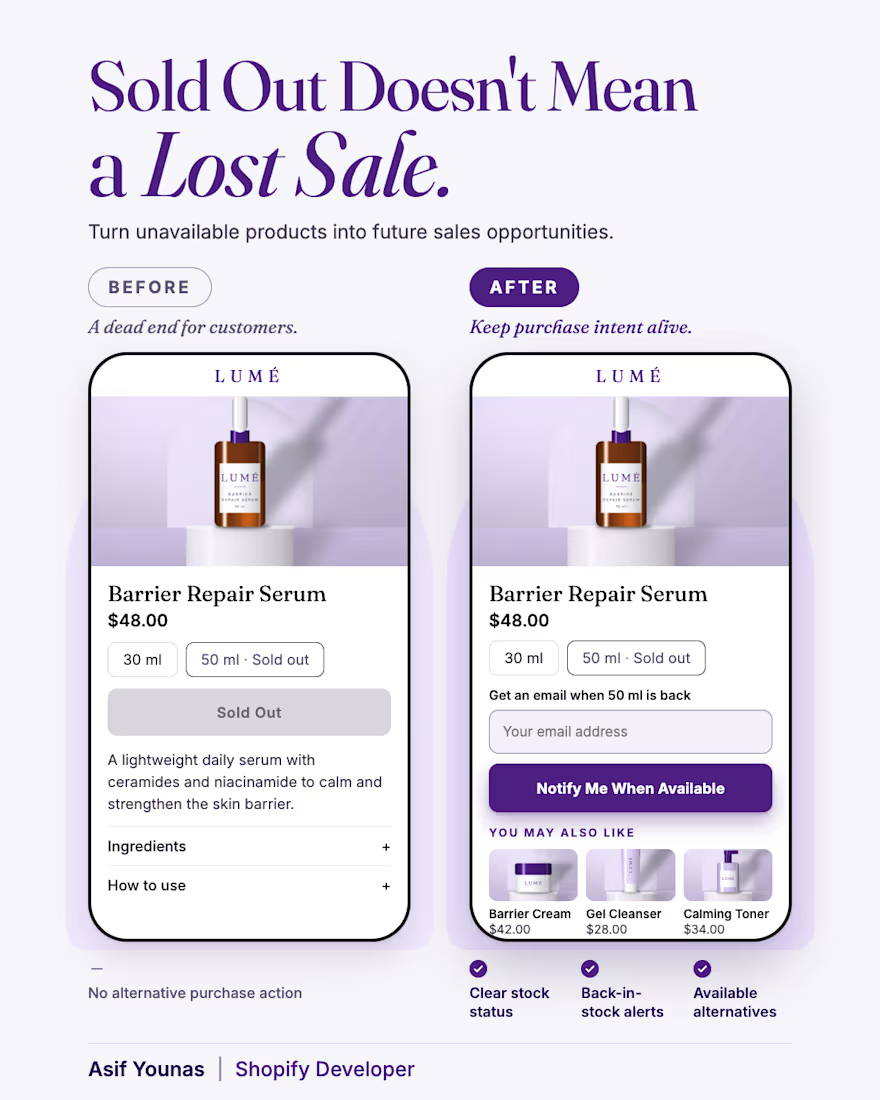
A sold-out product doesn't have to be a lost customer.
Most Shopify stores simply display a disabled "Sold Out" button and leave the customer with nowhere to go.
I'd approach it differently:
• Replace the disabled button with a back-in-stock signup.
• Recommend relevant, available alternatives.
• Clearly distinguish unavailable variants.
• Keep temporarily sold-out product pages accessible.
With custom Liquid, JavaScript and a back-in-stock integration, these experiences can adapt automatically based on product availability.
Good Shopify development isn't just about what happens when everything is working.
It's also about designing for the moments when customers can't buy what they came for.


Minimal design. Maximum impact.
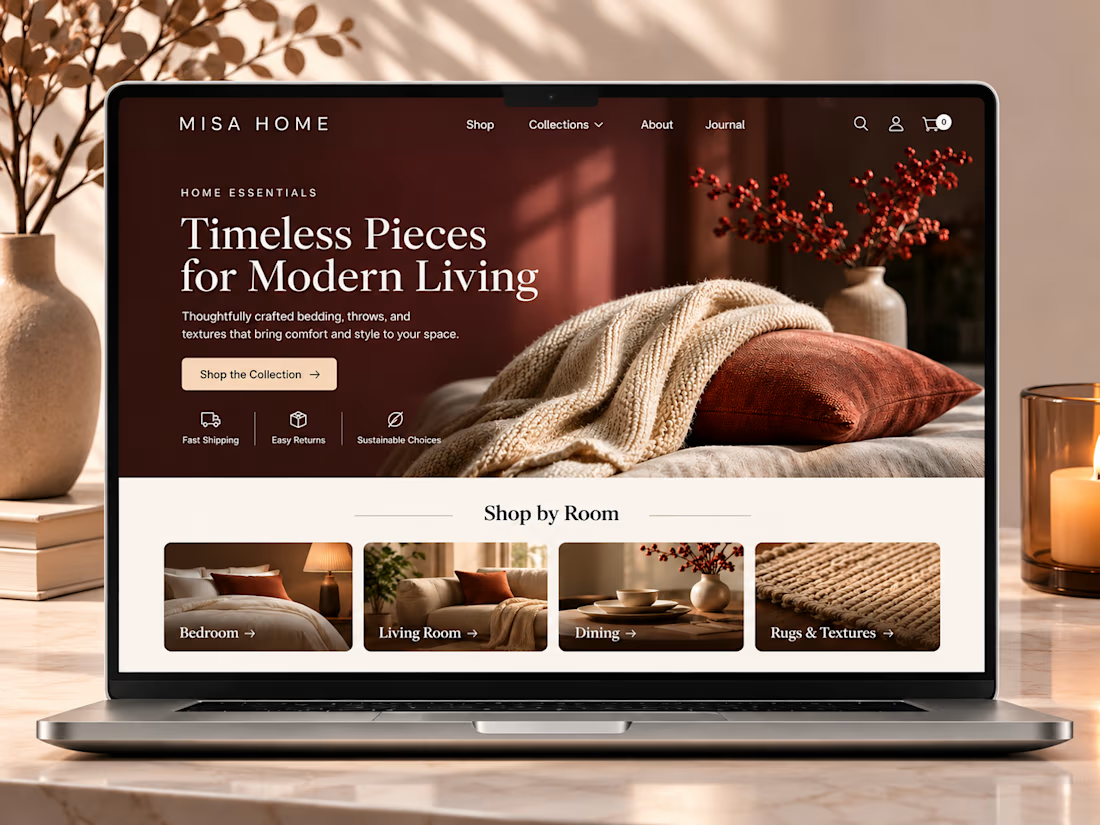
Introducing MISA HOME, a modern e-commerce homepage concept designed to make everyday living feel luxurious.
Featuring warm tones, elegant typography, curated home collections, and intuitive navigation, this design brings together aesthetics and functionality.
Let's hear your thoughts: Would you shop from a store with this kind of design? What would you improve?
#ShopifyDesign #EcommerceDesign #WebDesign #UIDesign #HomeDecor


The creativity is great, but the execution really seals the deal.

Sunfold is a concept apparel store for a fictional California label. I designed it in Figma, then directed the build as a custom Shopify Liquid theme with Claud


That sandy palette feels so California.


