The network for creativity
Join 1.25M professional creatives like you
Connect with clients, get discovered, and run your business 100% commission-free
Creatives on Contra have earned over $150M and we are just getting started
Back to feedPost

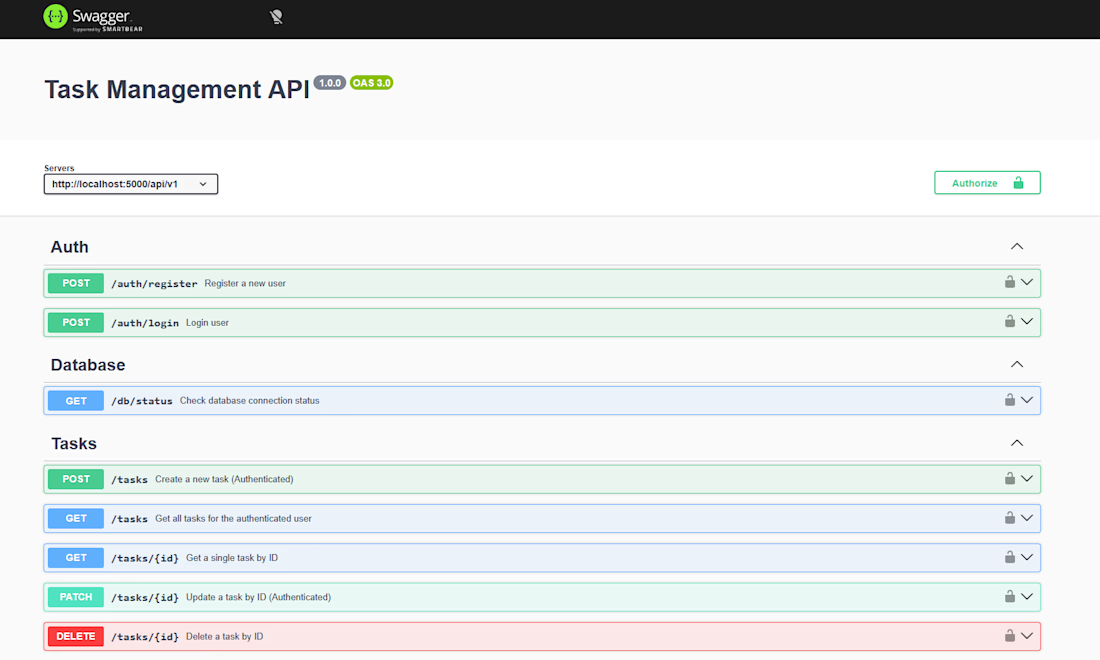
Production-ready Node.js backend API with JWT authentication, task management, PostgreSQL, Prisma, Swagger, and CI/CD


The network for creativity
Join 1.25M professional creatives like you
Connect with clients, get discovered, and run your business 100% commission-free
Creatives on Contra have earned over $150M and we are just getting started





Related posts

Know someone who needs a haircut? 🙋
Send them to TrimsByTracy.com, where they will find the salon of Tracy Turnblad, a solo hairstylist in Baltimore who needed an expert to tame her booking flow the way she tames manes.
I had a lot of fun working on this Proof of Concept, from ideating design system inspiration to working through the nooks and crannies of a hairstylist's booking flow, to figuring out how to succinctly communicate the value added in an overview video.
I also continue to learn each time I build something new with Lovable. This time I was focused on reducing the amount of time spent testing, which is what my "Process" video is about. I hope you'll take a look at that since I personally think what I shared there is very valuable and should be standard to all builders' workflow and possibly considered for productization by Lovable.
Regardless, I hope you enjoy taking a look around TrimsByTracy! All built with care in Lovable.
- Drake
https://trimsbytracy.com/
https://trims-by-tracy.lovable.app
Software DevelopmentUX DesignVisual DesignAdobe Premiere ProFigmalovablechallengeLovablelovablepartners


The delight of booking, Mr. Pinky made me smile.


MessyAPI is a production-ready developer infrastructure platform I built to eliminate repetitive data utility work. It gives developers one API to clean, validate, match, transform, protect, and analyze messy data instead of rebuilding those capabilities for every application.
I designed the platform around real production requirements, including API-key authentication, tenant isolation, usage metering, rate limiting, idempotency, asynchronous jobs, retries, webhooks, observability, and secure data handling.
MessyAPI also includes JavaScript and Python SDKs, OpenAPI, MCP support, CLI tooling, RapidAPI integration, interactive testing, and composable workflows for chaining multiple data operations together.
The goal was simple: turn common data infrastructure developers repeatedly build themselves into one reliable API.


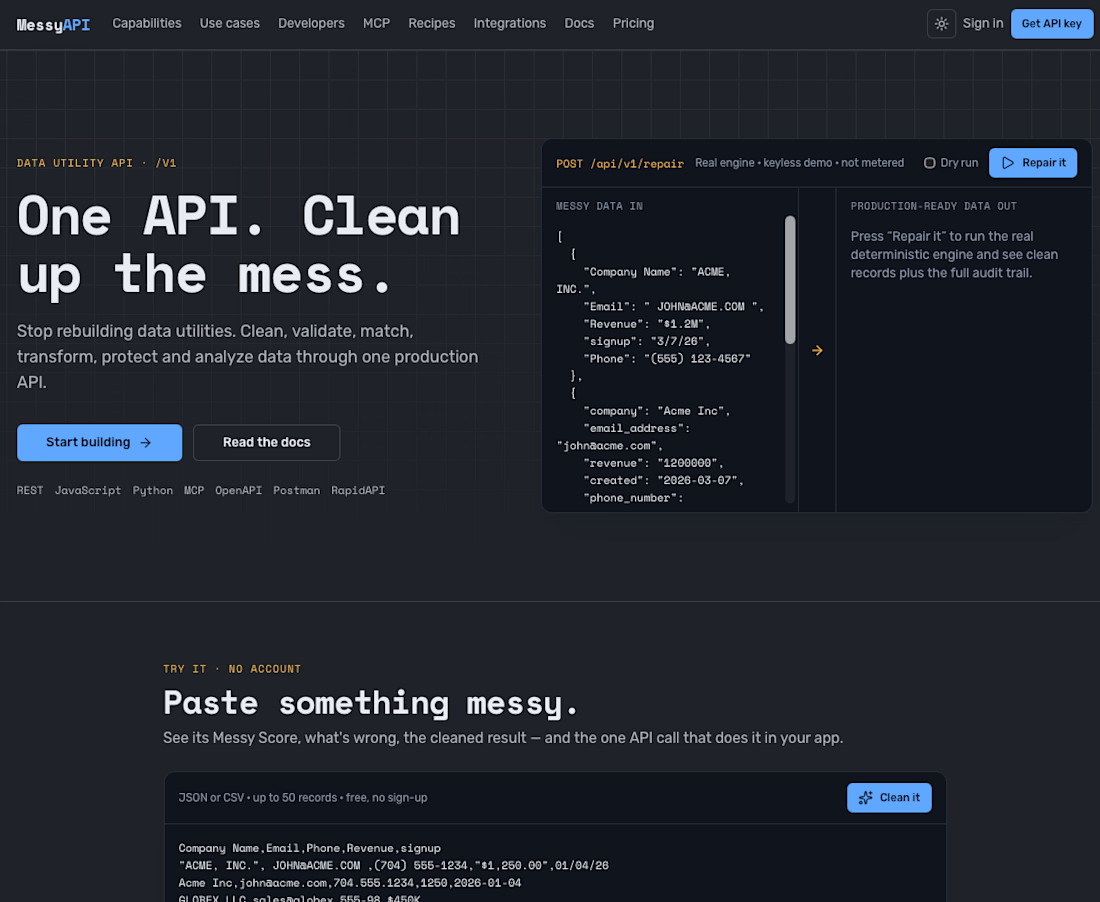

one API for messy data instead of rebuilding it every project is a big win

Problem: Apps need a secure, organized backend to handle users, orders, products and AI features.
Solution: Built a centralized API Gateway (BFF) in n8n Cloud. One webhook handles validation, API key security and rate limiting, then routes to sub-workflows: Users (register/login), Orders (stock check, totals, status), Products (search), and AI (OpenAI chat, recommendations, review summaries). Supabase is the database.
Tools: n8n, Supabase, OpenAI API, Webhooks
Self-initiated demo project.


I'd test authorization separately for each sub-workflow, especially Orders. Does the gateway pass a verified user identity through, or does the Orders workflow check that the caller can access each order?