The network for creativity
Join 1.25M professional creatives like you
Connect with clients, get discovered, and run your business 100% commission-free
Creatives on Contra have earned over $150M and we are just getting started
Back to feedPost

Most software problems are not caused by a missing feature.
They happen because two systems that should work together simply don't.
A recent problem I worked around was exactly that:
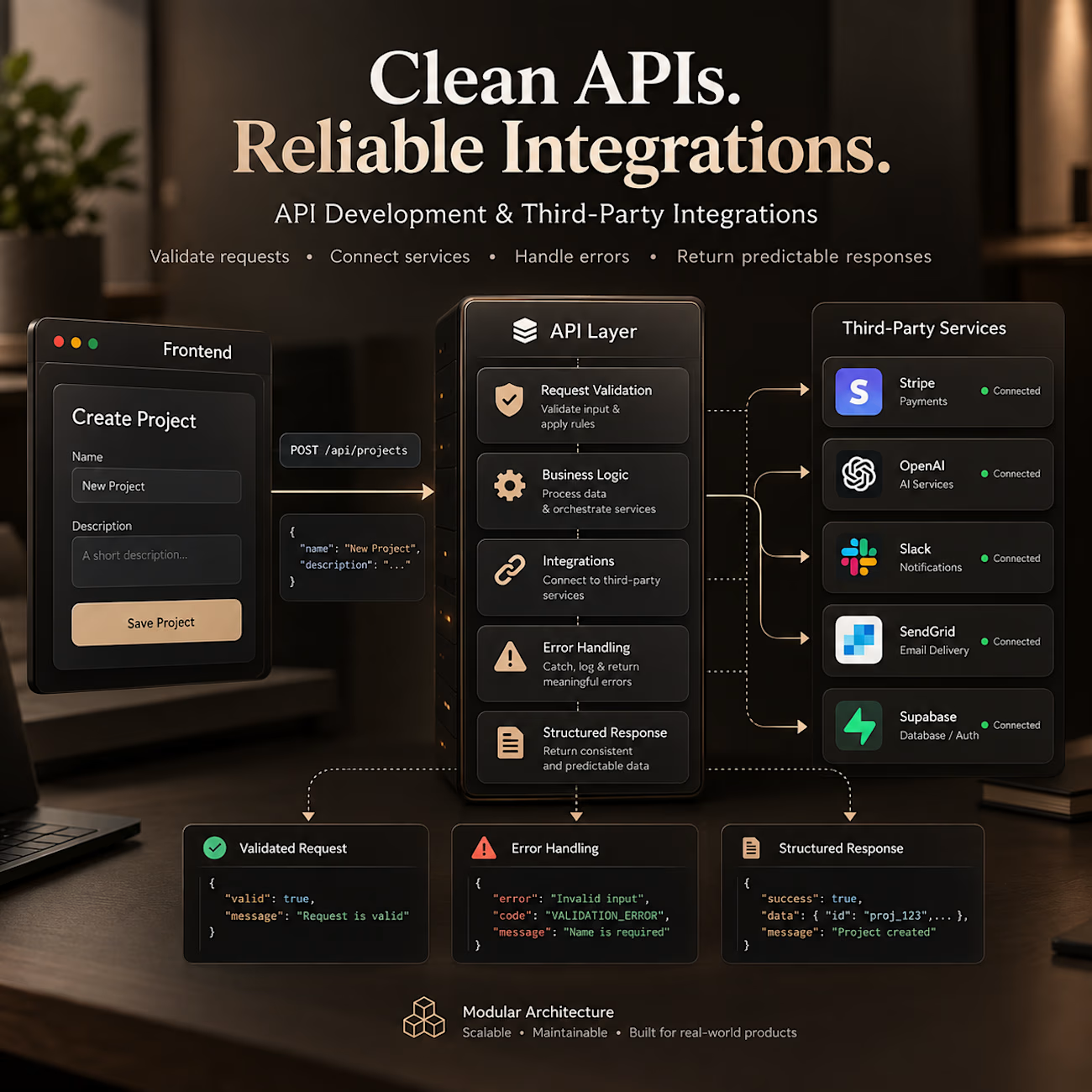
An application needed a clean backend layer that could communicate with external services, validate incoming data, handle failures properly, and return predictable responses to the frontend.
My approach was simple:
• Build a structured API layer
• Validate requests before processing
• Connect the required third-party services
• Handle errors and failed requests properly
• Keep the integration modular so it can be extended later
The goal wasn't just to "make the API work."
It was to make the integration reliable enough that the rest of the application didn't have to worry about what was happening behind it.
That's the type of development work I enjoy most: taking messy backend workflows and turning them into something clean, dependable, and usable.


The network for creativity
Join 1.25M professional creatives like you
Connect with clients, get discovered, and run your business 100% commission-free
Creatives on Contra have earned over $150M and we are just getting started











Related posts

Imagining you book your flight while experiencing
Meet Contrail.
Complex data into beautiful visuals in 3d.
Demo: https://flights-gr8r.vercel.app


Booking a flight with a 3D plane in the search is a fun idea. The dark UI makes the model stand out well.

Built a Conversion-Focused Shopify Store for True Fresh 🧼
Just completed a Shopify store for True Fresh, a brand specializing in washing machine and appliance cleaning products.
The goal was to create a clean, trustworthy storefront that makes it easy for customers to understand the product, see the results, and make a purchase.
What I built:
→ Figma to pixel-perfect Shopify development
→ Mobile-first responsive design
→ Conversion-focused product pages
→ Washing machine cleaning product showcases
→ Before & after cleaning comparisons
→ Product bundles & upsells
→ Customer reviews & social proof
→ FAQ sections to reduce purchase friction
→ Blog integration for SEO
→ Clean, modern UI/UX
→ Performance-focused development
Tech stack:
Shopify • Liquid • HTML/CSS • JavaScript
The store is designed around the product's key selling points: removing buildup and odors, easy monthly maintenance, compatibility with different washer types, and building trust through reviews and product education.
🔗 Live store: https://true-fresh.com/
Looking to build or improve a Shopify store for your brand? Let’s connect.
#Shopify #ShopifyDeveloper #ShopifyStore #Ecommerce #DTC #WebDevelopment #ConversionRateOptimization #Freelance


Trax Omni: Multi-Company Sales CRM + Mobile App, Built From Scratch
THE PROBLEM
Small and growing sales teams run on WhatsApp chats, Instagram DMs, spreadsheets and memory. Leads come from five places, nobody knows who replied to whom, follow-ups are forgotten, and the owner can't see what's actually in the pipeline. Every slow reply is a lost customer.
WHAT WE BUILT
Trax Omni, a complete sales CRM product, designed and built from scratch by UI Trax:
Product website: explains the product, shows industry templates, and lets a business create its own workspace
Today dashboard: total leads, open pipeline, won revenue, win rate and the next actions to take
Leads: source, stage, value, owner and score for every inquiry, with import and filters
Pipeline: drag-and-drop stages from Inquiry to Won, with custom stages
Sales Copilot: ask in plain words ("show my hot leads with no activity for 3 days"); it finds leads and drafts follow-ups, and nothing changes until you confirm
Tasks & follow-ups: open, overdue and completed tasks, so no lead goes cold
Automations: round-robin lead assignment, follow-up tasks and stage-based next steps
Reports & forecast: pipeline distribution, weighted forecast and revenue targets
Team & roles: separate owner, manager and employee views; each person sees only what they should
Campaigns: Meta and TikTok lead campaigns, with their leads brought into the pipeline
Quotes & invoices, WhatsApp inbox and email connected to each lead
Mobile app for iOS & Android with a full English and Urdu interface
HOW IT WAS BUILT
Multi-company setup: each business gets its own private workspace
Backend in Node.js with a PostgreSQL database
Mobile app in React Native (Expo)
Secure sign-in with Google Workspace / Microsoft SSO and MFA
Automated test suites for the backend, the mobile app and the dashboards
STATUS
Built and in final launch testing. The screens show sample data from the interactive preview.


