The network for creativity
Join 1.25M professional creatives like you
Connect with clients, get discovered, and run your business 100% commission-free
Creatives on Contra have earned over $150M and we are just getting started
Back to feedPost

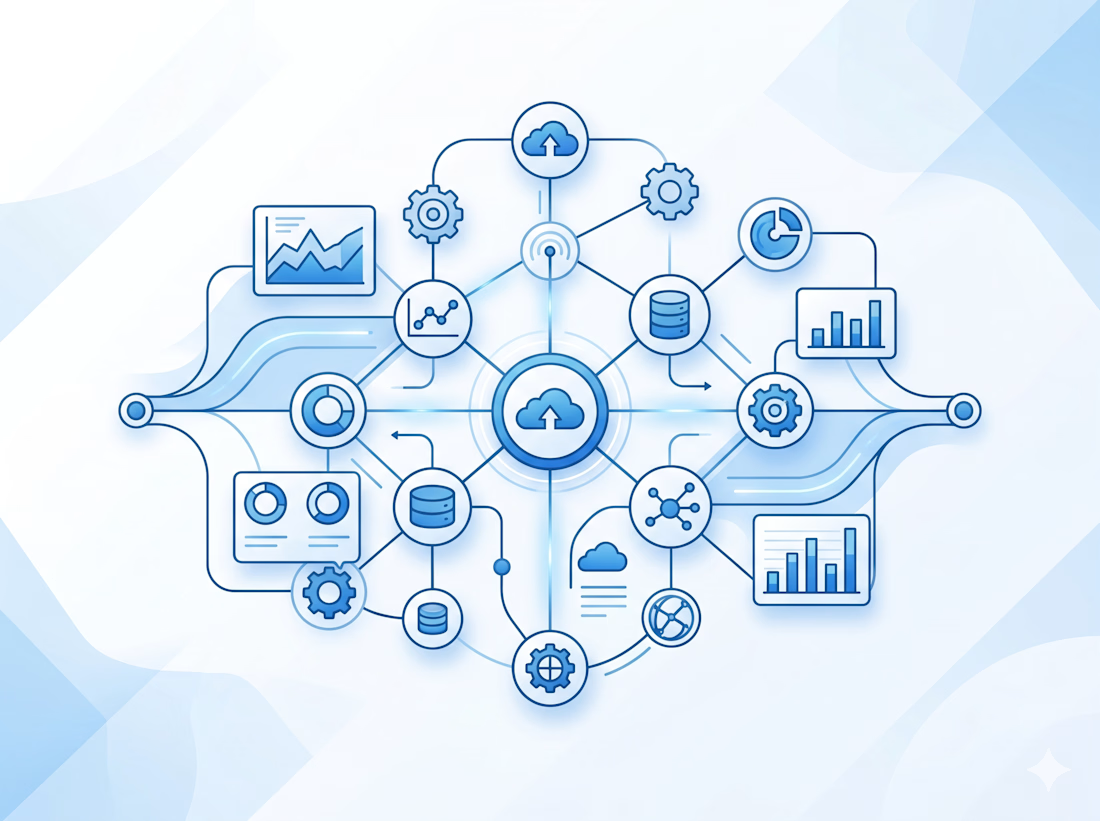
Salesforce System Cleanup & Structural Stabilisation
Restructured an existing Salesforce environment to improve clarity, maintainability, and long-term scalability.
Scope included:
• Cleanup of redundant and conflicting configurations
• Standardisation of object structure and relationships
• Refactoring of inefficient flows and validation rules
• Alignment of system with business workflows
Approach:
• Analysed current setup to identify structural gaps
• Applied standard-first configuration principles
• Simplified automation to reduce complexity
Outcome:
Delivered a clean and stable Salesforce setup that reduced operational issues and improved maintainability.

The network for creativity
Join 1.25M professional creatives like you
Connect with clients, get discovered, and run your business 100% commission-free
Creatives on Contra have earned over $150M and we are just getting started

Challenges
View all


Related posts

Designed a modern Executive Business Dashboard.
Clean and data-driven UI with key metrics (Sales, Revenue, Profit, Retention), performance charts, product insights, and clear analytics for smarter business decisions.
smallbusinessdashboardbusinessdashboardProduct DesignWeb DesignAdobe After EffectsFigmaJitterUI Design


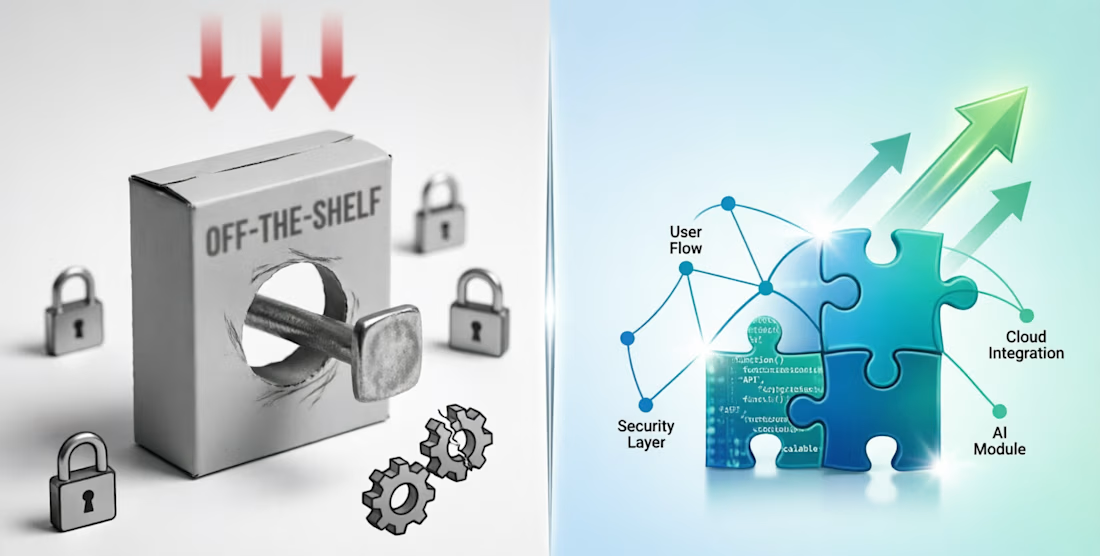
Custom Software Development vs. Off-the-Shelf Solutions: When is a Tailored Approach Justified?
In practice, companies often try to adapt their business processes to the limitations of ready-made software. However, in the long term, it is more effective to tailor technology to business needs, rather than the other way around.
Custom software development means building an IT product to fit a company's specific requirements and workflows.
A tailored solution becomes necessary when a business faces the following challenges:
Specific processes. Unique operational algorithms that cannot be implemented using standard software.
Scaling limitations. Off-the-shelf software fails to handle growing loads, and vendor modifications are no longer cost-effective.
Security and autonomy. A need for full control over the architecture, source code, and data storage.
Complex integration. A requirement to combine fragmented IT systems into a single ecosystem.
Designing and building an IT product from scratch requires time and investment. However, the client ultimately gains independence from third-party licenses and a flexible tool ready for market changes.
I specialize in custom software development: designing architecture, writing clean code, and integrating systems. My goal is to create stable solutions that automate routine tasks and optimize internal processes.
I would love to discuss your experience in the comments: what limitations of off-the-shelf software have you encountered most often?

The honest line is usually integration count, not feature count. Off-the-shelf stays cheaper right up until the business needs its own data shape inside someone else's schema, and from there the cost moves into middleware and reconciliation jobs nobody budgeted. Custom is worth...

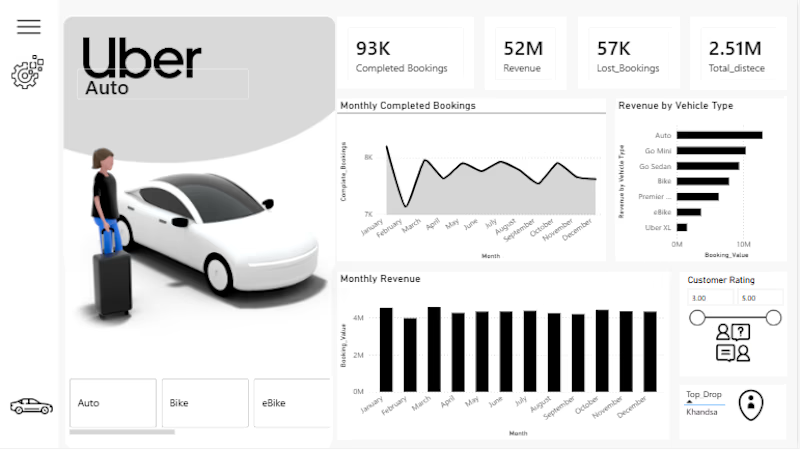
I built an interactive Power BI dashboard to analyze Uber ride bookings, revenue, vehicle performance, and customer ratings.
-The dashboard provides a clear view of:
93K completed bookings
52M revenue
Revenue performance by vehicle type
Monthly booking and revenue trends
Customer ratings
Top drop-off locations
Tools: Power BI, Power Query, DAX, Excel
The goal was to turn raw ride-booking data into an interactive business dashboard that makes performance trends easier to understand and analyze.
Open to freelance data analytics, reporting, and Power BI dashboard projects.