The network for creativity
Join 1.25M professional creatives like you
Connect with clients, get discovered, and run your business 100% commission-free
Creatives on Contra have earned over $150M and we are just getting started
Back to feedPost

Most businesses are not struggling because they lack talent.
They are struggling because they lack systems.
A business without systems usually looks like this:
- Leads come in randomly
- Follow-ups happen inconsistently
- Tasks stay in someone’s head
- Customers get different experiences every time
- Growth feels unpredictable
- Everything depends on the owner
And eventually? The business becomes exhausting to run.
Here’s the truth: Hard work alone does not create scalability.
Systems do.
Because systems create:
- Consistency
- Structure
- Efficiency
- Better customer experiences
- Predictable growth
Most businesses do not need more hustle. They need better operational thinking.
The moment a business moves from “random effort” to “intentional systems,” everything changes.
That is where clarity starts.
Which part of your business currently feels the most chaotic?
The network for creativity
Join 1.25M professional creatives like you
Connect with clients, get discovered, and run your business 100% commission-free
Creatives on Contra have earned over $150M and we are just getting started

Challenges
View all


Related posts

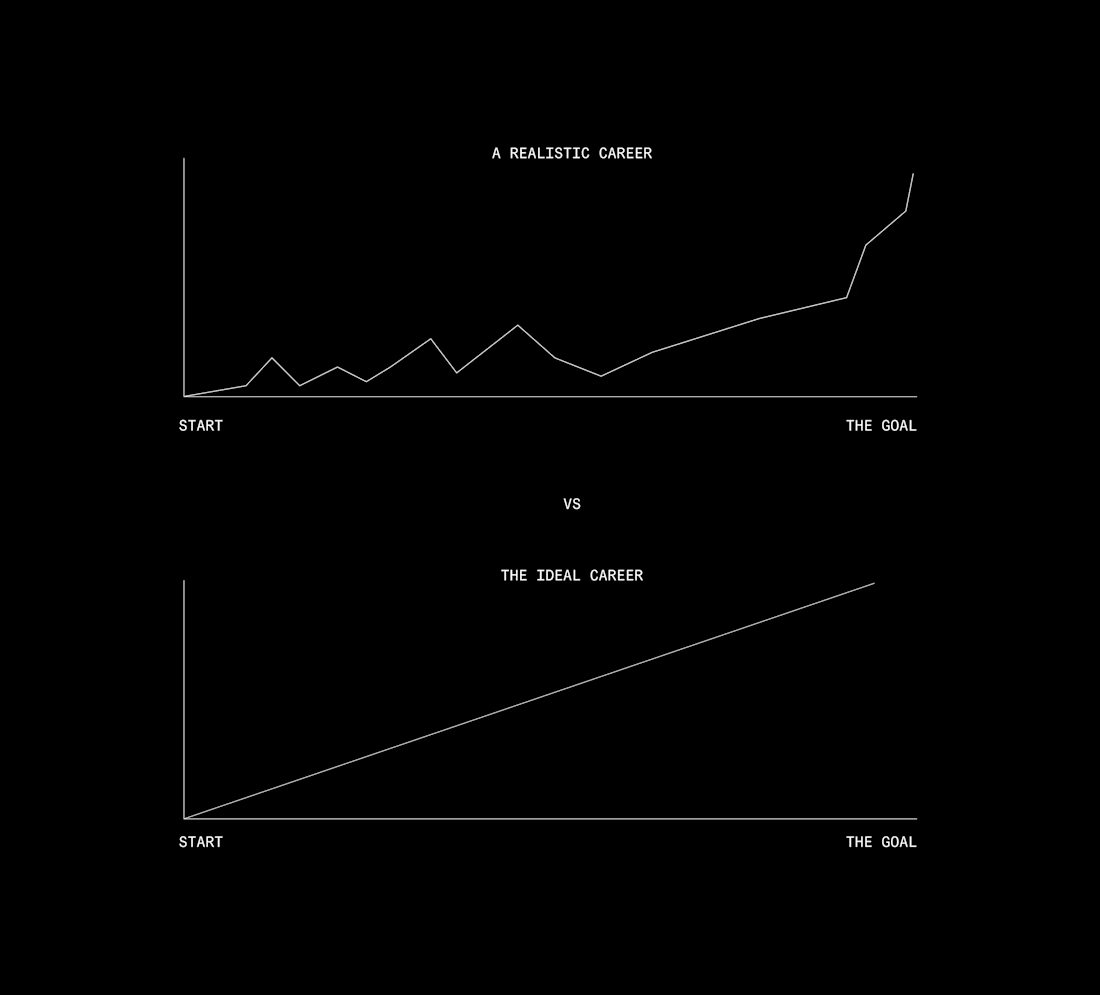
My career as a designer has never been a consistent one.
No straight line. No winning year on year. Honestly, the bumpiest journey imaginable to get where I am.
I started in this industry with a cracked version of Photoshop, running on a PC that would crash with anything I designed.
I once worked for a company on 12k a year and could barely make rent. But I did what I could, because I love what I do.
To anyone expecting perfection in your first year, think twice. Technology lets us get better faster, sure, but you still need the fundamentals of design and business. Without them you're just guessing at what's good, and your clients pay the price.
Take your time. The reality of success is still damn hard work. A social following doesn't pay the way you think it does not unless you know how to sell or create.
If I could give someone a piece of advice, it'd be this: Be patient, Be willing to give more than you take and don't rely on AI to do all the thinking for you.

How long have you been in this industry? Since I started this career, I have been a huge fan of your work. From which design period did you start to show the desired outcome after you joined?


A client shouldn’t have to learn Webflow just to publish their next case study.
On a recent build, I spent a lot of time on the CMS: setting up reusable blocks and the logic that lets the team update content without rebuilding pages.
The tricky part is deciding how much control to give them. Too little, and every update becomes a request. Too much, and they’re suddenly responsible for the layout.
I want them to open the CMS, know what to do, and get on with their day. There’s a fair amount of work behind making that feel simple.


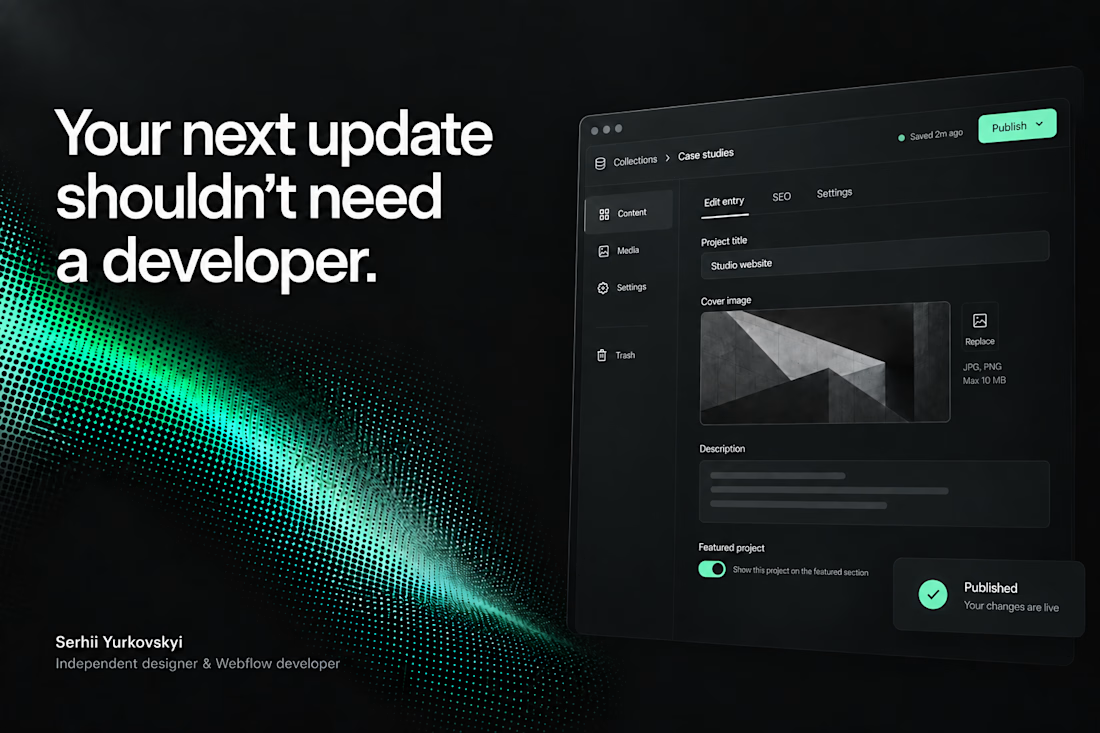

The CMS thinking here is spot on: the best handoff is the one that gives a client confidence without exposing all the complexity underneath.

🤖 Smarter Sales. Stronger Growth. — AI for Modern Business