The network for creativity
Join 1.25M professional creatives like you
Connect with clients, get discovered, and run your business 100% commission-free
Creatives on Contra have earned over $150M and we are just getting started
Back to feedPost

The first thing I decide before building a two-way integration isn’t the API.
It’s this:
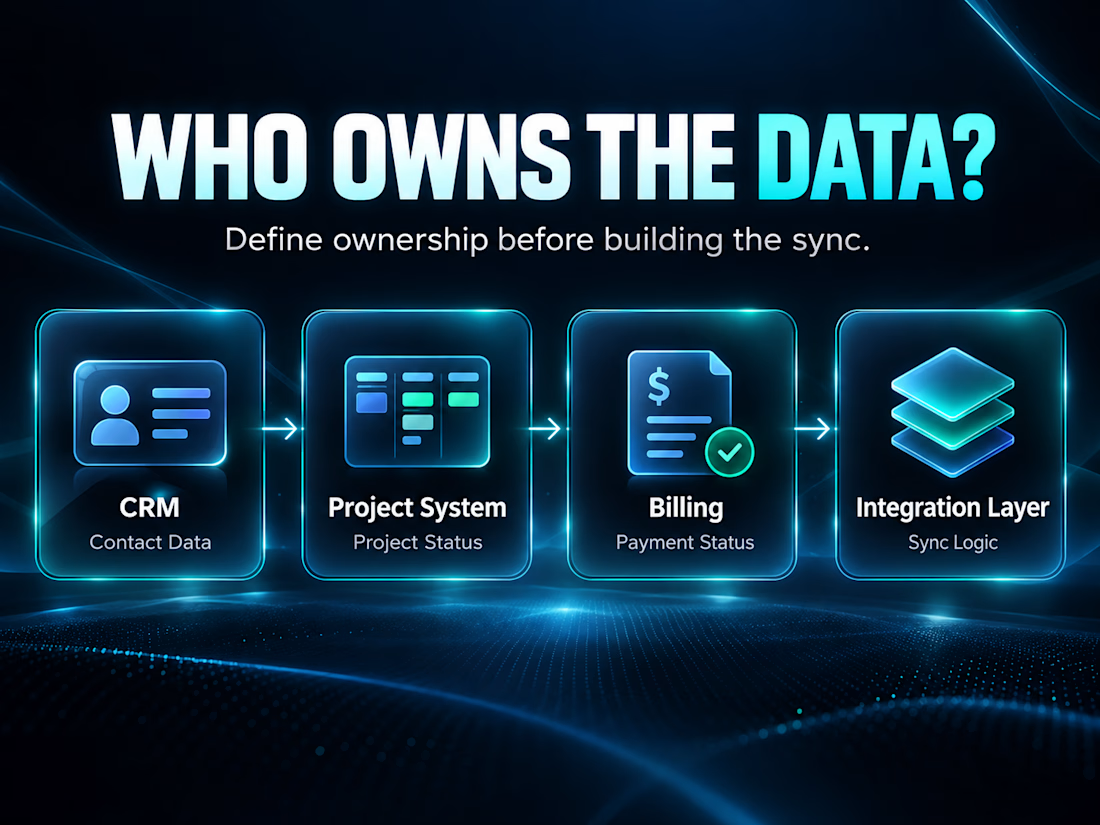
Which system owns each piece of data?
A lot of sync problems start when two platforms are both allowed to update the same field without a clear rule.
For example:
• Contact details → CRM
• Project status → Project management system
• Payment status → Billing platform
• Communication history → CRM
• Sync metadata → Integration layer
Then for every important field, the workflow needs a rule:
Create: when should the record be created?
Update: which system is allowed to overwrite it?
Ignore: which changes should not sync back?
Conflict: what happens when both systems change the same value?
Without those decisions, a “two-way sync” can quickly become:
duplicate records, overwritten data, circular updates, and workflows nobody wants to touch later.
The API connection is usually the easy part.
Defining ownership and sync rules is what makes the integration reliable.
CRM Automation • API Integration • Data Sync • Workflow Architecture • System Integration
The network for creativity
Join 1.25M professional creatives like you
Connect with clients, get discovered, and run your business 100% commission-free
Creatives on Contra have earned over $150M and we are just getting started









Related posts


Just wrapped up this Webflow website project for Offline Insight, a CRM and data consultancy helping businesses simplify disconnected systems and make better use of their customer data.
For this one, I focused on making a technical service feel clear and approachable, cleaner messaging, stronger service structure, responsive layouts, and a smoother path from understanding the problem to booking a consultation.
I really like how the final experience balances technology, strategy, and simplicity.
Curious to hear your thoughts, does the website make a complex service feel easy to understand?
#Webflow #WebDesign #UIDesign #UXDesign #WebDevelopment #B2BWebsite #SaaSDesign #CRM #ResponsiveDesign #PortfolioProject #Contra




Ye le Jani Victor wali post ke liye copy-ready:
This looks genuinely polished, Victor! Making a CRM & data consultancy feel clear and approachable is not easy but you nailed it. Offline Insight website looks super clean and professional in Webflow + Figma. "Level Up Your Performance" hero is strong!

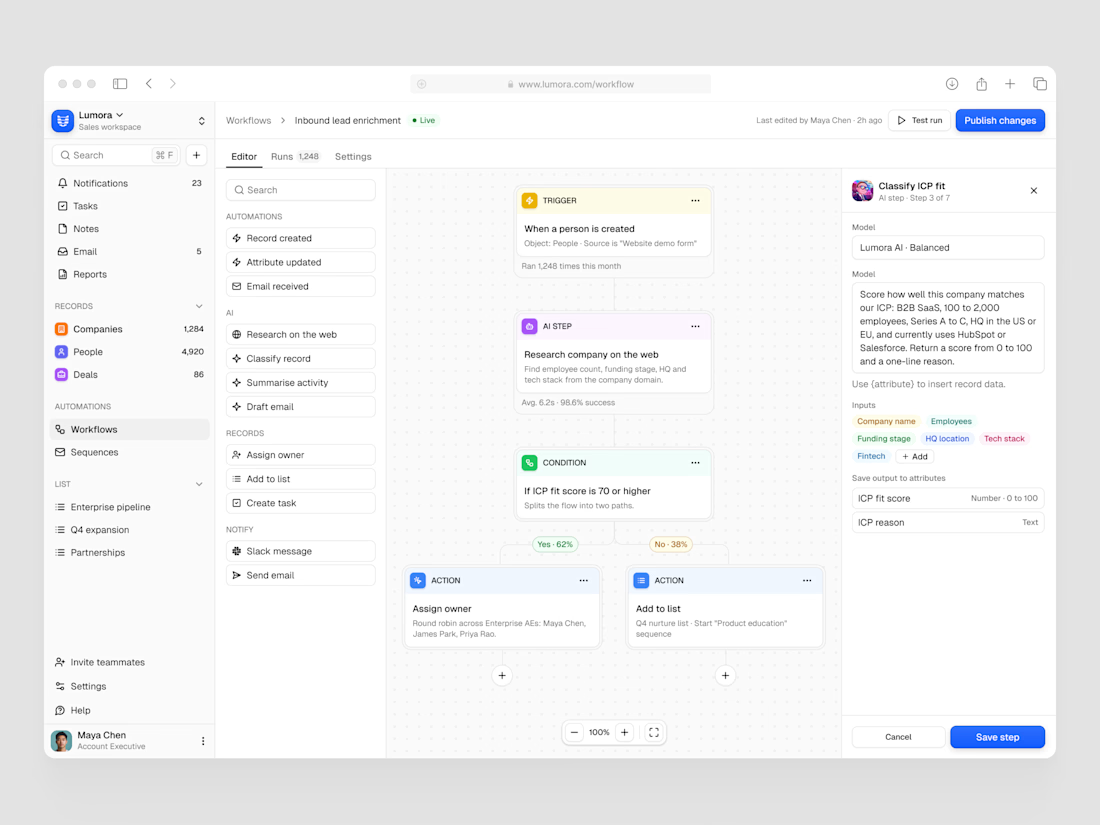
AI-Powered Workflow Automation for Smarter Lead Qualification ⚙️
A workflow automation interface designed to help sales teams research inbound leads, evaluate their fit, and route qualified prospects without manual effort.
Looking for a SaaS product design partner? Let’s build something great together.
📩 connect@extrive.design

Webflow or Framer? Clients ask us this every week. Here's how we decide.
We lean Webflow when:
→ The CMS is large, with many collections and references
→ You need complex filtering and lots of dynamic pages
→ A bigger team will edit the site for years
We lean Framer when:
→ Speed to launch matters most
→ The site is design-led, with a lot of motion
→ Designers want to edit directly on a canvas
Both are excellent. The content model decides, not the hype.
Which one is your team on, and why?


The content model decides, not the hype is exactly right. I love that the decision comes down to who will edit it for years, that is the question clients never think to ask themselves. For most of my projects I lean toward the speed and motion side, but the bigger team argument...