The network for creativity
Join 1.25M professional creatives like you
Connect with clients, get discovered, and run your business 100% commission-free
Creatives on Contra have earned over $150M and we are just getting started
Back to feedPost

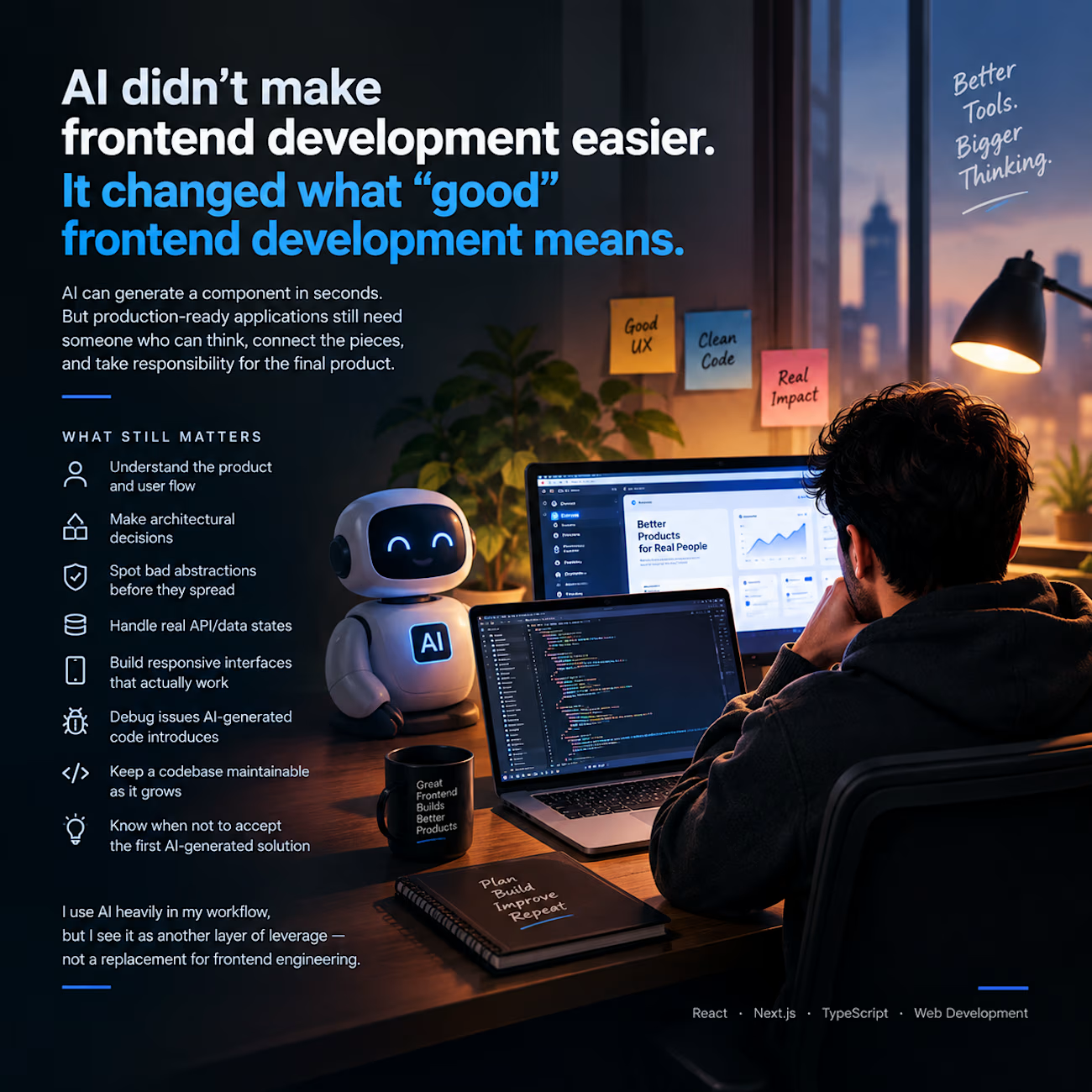
AI didn’t make frontend development easier. It changed what “good” frontend development means.
A few years ago, knowing how to write React components was a competitive advantage.
Today, AI can generate a component in seconds.
So I think the valuable part of frontend development is shifting toward something else:
Knowing what to build, what not to build, and how to make the pieces work together.
AI is great at generating code.
But production applications still need someone who can:
→ Understand the product and user flow
→ Make architectural decisions
→ Spot bad abstractions before they spread
→ Handle real API/data states
→ Build responsive interfaces that actually work
→ Debug problems AI-generated code introduces
→ Keep a codebase maintainable as it grows
→ Know when not to accept the first AI-generated solution
I use AI heavily in my development workflow.
But I don't see it as a replacement for frontend engineering.
I see it as another layer of leverage.
The developers who adapt won't necessarily be the ones who write code the fastest.
They'll be the ones who can think clearly, use AI effectively, and still take responsibility for the final product.
That’s the direction I’m focusing on as a React/Next.js developer.
#AI #FrontendDevelopment #React #Nextjs #SoftwareEngineering #WebDevelopment
The network for creativity
Join 1.25M professional creatives like you
Connect with clients, get discovered, and run your business 100% commission-free
Creatives on Contra have earned over $150M and we are just getting started
Related posts

AI can generate a dashboard. But can it give a product its own identity?
The first design was created by my client using AI a familiar dashboard style you've probably seen across countless AI-generated products.
I redesigned it to feel less generic and more intentional, with a distinctive visual identity, clearer hierarchy, and an experience built around meaningful celebrations.
The goal wasn't just to make it look better. It was to make it feel like its own product.
What do you think is missing from most AI-generated interfaces?
#ProductDesign #UIDesign #AI

5 voted
23%
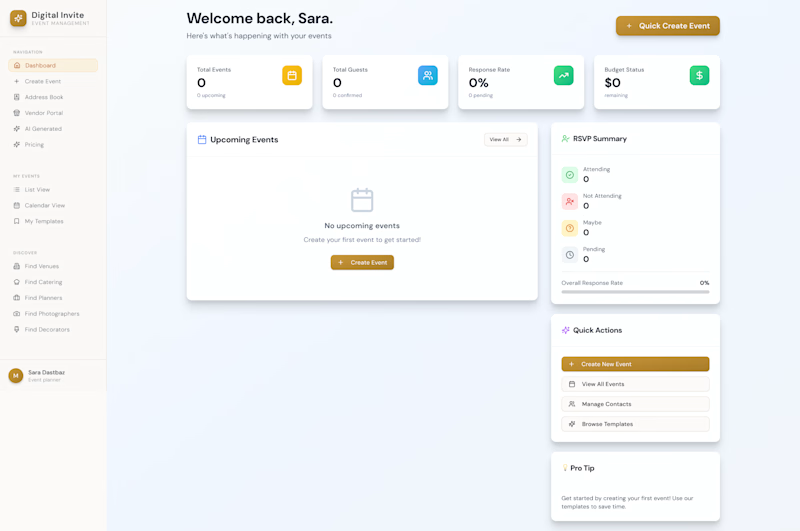
17 voted
77%
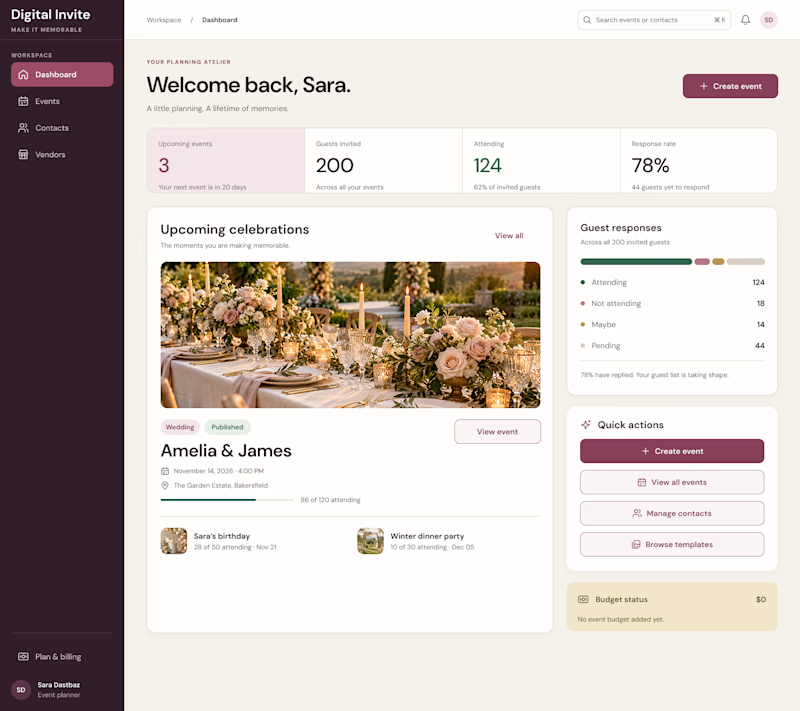
22 votes
Closed

I think personality is what makes a product stand out. A clean design is good, but it should also feel unique and memorable. 👏

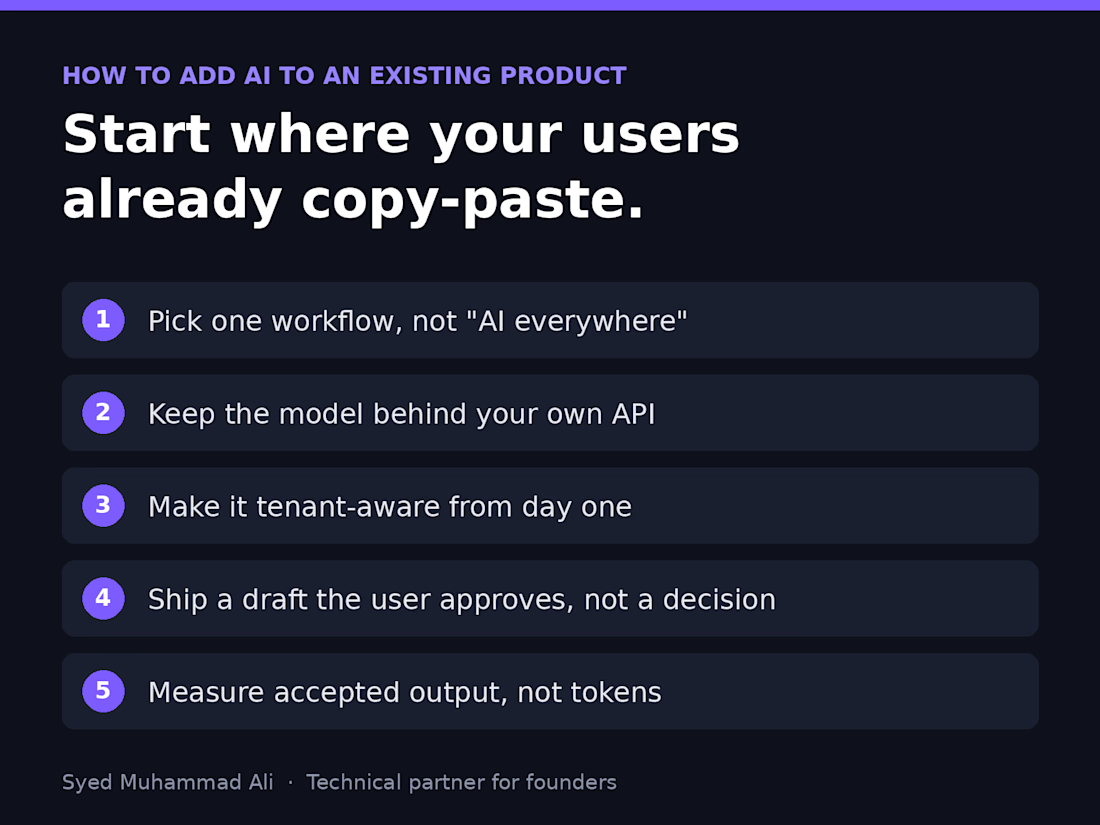
Before you add AI to your product, find the screen where your users already copy and paste.
That's usually where the real AI feature lives. Not a chatbot in the corner, but a step people already do by hand: summarising a ticket, drafting a reply, tagging an upload, pulling fields out of a PDF.
Here's the order I follow when a founder asks me to add AI to an existing SaaS:
1. Pick one workflow, not "AI everywhere." Watch where users leave your app to paste something into ChatGPT and come back. That round trip is your feature.
2. Keep the model behind your own API. One service owns prompts, retries, logging and cost limits, so you can switch providers without touching the frontend.
3. Make it tenant-aware from day one. Each customer's data, prompts and usage stay scoped to their account, or the first enterprise security review will stop you.
4. Ship a draft, not a decision. Let the AI suggest and the user approve. You earn trust and get real feedback before you automate anything.
5. Measure accepted output, not tokens. If users rewrite most of what it produces, the prompt or the context is wrong, and that's your real roadmap.
Most AI features that flop didn't fail because of the model. They were bolted onto the wrong step.
What's the one task your users still copy into ChatGPT?

Watching where users paste into ChatGPT and come back is such a practical way to find the real feature. Most teams start with the chatbot instead.

Blog Listening Web Application With Admin Dashboard.
webdesignappdesignadmindesignBackend DevelopmentFrontend DevelopmentFull Stack DevelopmentExpressJSNext.jsTailwind CSS


