The network for creativity
Join 1.25M professional creatives like you
Connect with clients, get discovered, and run your business 100% commission-free
Creatives on Contra have earned over $150M and we are just getting started
Back to feedPost
AI-Powered B2B Lead Qualification & Outreach System
Role: AI Automation & B2B Growth Specialist
Project Type: Independent System Build
Overview
A structured B2B prospecting and outreach system built to identify high-fit accounts, prioritize the right decision-makers, enrich qualified prospects, personalize outreach, and maintain a clear follow-up pipeline.
The system is designed around a simple principle:
Do not spend time, data, or outreach capacity on prospects that have not earned it.
Instead of treating lead generation as list building, the workflow treats it as a qualification and decision system.
The Business Problem
Many B2B outbound processes become inefficient because prospect discovery, enrichment, qualification, personalization, and follow-up are handled as disconnected activities.
That creates predictable problems:
Large lists with weak ICP alignment
Data enrichment wasted on low-fit accounts
Generic messaging
Poor visibility into prospect priority
Inconsistent follow-up
CRM pipelines filled with contacts rather than opportunities
This system addresses those problems by giving each stage of prospecting a defined purpose.
System Architecture
ICP Definition → Account Discovery → Decision-Maker Identification → Qualification → Enrichment → Prioritization → Personalization → Outreach → Follow-Up → Pipeline Tracking
1. ICP & Targeting Logic
Targeting begins with defined commercial criteria such as:
Industry
Company size
Geography
Business model
Growth stage
Relevant decision-maker
Likely operational or growth problem
Fit with the offer being sold
This prevents prospecting from becoming a volume exercise.
2. Account Discovery
Target companies are identified against the ICP and organized for further evaluation.
The objective is not to create the largest possible list.
The objective is to create a relevant account universe.
3. Decision-Maker Identification
The system maps the offer to the person most likely to own the problem.
Depending on the business, this can include:
Founders
Heads of Growth
Marketing leaders
Sales leaders
Operations leaders
Revenue or GTM decision-makers
4. Qualification & Prioritization
Prospects are evaluated before deeper enrichment using criteria such as:
Account fit
Role relevance
Business need
Observable intent or growth signal
Reason for outreach
Personalization potential
High-priority prospects move forward while weaker records can be removed early.
5. Data Enrichment
Qualified prospects can be enriched through tools such as Apollo and Clay to add useful company, role, and business contact information where available.
Enrichment is treated as a resource to deploy strategically, not something automatically applied to every record.
6. AI-Assisted Research & Personalization
High-priority prospects receive additional company and role context that can support relevant outreach.
Personalization can incorporate:
Company activity
Offer positioning
Public business signals
Role responsibilities
Growth challenges
Market context
Relevant operational gaps
The goal is to answer:
Why this company? Why this person? Why this message?
7. Outreach & Follow-Up Logic
Prospects can move into structured outreach sequences while maintaining the original context behind why they were selected.
Follow-up can be organized around:
Initial outreach
Value-based follow-up
Relevant insight or resource
Opportunity-specific follow-up
Final close-out
8. Pipeline Visibility
The workflow can organize prospects through stages such as:
Identified → Qualified → Enriched → Prioritized → Ready for Outreach → Contacted → Replied → Opportunity → Follow-Up
This provides clearer visibility into where opportunities are being created or lost.
Technology Stack
Apollo — prospect and decision-maker discovery
Clay — enrichment, qualification, and research workflows
AI/LLMs — research assistance and personalization logic
CRM / Google Sheets — pipeline organization and record management
Email infrastructure — outreach and follow-up execution
Automation layer — workflow orchestration and routing
Core Capabilities
B2B prospecting architecture
ICP development
Account qualification
Decision-maker research
Lead scoring and prioritization
Data enrichment
AI-assisted prospect research
Personalized outreach workflows
CRM organization
Follow-up automation
Pipeline tracking
Workflow documentation
Business Outcome
The system creates a more disciplined outbound operation by moving the focus away from lead volume and toward account relevance, qualification, personalization, and pipeline quality.
For B2B teams, agencies, SaaS businesses, and service companies, this approach can provide a stronger foundation for prospecting than disconnected databases, spreadsheets, and generic mass outreach.
I build these systems around the client's ICP, sales process, existing tools, and commercial objectives rather than forcing every business into the same automation template.


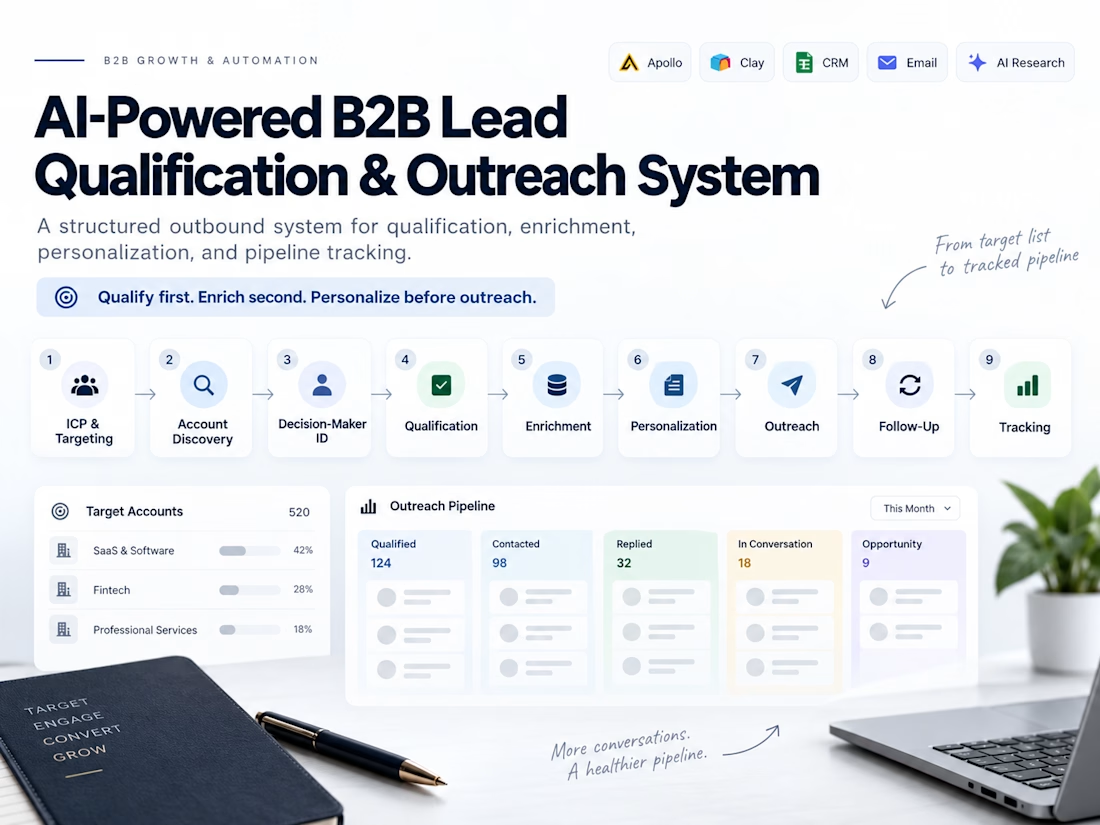

The shift from list building to a qualification decision system caught my eye, making the enrichment step only run on accounts that already meet the ICP seems like an effective way to cut wasted data pulls.

Thanks Johnson, exactly. I wanted qualification to happen before enrichment so the system doesn’t waste data credits and research effort on weak-fit accounts. The idea is to only spend enrichment and personalization resources on prospects that have already earned the next step through ICP fit and relevance.
The network for creativity
Join 1.25M professional creatives like you
Connect with clients, get discovered, and run your business 100% commission-free
Creatives on Contra have earned over $150M and we are just getting started





Related posts

AI Content Automation Pipeline | n8n • ChatGPT • Airtable • Notion
Built an AI-powered content automation system that streamlines content generation, management, and publishing through one connected workflow—reducing repetitive work and improving content production efficiency.
What I Built
AI content generation with ChatGPT / OpenAI API
Automated n8n workflows
Airtable & Google Sheets data automation
Notion draft management and publishing
Custom REST API & webhook integrations
Optimized AI prompt engineering
End-to-end content workflow automation
Tech Stack
n8n • OpenAI API • ChatGPT • Airtable • Notion • Google Sheets • Python • Webhooks • REST APIs
Key Skills
AI Automation • Workflow Automation • Prompt Engineering • API Integration • Content Automation • Database Automation • ChatGPT Integration • n8n Development
SEO Keywords
AI Content Automation • n8n Automation • n8n Developer • ChatGPT Automation • ChatGPT API Integration • OpenAI API Integration • AI Workflow Automation • AI Automation Developer • Content Automation • n8n Workflow Development • OpenAI Automation • Prompt Engineering • API Integration • REST API Integration • Webhook Automation • Airtable Automation • Notion Automation • Google Sheets Automation • Python Automation • Database Automation • Business Process Automation • Marketing Automation • Automated Content Generation • Generative AI • Custom AI Automation • Custom Workflow Development
Result: A scalable AI content pipeline designed to reduce manual work, connect multiple platforms, and make content creation and management faster and easier.
#AIContentAutomation #AIAutomation #n8n #n8nAutomation #ChatGPT #OpenAI #WorkflowAutomation #ContentAutomation #ChatGPTAPI #OpenAIAPI #APIIntegration #PromptEngineering #Airtable #Notion #GoogleSheets #GenerativeAI #BusinessAutomation #AutomationDeveloper #AIDeveloper


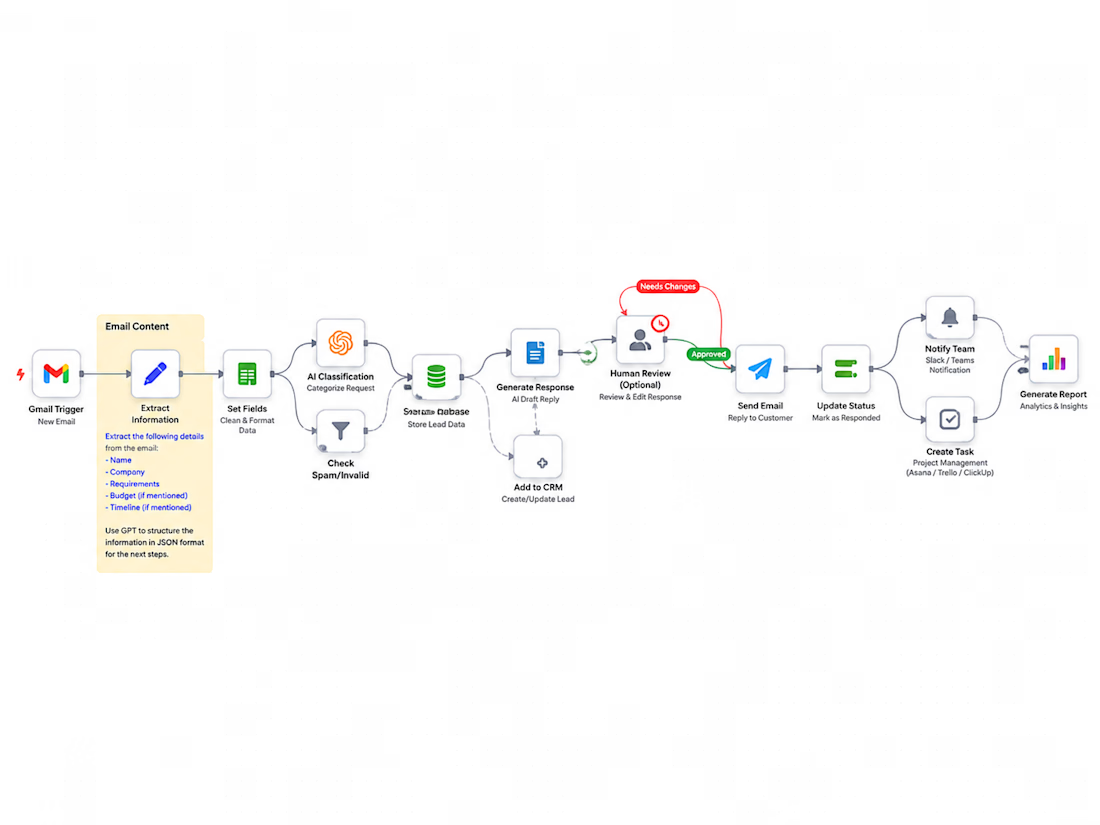
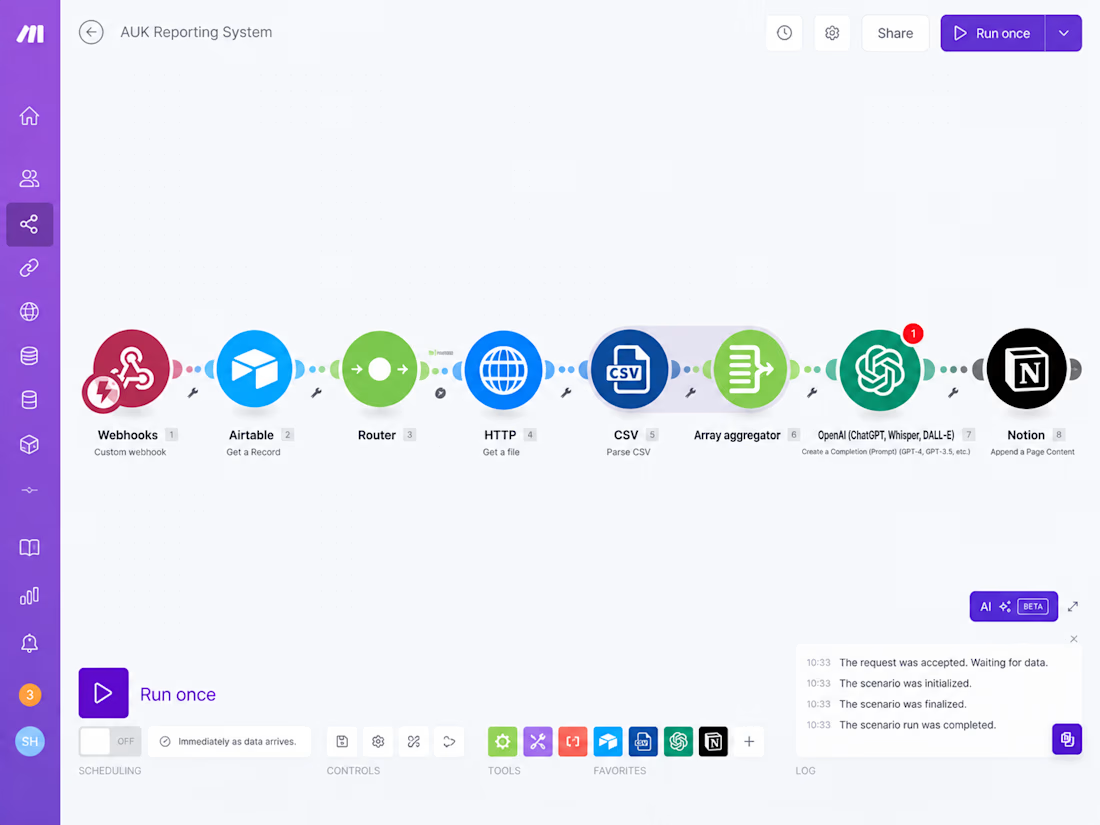
Linking ChatGPT responses to Airtable and Notion in one flow wipes out the manual transfer step. That lets you focus on the creative side instead of data juggling.

"We can't afford a data analyst."
I've heard this from 3 different startups this year.
So I built one.
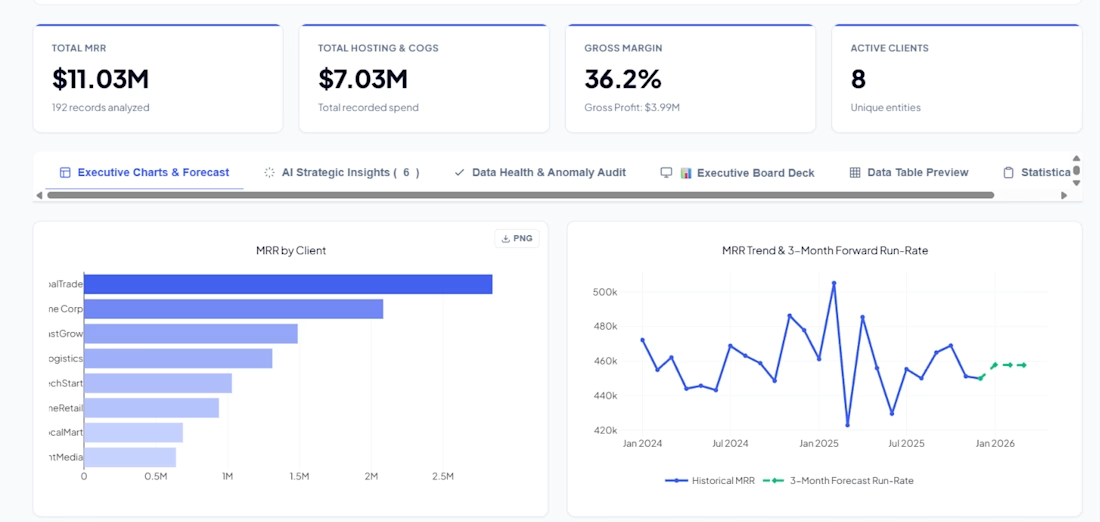
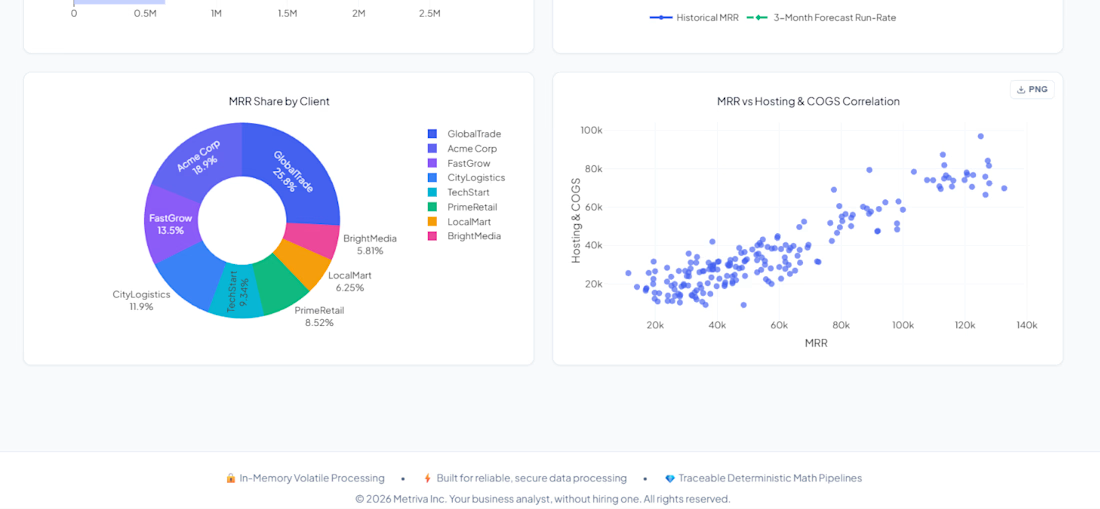
Metriva is an AI-powered business analyst that:
📊 Turns messy spreadsheets into executive dashboards
🧠 Writes C-level business briefs automatically
📈 Forecasts trends + detects anomalies
💬 Answers questions about your data in plain English
🎯 Finds your Pareto 80/20 — who drives 80% of your revenue?
No SQL. No Python. No data team.
Just upload your file and get answers.
Built with Flask, vanilla JS, and a lot of late nights.
🔗 Try it: metriva.ai1.vercel.app
#AI #BusinessIntelligence #Founder #IndieHacker #DataScience
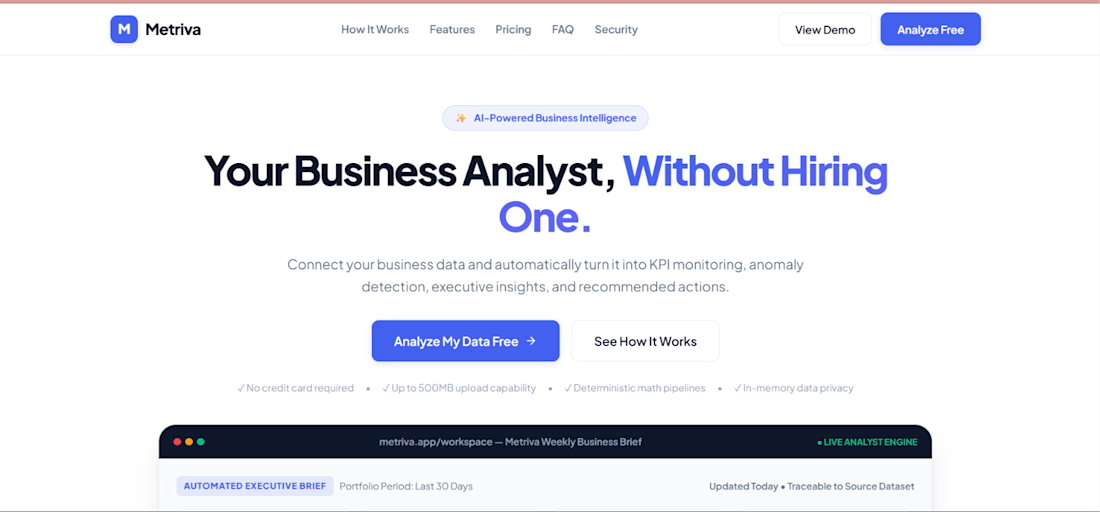

The brief-writing piece is interesting — curious how you handle the validation step. AI-generated language tends to sound confident even when the underlying data is sparse or the trend is ambiguous. One pattern that helps: have the model output a confidence signal alongside the...

I help businesses scale through custom AI engineering services.
This video outlines my services for creating consistent AI characters and cinematic AI ads for brands looking to stand out.
Whether you need a full brand film or specific automation tools, I focus on delivering high-quality assets that align with your business goals.
Every project starts with a clear brief and a strategic approach. If you are unsure where to begin, I suggest starting with an AI audit to identify the best opportunities for automation within your current operations.
Let me know in the comments what kind of content you are trying to produce for your brand.
I like how you kick off with a clear brief and an AI audit to map out the automation opportunities.