The network for creativity
Join 1.25M professional creatives like you
Connect with clients, get discovered, and run your business 100% commission-free
Creatives on Contra have earned over $150M and we are just getting started
Back to feedPost

What actually makes a marketplace complex?
It is rarely the homepage, search screen, or profile design.
The real complexity starts when different users need the platform to behave differently.
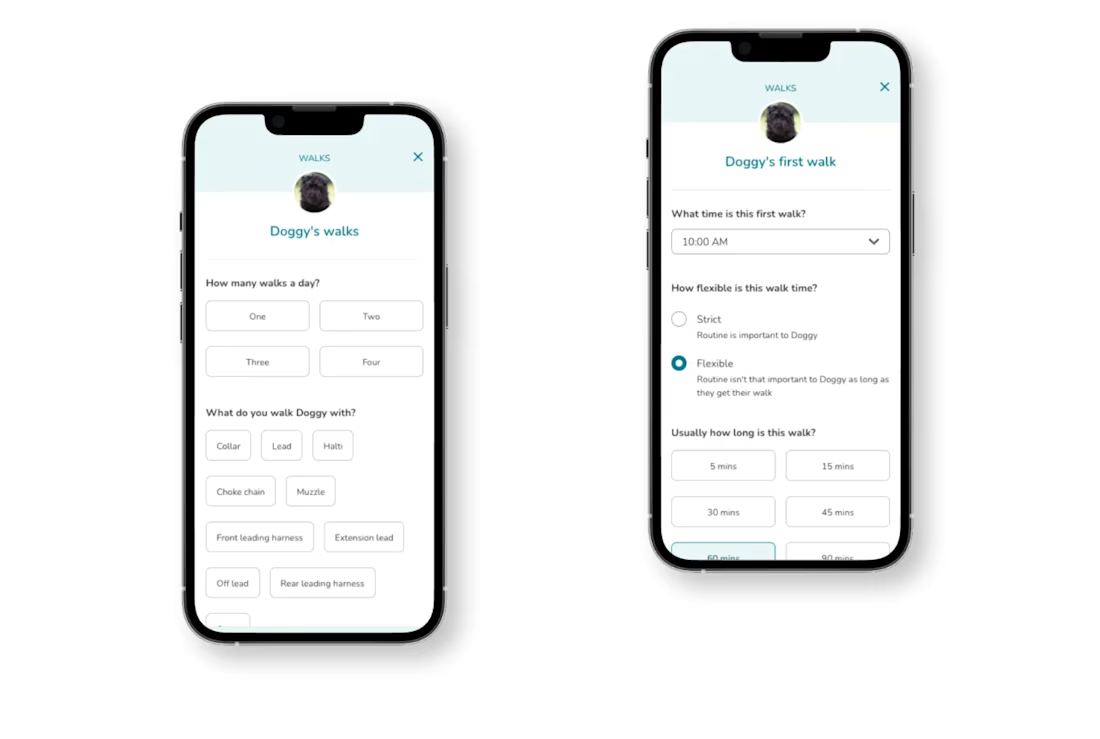
For Mad Paws, that meant connecting pet owners with local pet sitters while supporting:
— separate owner and sitter accounts
— sitter profiles, services and pricing
— location-based search and matching
— availability and booking requests
— payments and booking status changes
— communication between both sides
— reviews and trust signals
— admin tools for managing users, bookings and disputes
Each feature also affects the others.
Availability changes what can be booked.
Pricing affects checkout.
Cancellations affect payments.
User verification affects trust.
Admin workflows affect how quickly problems can be resolved.
That is why a marketplace MVP cannot be planned as a collection of isolated screens. The complete journey—from search to completed booking—needs to work as one connected system.
At A2 Design, we work on both the user-facing experience and the product logic behind it, helping turn complex marketplace ideas into practical, buildable platforms.
What part of a marketplace do you think founders underestimate most: payments, availability, communication, or administration?
The network for creativity
Join 1.25M professional creatives like you
Connect with clients, get discovered, and run your business 100% commission-free
Creatives on Contra have earned over $150M and we are just getting started



Related posts

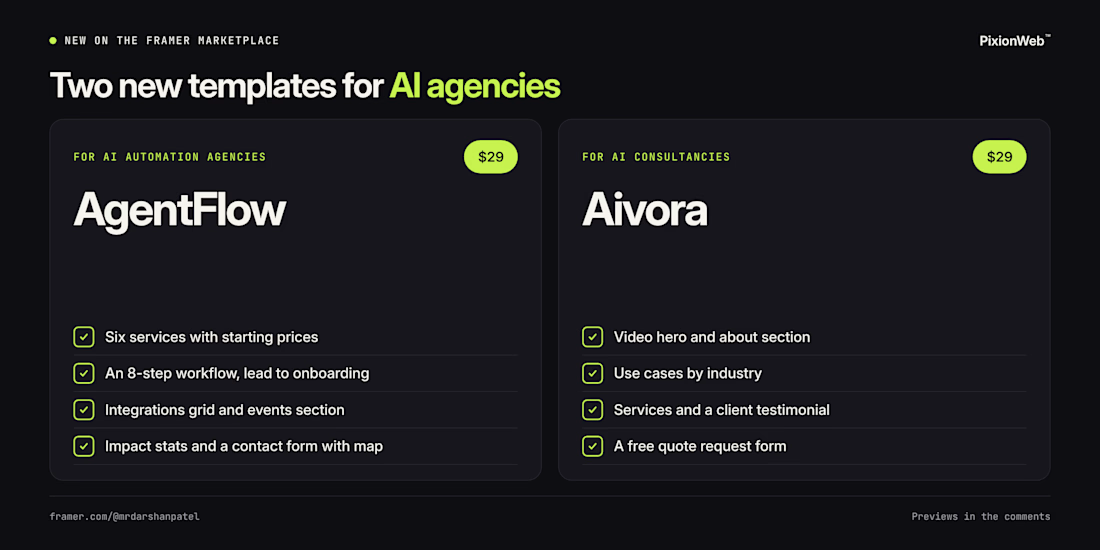
Most AI agency websites explain the technology. Buyers want to know what changes in their business. 🤖
So we built two templates around that:
AgentFlow, for automation agencies: an 8-step workflow from first lead to onboarding, plus services with starting prices.
Aivora, for AI consultancies: one block per industry (healthcare, e-commerce, finance, education), so visitors find their own use case in one scroll.
Both are now on the Framer Marketplace. Previews and links in the first comment.
Which approach would win you more sales calls? 👇



From a sports community running on Instagram, Discord, WhatsApp and Google Sheets to a live gamified product in roughly 4 months.
That's what we helped Padel Underground achieve.
The biggest challenge wasn't designing the app. It was translating an already thriving community into a scalable digital ecosystem without losing what made it successful.
We worked across:
• Gamified player journeys, rankings and progression.
• Rewards, competitive mechanics and referral systems.
• Admin workflows that simplified community management.
• A scalable design system and launch website.
The product also needed to preserve the competitive energy that brought players together in the first place.
When an existing community becomes a digital product, the goal shouldn't be to change how people behave. It should be to make the behaviour that already works easier to scale.
Here's a glimpse of what we built.
https://contra.com/p/mvvFsYYF-padel-underground-gamified-sports-app

Turning a community that already worked into a product without changing how people behave is the hard part. Great approach with the gamified rankings.

Most small business websites don't need more features. They need three things: a clear first sentence saying what you do, a fast page on mobile, and one obvious way to contact you.
I build sites with that order of priorities, and only then add systems, automation or AI where they actually save time.


