The network for creativity
Join 1.25M professional creatives like you
Connect with clients, get discovered, and run your business 100% commission-free
Creatives on Contra have earned over $150M and we are just getting started
Back to feedPost

Stop fighting the operating system.
When building our local AI agent CLI (VYN), we made a radical decision that eliminated 90% of our deployment friction: we completely abandoned native Windows executable support.
Here is why we did it, and what we learned about systems architecture:
The Dream:
We wanted the installation of our Python-based AI agent to be a single, simple curl command. We used PyInstaller to bundle all our packages into standalone .exe files for Linux, macOS, and Windows.
The Brutal Reality of Windows:
Smart App Control and Windows Defender Device Guard have become incredibly hostile to unsigned native executables. Unless you pay a fortune for enterprise-grade EV Code Signing Certificates, Windows simply blocks your .exe from running.
We spent weeks writing complex PowerShell overrides, fighting console encoding bugs (where characters like ✓ turned into unreadable code pages), and patching pathing backslashes ().
We were fighting the operating system instead of building AI.
The Pivot:
We decoupled the monolith. We split our core cognitive engine (Silex) into a headless background daemon running on localhost, and kept the frontend CLI (VYN) open-source.
We standardized strictly on Unix paths (/) and macOS/Linux builds.
For Windows users, we shifted the deployment entirely to Windows Subsystem for Linux (WSL2).
The Results:
By standardizing on a Unix/WSL2 architecture, we eliminated all Windows code-signing restrictions, speeded up our CI/CD pipelines, and forced our system into an environment where standard AI tooling natively thrives.
The lesson?
Systems architecture is rarely determined by theoretical elegance. It is shaped by the brutal reality of deployment friction. Sometimes the best line of code is the one you delete entirely.
I wrote a detailed technical breakdown of this transition and our headless Silex architecture:
https://openyf.dev/blogs/silex-decoupling
#SoftwareEngineering #SystemsArchitecture #DevOps #WSL2 #Python
The network for creativity
Join 1.25M professional creatives like you
Connect with clients, get discovered, and run your business 100% commission-free
Creatives on Contra have earned over $150M and we are just getting started





Related posts


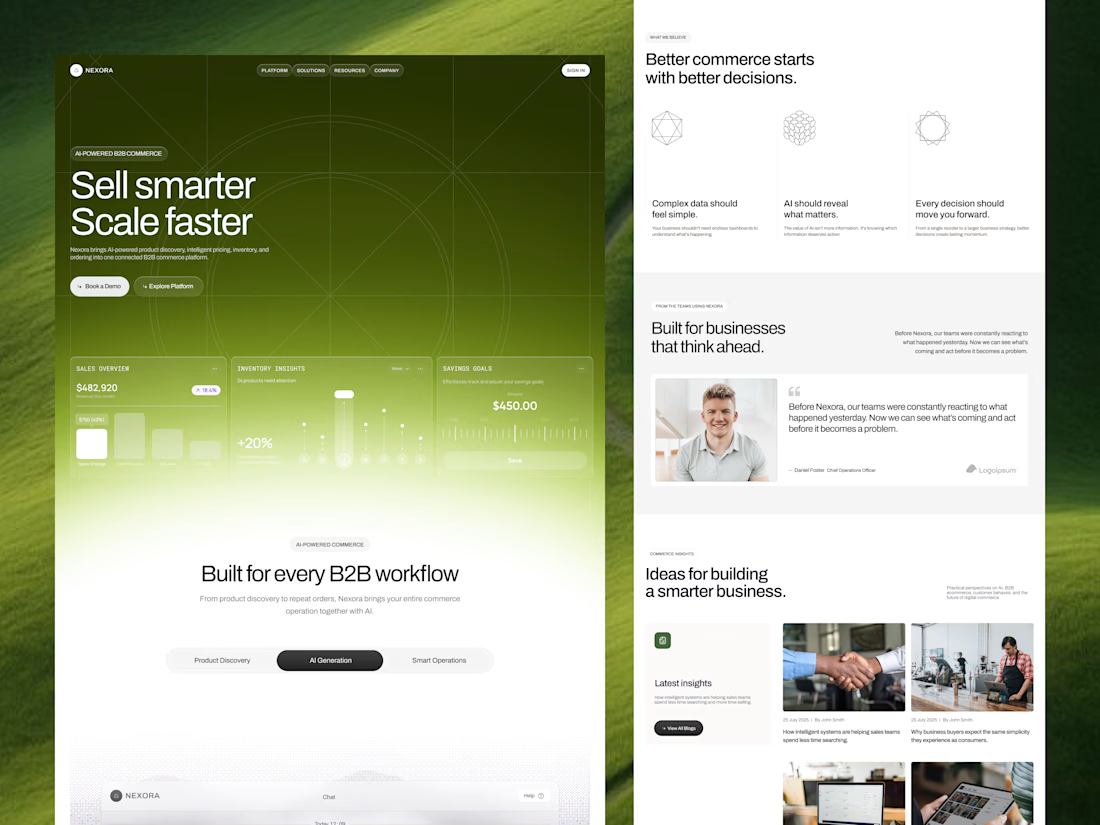
Our goal was to make pricing, inventory and ordering data feel simple and human for an AI-powered B2B commerce platform. We'd love to hear your thoughts!

Engaging background and nice gradient to not make the section look seprate 🔥

Framer skills are fun and useful.
Check out how I create a new page + CMS for this website.
You'll get 5 skills with the template from @Framer Marketplace https://www.framer.com/marketplace/templates/oda/


Bundling the skills with the template is a smart move, feels like you're selling the workflow and not just the layout. Does the agent keep the page consistent with the existing CMS styles on its own, or do you still end up nudging spacing by hand?


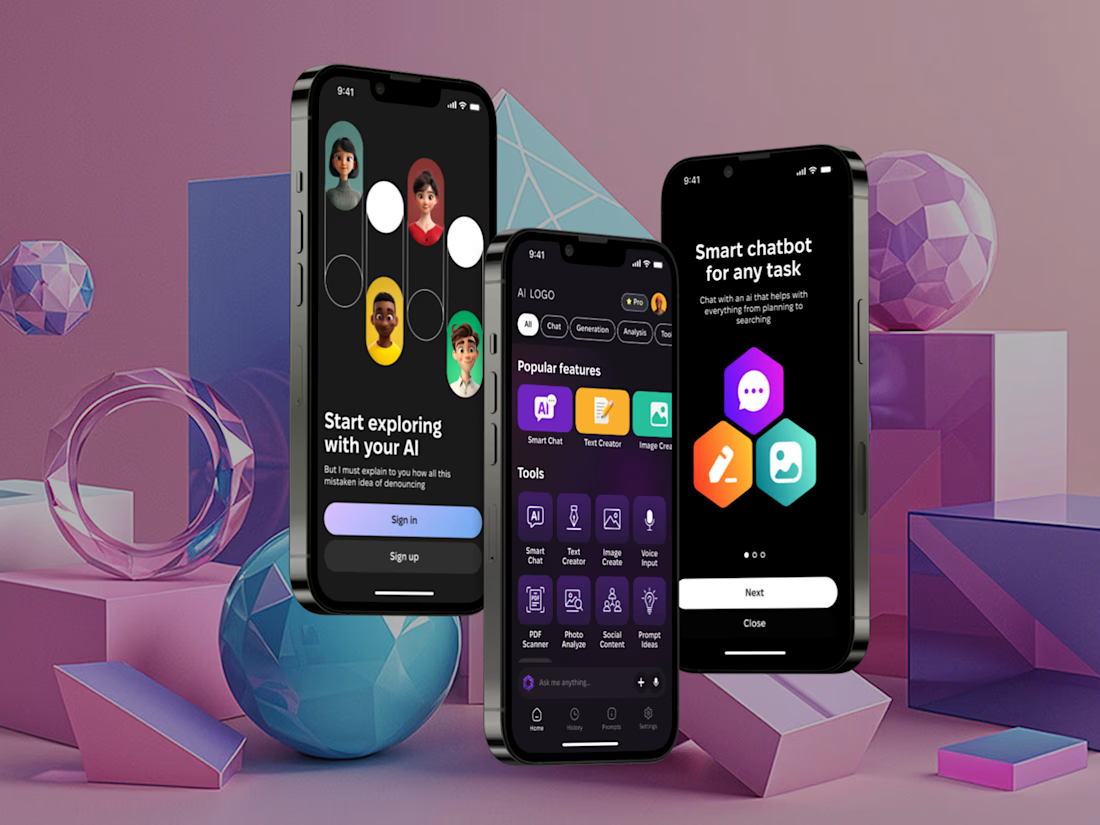
I've built a new mobile AI assistant that brings chat, text and image generation, voice input and document analysis into one app.
It have Smart Chat, Text Creator, Image Create, Voice Input, plus PDF Scanner, Photo Analyze, Social Content and Prompt Ideas, filtered by category.
Almost everything AI can do, just in one place.


Such an amazing tool! Keep going!