The network for creativity
Join 1.25M professional creatives like you
Connect with clients, get discovered, and run your business 100% commission-free
Creatives on Contra have earned over $150M and we are just getting started
Back to feedPost

🧪 Recent QA Insight:
Even “simple” login flows can hide issues:
Too-short password reset links
Missing loading states on slow connections
Mobile keyboard covering buttons
Exploratory testing caught all of them.
Always worth going beyond the checklist.
The network for creativity
Join 1.25M professional creatives like you
Connect with clients, get discovered, and run your business 100% commission-free
Creatives on Contra have earned over $150M and we are just getting started





Related posts

94 tests passed. The feature did nothing.
The check was reading its own log entry, so it passed no matter what the code did.
Since then, I don't trust a test until I've watched it fail:
1. Remove the thing the test guards
2. Run it: it should fail
3. Put it back: it should pass
If step 2 passes, the test is useless.
Across ~1,900 tests on a production platform, this is the habit my client valued most. Do you check that your tests can fail?
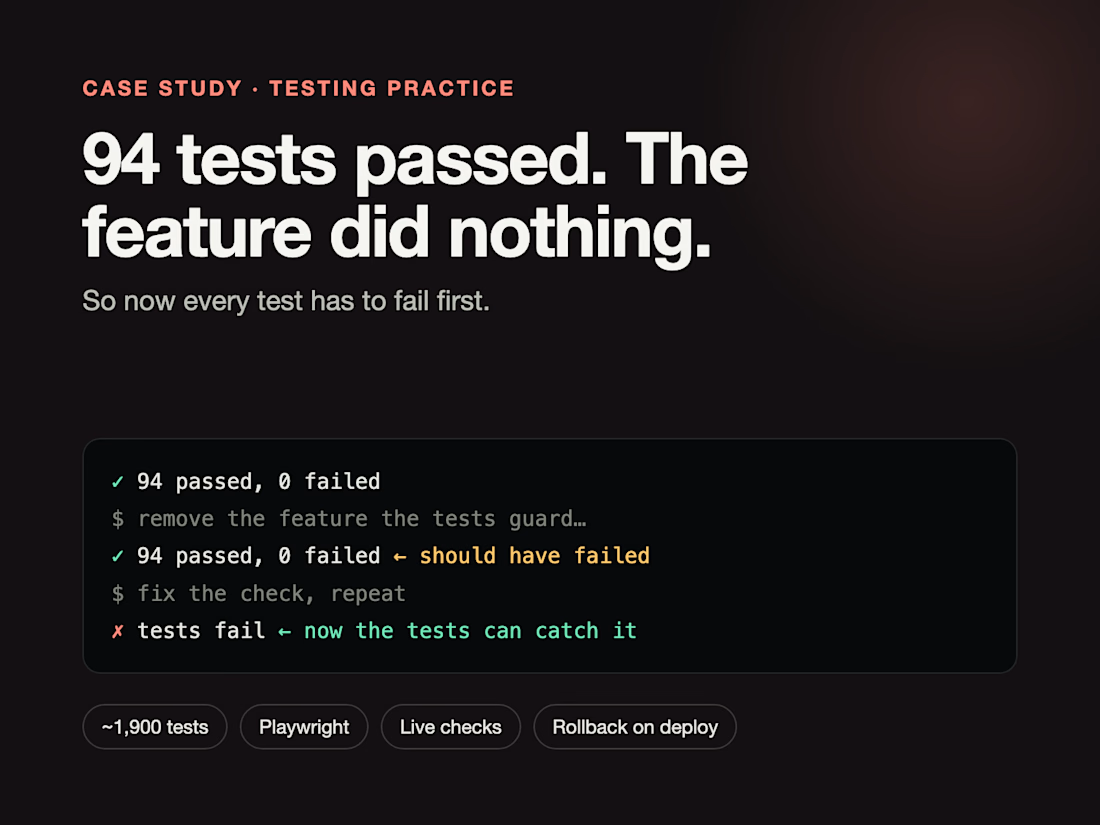

This matters even more when AI writes the tests, because it will happily write a check that agrees with the code. I now ask for a deliberate break first and only trust a test once it goes red.


📨 Mailbuddy - Full App Flow Design in 5 days

The deal summary card with an Add to Deal button is a smart touch. Can you edit the extracted terms before saving?

Most Claude Code sessions go wrong in the first message.
Not because the model is weak, but because the starting prompt is vague: “fix this bug” or “add tests.” With nothing else to go on, the model starts editing before it has looked at the repository, and you spend the next ten minutes steering it back.
What changes the outcome is the order of the work. Inspect the repo first. Learn the existing conventions. Plan before editing. Make focused changes, add or update tests, run real commands to verify, then summarize what changed. A prompt that builds that sequence in means you don’t have to remember to ask for it every time.
I put together a set of 2,000 prompts around that workflow, covering areas like debugging, testing, security, architecture, APIs, and cloud. They come as JSON, CSV, and JSONL, so you can browse them, filter them, or feed them into your own scripts.
If you’d rather not start every session from a blank screen, it’s here: https://contra.com/products/5w55SuJ3-claude-code-prompt-vault-2000

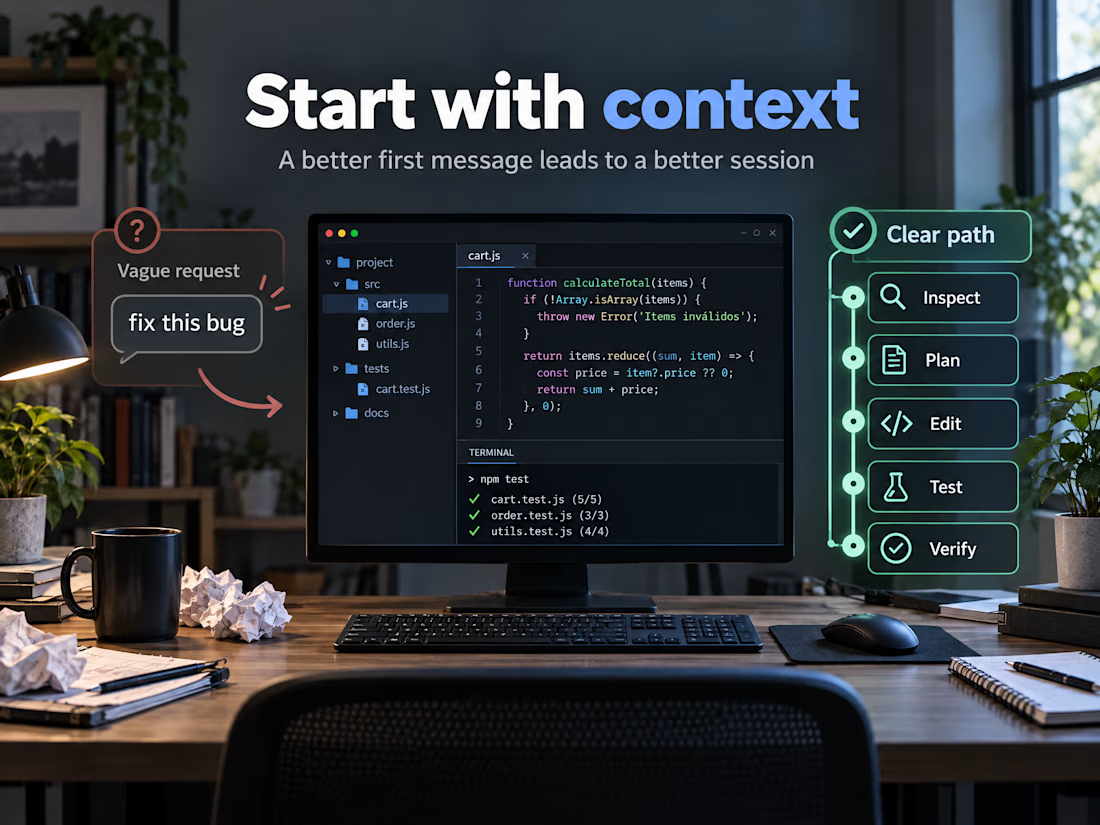
Plan before editing is the step I see skipped most. When I build with Claude, asking it to restate the repo's conventions back to me before any change catches most wrong assumptions early.