The network for creativity
Join 1.25M professional creatives like you
Connect with clients, get discovered, and run your business 100% commission-free
Creatives on Contra have earned over $150M and we are just getting started
Back to feedPost

"It works fine in testing" is the most expensive sentence in software.
When an app falls over under real traffic, the instinct is to go looking for slow code. Profile the endpoints, optimise a query, add an index. Sometimes that helps. Usually it doesn't, because the problem was never speed.
It's sharing.
Every request in your system competes for the same handful of things, and they don't all scale the same way:
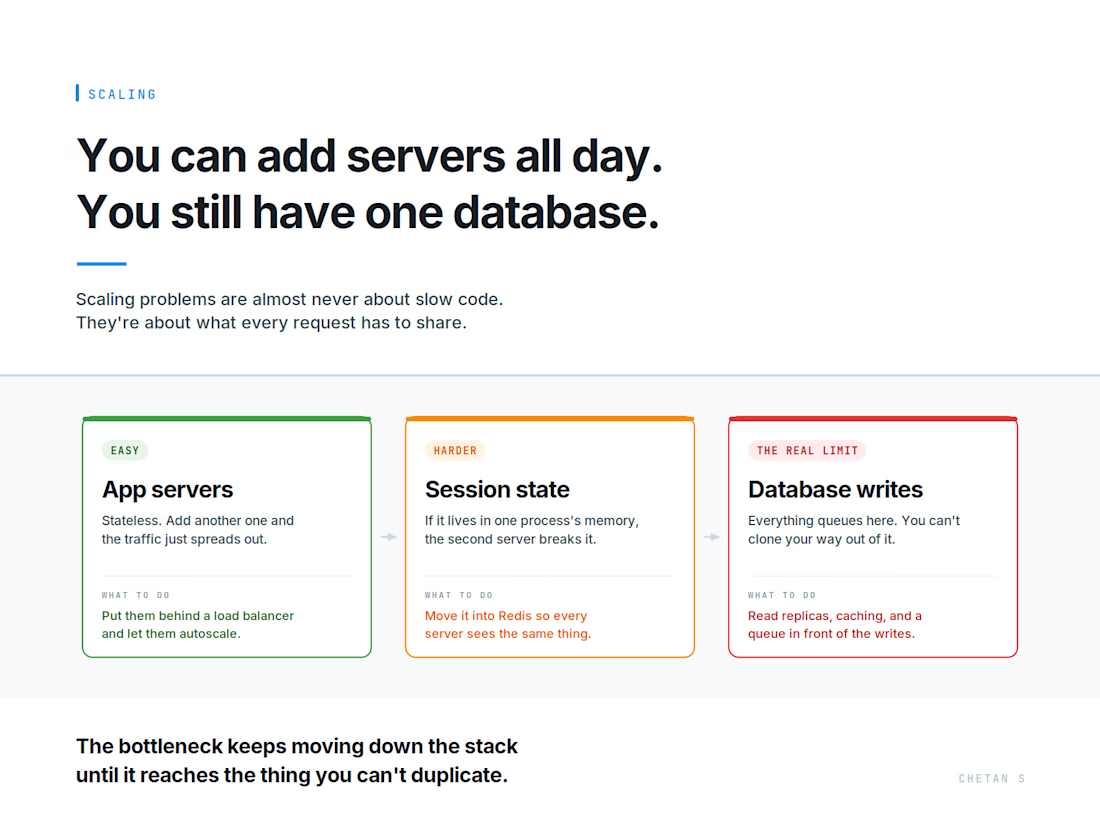
App servers are easy. They're stateless. Add another one, put a load balancer in front, done. This is the part everyone gets right.
Session state is where it first goes wrong. If sessions live in one process's memory, adding a second server means half your users randomly get logged out. Now you're debugging something that only happens in production, at peak.
The database is the real limit. Every request eventually queues behind one writer. You can't clone your way past this one — you have to reduce what reaches it. Read replicas, caching, queues in front of writes.
The pattern is that the bottleneck keeps sliding down the stack until it hits the thing you can't duplicate. Then you have to actually design.
Where did yours break first? For me it's almost always been session state — it's the one that survives testing and dies on launch day.
The network for creativity
Join 1.25M professional creatives like you
Connect with clients, get discovered, and run your business 100% commission-free
Creatives on Contra have earned over $150M and we are just getting started

Challenges
View all


Related posts

Title: Scalable Headless E-commerce API Layer
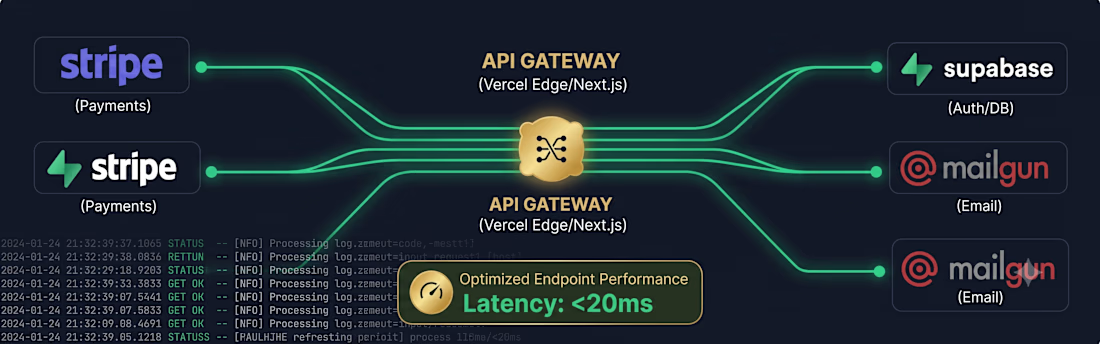
Explanation: Architected a secure API gateway layer for a headless commerce startup. This custom middleware (deployed on Vercel Edge with Next.js) orchestrates data between the Shopify GraphQL API, Stripe Payments, and a Supabase DB. Optimized a critical database query that reduced product page load times by 40%. The result is a secure, extremely fast checkout experience that handles high traffic spikes without latency, directly impacting customer conversion metrics.



Fieldwork now works from request to approved quote.
Try the demo: https://launchinseven.com/samples/fieldwork
Enter a fictional service request, see the itemized estimate, then open Operations to edit the quote, review it and export a printable quote or CSV. Records survive a reload in your browser. The demo uses fictional data and local storage; a shared live system would need its own agreed backend and access controls.
The point is to make a business workflow concrete enough to test: what the customer enters, what the team reviews, what changes status and what leaves the system.
I direct scope and review; GPT-6 Astra handles implementation and many checks. This is an original working sample, not a paid client case.
If an existing web workflow is causing friction, message me on Contra with the URL or redacted screenshots and what should happen. We can agree a small paid first milestone—such as a documented workflow review or a defined interface fix—with its deliverable, fee, inputs and timing confirmed before work.
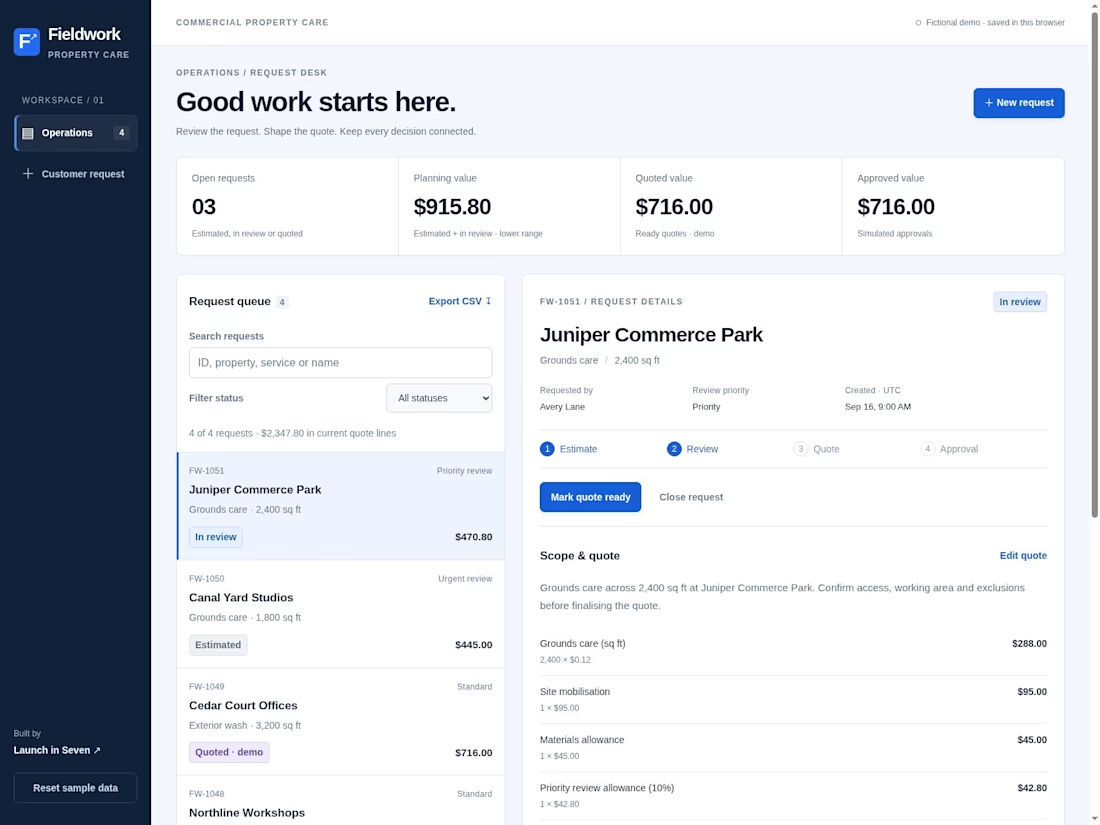

I'd keep a short change history beside the itemized estimate, so the team can see what changed before approval and which version was exported.

Been playing around with 3D on the web and ended up building this.
The scene was made in Blender, characters with Tripo3D, and everything was brought together on the web with Three.js + Astra.
It’s also a live multiplayer experience, people can join the same space, walk around, talk to each other and just hang out together.
Try it here:
https://aeronaut.dailiess.app/
Or join my room:
https://aeronaut.dailiess.app/r/ikanishakm/ai


wait you can actually play roulette in there? how long does it take to load?