The network for creativity
Join 1.25M professional creatives like you
Connect with clients, get discovered, and run your business 100% commission-free
Creatives on Contra have earned over $150M and we are just getting started
Back to feedPost

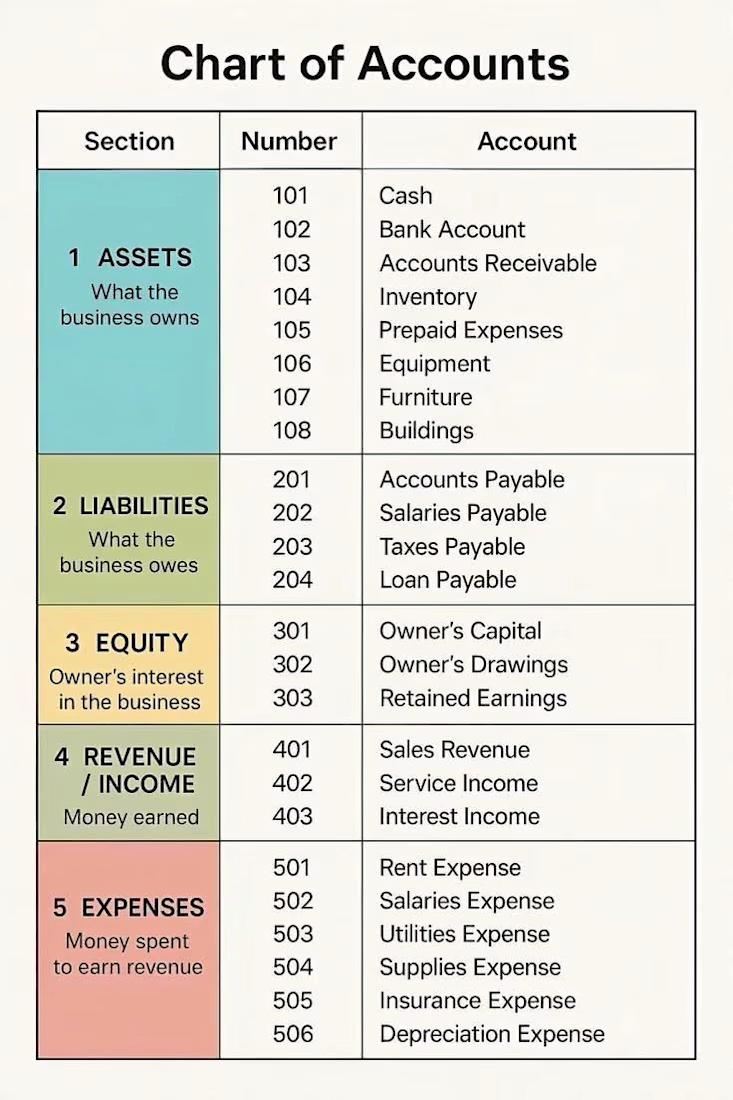
📊 𝐖𝐡𝐲 𝐭𝐡𝐞 𝐂𝐡𝐚𝐫𝐭 𝐨𝐟 𝐀𝐜𝐜𝐨𝐮𝐧𝐭𝐬 𝐌𝐚𝐭𝐭𝐞𝐫𝐬
Behind every clear financial report is a well-organized 𝐂𝐡𝐚𝐫𝐭 𝐨𝐟 𝐀𝐜𝐜𝐨𝐮𝐧𝐭𝐬 (𝐂𝐎𝐀).
Think of the COA as the financial filing system of a business. It organizes transactions into the right categories so financial information stays clear, accurate, and useful.
The five main account categories are:
💰𝐀𝐬𝐬𝐞𝐭𝐬— What the business owns
📌 𝐋𝐢𝐚𝐛𝐢𝐥𝐢𝐭𝐢𝐞𝐬— What the business owes
👤 𝐄𝐪𝐮𝐢𝐭𝐲— The owner’s interest in the business
📈𝐑𝐞𝐯𝐞𝐧𝐮𝐞 — What the business earns
💸 𝐄𝐱𝐩𝐞𝐧𝐬𝐞𝐬— What the business spends to operate and generate income
A well-structured Chart of Accounts can help businesses:
✅ Keep financial records organized
✅ Generate clearer financial reports
✅ Understand where money is coming from and going
✅ Make more informed business decisions
You don’t need to be an accountant to start understanding your numbers. Sometimes, it begins with knowing how your financial information is organized.
As a bookkeeper, I believe organized books should do more than produce reports—they should help business owners understand the story behind their numbers.
💬𝐖𝐡𝐚𝐭 𝐛𝐨𝐨𝐤𝐤𝐞𝐞𝐩𝐢𝐧𝐠 𝐭𝐨𝐩𝐢𝐜 𝐰𝐨𝐮𝐥𝐝 𝐲𝐨𝐮 𝐥𝐢𝐤𝐞 𝐞𝐱𝐩𝐥𝐚𝐢𝐧𝐞𝐝 𝐢𝐧 𝐚 𝐬𝐢𝐦𝐩𝐥𝐞 𝐰𝐚𝐲 𝐧𝐞𝐱𝐭?


The network for creativity
Join 1.25M professional creatives like you
Connect with clients, get discovered, and run your business 100% commission-free
Creatives on Contra have earned over $150M and we are just getting started











Related posts

Episode 7: Your bank balance is not your income. 💸
As a designer, money reaches you from Stripe, PayPal, Wise, direct transfers and Contra. By the time it lands, fees, currency conversion and delays have already taken a cut, and some of it never gets recorded.
That’s why a monthly bank reconciliation matters. It means matching your bank statement to your books, line by line, so you can:
✅ Spot the client invoice that was never paid
✅ Catch the software subscription you forgot to cancel
✅ Find the processor fees nobody recorded
✅ Know your real profit per project
✅ Reach tax time with clean numbers instead of a panic
It takes about 30 minutes a month. A gap you catch in October is easy to fix. A gap you find a year later is expensive.
#bookkeeping #freelancedesigner #designbusiness #freelancefinance #smallbusiness


You are giving real concepts how finances can be handled

Liquidity or Tax Saving
Which is best for a company owner?
Recently, I worked on a file where a business owner could save $450,000 in taxes.
But in the letter, she explained that she didn’t want to lose liquidity in her business.
In accounting, we know what liquidity means.
So, before making a decision, a business owner must ask some questions:
How much cash do you currently have on hand?
Do I have enough cash to run my day-to-day business operations?
Can I pay my loan instalments and interest on time?
As a bookkeeper, I want to ask you:
What financial problems are you facing in your business?
#prepareplan #management
Episode #6: The bank balance is NOT your profit.
“I have AED 250,000 in the bank, so I’m doing great.”
Not necessarily. Look at what’s actually inside that balance:
🟣 AED 100,000 is a bank loan. You have to pay it back.
🟡 AED 60,000 is customer advances. You haven’t delivered the work yet.
🔵 AED 15,000 is VAT collected. It belongs to the tax authority.
🔵 AED 45,000 is your own capital that you put in.
🟢 AED 30,000 is the actual profit.
Cash and profit are different things, for three reasons:
1️⃣ Timing. An invoice you’ve sent is profit, but it isn’t cash until the customer pays.
2️⃣ Non-cash costs. Depreciation lowers your profit, but no money leaves the bank.
3️⃣ Not your money. Loans, advances, VAT and capital all add to your balance without adding to your profit.
Profit = Revenue earned − Expenses incurred.
Earned ≠ received. Incurred ≠ paid.
Before you spend, ask:
✅ Did customers pay me, or did I only invoice them?
✅ Is any of this a loan, advance, VAT or my own capital?
✅ Which bills and taxes are still due?
✅ What is my real profit this month?
If you can’t answer these, your bank balance is giving you a false picture of how the business is doing.
Next up: Episode 7. Follow along so you don’t miss it.
Counting Crux |
#Accounting #UAEBusiness #Profit #CashFlow #Bookkeeping #Founders #DubaiBusiness #SmallBusiness


Cash flow and profitability are two different things. Understanding where your money comes from and where it needs to go is essential for making smarter business decisions.