The network for creativity
Join 1.25M professional creatives like you
Connect with clients, get discovered, and run your business 100% commission-free
Creatives on Contra have earned over $150M and we are just getting started
Back to feedPost

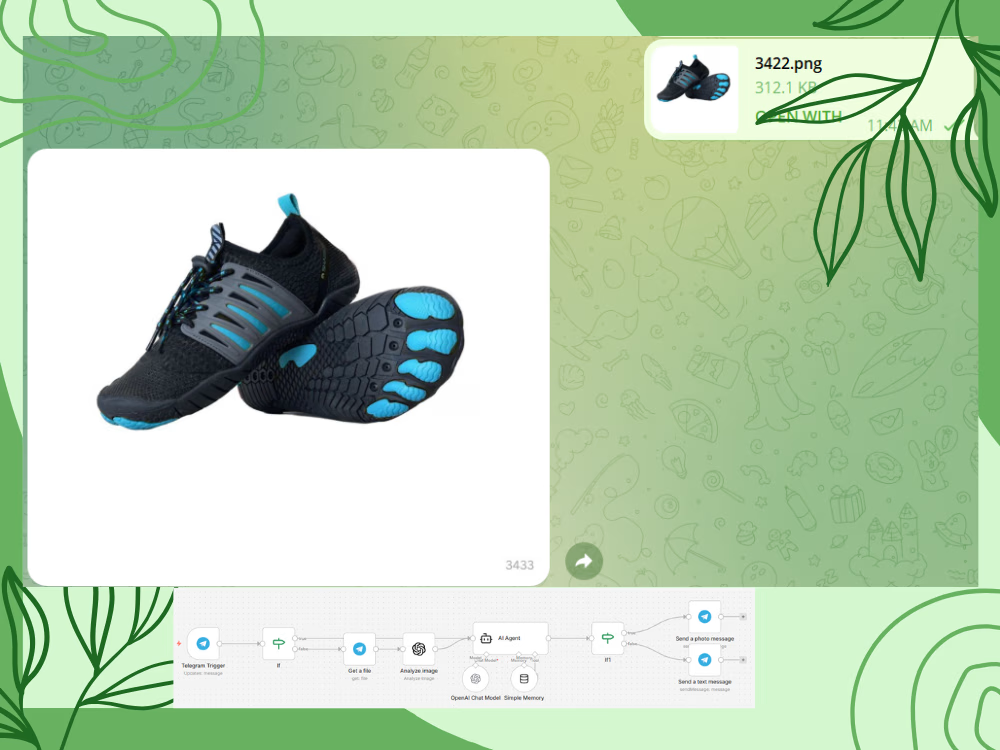
AI agents don’t actually see images — they guess. This becomes a real problem in n8n and automation workflows where accurate product recognition matters.
I solved this by embedding a unique product code directly into the corner of each image. When an image is sent through WhatsApp or Telegram, the AI reads the code instead of relying on visual interpretation. That single change makes image recognition deterministic and reliable.
I built and tested the full n8n workflow: image intake → code extraction → backend product match → accurate response. The result is zero hallucination, higher accuracy, and production-ready automation for ecommerce and support bots.


The network for creativity
Join 1.25M professional creatives like you
Connect with clients, get discovered, and run your business 100% commission-free
Creatives on Contra have earned over $150M and we are just getting started
Challenges
View all


Related posts

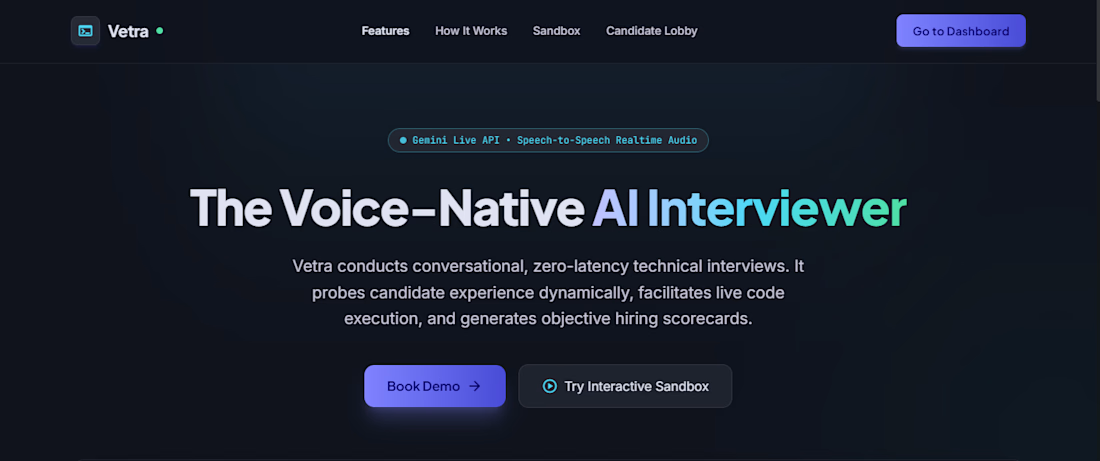
I built Vetra, an AI technical interviewer that makes interviews more structured, adaptive, and realistic.
Vetra conducts real-time voice interviews, explores a candidate’s experience, adapts its questions based on their responses, evaluates performance, and generates structured assessments.
I built the interview orchestration with LangGraph, added real-time voice interaction using Gemini Live, and created a separate evaluation layer for evidence-based scoring.
The goal was to create an AI interview experience that feels more like a real technical conversation than a chatbot.

Jonathan, keeping the evaluation layer separate from the interviewer is a smart choice. When the same model asks and scores, it tends to grade its own questions kindly. How are you handling silence and long pauses on the voice side? That was the hardest part for us on a voice AI build.

I ran a session with my team on how to build a team of AI agents, and how to treat them so they actually deliver.
What we've seen running this setup on client work:
→ Agents running 24/7
→ 3B+ tokens in 6 days
→ A 2-week milestone done in 3 days
The 5 things I taught the team:
Treat agents like teammates, not software.
Give them a clear goal, the right context and tools they're comfortable with.
Tell them the goal, never the solution.
Let the agents propose the options. You make the call.
Talk to one agent, not ten.
A central PM agent takes the goal and coordinates the rest.
Solve today's problem.
Don't build the perfect agent on day one. Start small and let the team grow with the work.
Don't be the bottleneck.
Review at milestones, not every task.
For clients, this changes the pace. My job is understanding the problem and making the decisions. The agents handle the execution.
Highlights from the session 🎥
Building something and want to move faster with an AI-first team? Let's talk.


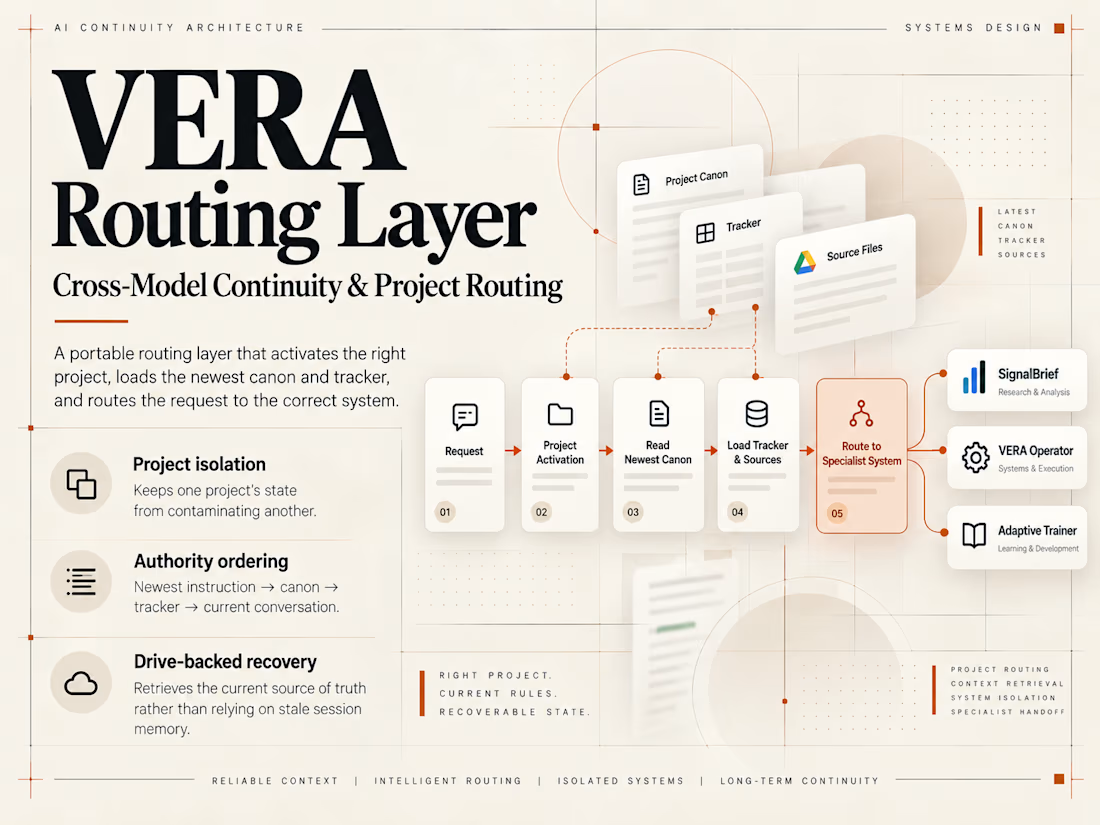
A strong specialist skill is useless if the wrong system gets invoked. Long-running AI work breaks in boring, expensive ways.
That is not a prompting problem. It is a routing and authority problem.
How I can help you:
I build project routers for teams using multiple AI workflows, agents, or specialist assistants so that they work with each other as a team.
I design source-of-truth resolutions so your agents retrieve the current rules instead of improvising or relying on assumptions or stale chat data.
I create reusable skill registries and specialist handoff logic hardened by determined and dedicated flow states reducing the need for model reliance on its own internal and displaced memory context.
I separate project states with individualized canonical states bound by rules living under essential model instructions and routed properly so unrelated workflows do not contaminate one another, but exist with awareness of the role each project plays, enabling a persistently growing ecosystem to develop organically.
I add governance wrappers, escalation hooks, and recovery mirrors around existing AI stacks so that trust is designed at the root, and variance is eliminated with rule based source archiving and implementation.
Trust means closing your eyes at night and sleeping soundly because your agents got your back. And I can put it all together for you, precision results sourced and undisputed because I got tired of doing things the hard way.
Phillip, agree that routing is where it breaks. In our builds the worst bugs came from an agent pulling an old rule from chat history instead of the current source. Pinning one source of truth per project fixed more than any prompt change did.