
SaaS Product & UX AuditKevine Nzapdi
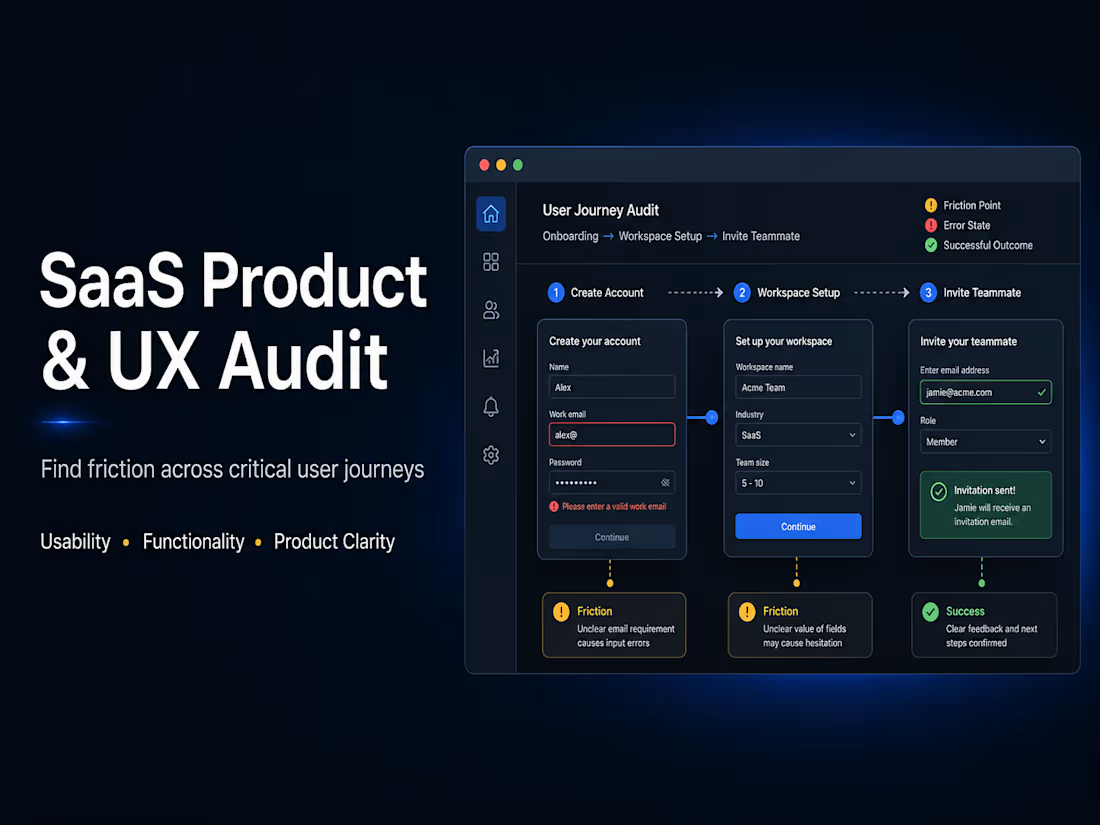
Users may abandon onboarding, struggle to understand a feature, encounter inconsistent interactions, or repeatedly contact support without your team knowing exactly where the experience breaks down.
I conduct structured product and UX audits for SaaS platforms, developer tools, web applications and other complex digital products. I examine the product from the user’s perspective, test agreed workflows and document usability problems, functional friction, content gaps and opportunities for improvement.
You receive evidence-based findings and a prioritized action plan that your product, design, engineering and content teams can use to make informed improvements.
This is not a generic list of UX best practices. Every material finding is connected to a specific screen, interaction, workflow or user need within your product.
This service is useful when
A product audit can help if:
New users struggle to complete onboarding
Users abandon an important workflow before completion
Activation, adoption or retention is below expectations
Support receives repeated questions about the same features
Customers describe the product as confusing or difficult to use
A complex workflow has grown through multiple feature releases
Navigation or information architecture no longer reflects the product
Different product areas use inconsistent terminology or interaction patterns
Error messages do not help users recover
Empty, loading, success or failure states are missing or unclear
Your team is planning a redesign but needs evidence before changing the interface
You want an independent review before launching a new product or feature
Stakeholders disagree about which product problems should be fixed first
The product serves multiple roles with different permissions and workflows
The website, product and documentation create inconsistent expectations
You need an actionable backlog instead of general design feedback
Products I can audit
The service can cover:
B2B and B2C SaaS platforms
Developer tools and API products
Web applications
Mobile-responsive product experiences
Dashboards and administration panels
Marketplaces and multi-sided platforms
Fintech, health-tech and education platforms
AI-enabled products
Subscription products
Account and workspace management experiences
WordPress or headless CMS-powered platforms
Pre-launch products in a functional staging environment
The audit can focus on an entire small product or selected high-priority workflows within a larger system.
Possible user journeys
Depending on your product and goals, the audit may examine:
Account registration and sign-in
First-time user onboarding
Workspace or organization creation
Product setup and configuration
Connecting an integration
API key creation or authentication
Searching, filtering and discovering content
Creating, editing or deleting an item
Importing or exporting data
Inviting and managing team members
Roles, permissions and access control
Checkout, subscription or upgrade flows
Account settings and billing
Error recovery and troubleshooting
Help, documentation and support discovery
Mobile and desktop continuity
Cancellation, deletion or offboarding
Another business-critical workflow agreed during scoping
What I evaluate
The final evaluation criteria are selected according to the product and agreed scope.
User journeys and task completion
I examine whether users can understand where to begin, what action to take next and how to complete important tasks without unnecessary confusion or interruption.
Navigation and information architecture
I assess menus, labels, hierarchy, content grouping, discoverability and whether the product’s organization matches users’ likely expectations.
Onboarding and activation
I review registration, first-use guidance, setup requirements, progress indicators, instructional content and the path to the user’s first meaningful outcome.
Usability and interaction clarity
I identify unclear actions, unnecessary steps, excessive cognitive load, misleading interface behaviour and interactions that do not provide sufficient feedback.
Forms and input handling
I review field labels, instructions, validation, required information, error prevention, error recovery and confirmation messages.
Product states
I examine loading, empty, error, disabled, warning and success states to determine whether users understand what is happening and what they should do next.
UX writing and product content
I assess button labels, instructions, notifications, error messages, terminology and other interface content for clarity, consistency and usefulness.
Consistency
I identify inconsistent components, terminology, navigation patterns, behaviour or visual hierarchy that may make the product harder to learn.
Accessibility indicators
I review visible accessibility concerns such as contrast, hierarchy, labels, keyboard-related interaction barriers and unclear controls where they can be evaluated through the available interface.
This is an expert accessibility review, not a formal accessibility certification or comprehensive WCAG conformance audit.
Functional friction
While following the agreed workflows, I document reproducible errors, unexpected behaviour, broken links, incomplete states and other functional issues that directly affect the user experience.
This does not replace a complete software regression-testing or security-testing engagement.
Documentation and support alignment
Where relevant, I compare the product experience with its help content or documentation to identify missing guidance, outdated instructions or differences between documented and actual behaviour.
Available evidence
If you provide relevant analytics, support tickets, session recordings, survey findings or user feedback, I can use them to validate and prioritize the expert review.
The base audit does not include recruiting or interviewing users.
What you receive
1. Comprehensive product and UX audit report
A structured report covering the evaluated workflows, identified issues, supporting evidence, user impact and recommended improvements.
2. Annotated screenshots
Visual evidence showing where each material issue occurs and why it may create difficulty for users.
3. Severity and impact classification
Findings classified according to their effect on task completion, usability, trust, accessibility or product adoption.
Typical classifications include:
Critical
High
Medium
Low
Observation or opportunity
4. User-flow analysis
An evaluation of the agreed user journeys, including unnecessary steps, decision points, interruptions, dead ends and recovery problems.
5. Functional issue log
A structured record of reproducible bugs or unexpected behaviour encountered during the agreed workflow testing.
6. UX and content recommendations
Practical recommendations for improving workflows, navigation, interactions, interface content, system feedback and supporting guidance.
7. Prioritized improvement roadmap
A roadmap separating immediate fixes, high-impact improvements and longer-term product opportunities.
Recommendations are prioritized using factors such as:
User impact
Business importance
Frequency or reach
Severity
Expected implementation effort
Dependencies
8. Final findings walkthrough
A live call presenting the most important findings, explaining the prioritization and answering questions from your team.
9. Clarification period
One round of clarification is included after delivery so your team can confirm the meaning or implementation intent of individual recommendations.
My audit process
1. Discovery and scope review
We identify the product, business context, intended users, critical workflows and known concerns.
I review the approximate product size and access requirements before confirming the final quote and timeline.
2. Audit plan
I define the platforms, user roles, workflows, screens and evaluation criteria included in the audit.
This prevents ambiguous expectations and protects both parties from uncontrolled scope changes.
3. Product familiarization
I review the available product information, documentation, user feedback and other relevant materials before testing.
4. Workflow testing
I follow the agreed user journeys using the available test environment and user roles. I document friction, usability concerns, inconsistent behaviour and reproducible functional issues.
5. Analysis and evidence collection
I organize the findings, annotate supporting evidence and evaluate the likely effect of each problem.
6. Prioritization and recommendations
I classify the findings and develop practical recommendations based on user impact, business importance and implementation considerations.
7. Report delivery and walkthrough
I deliver the final report and conduct the findings presentation.
What I need from you
Please provide:
A brief explanation of the product
The intended users and their main goals
A link to the live product or staging environment
Test credentials for every user role included
The workflows or product areas you want prioritized
Known complaints, support patterns or suspected problems
Product documentation or onboarding materials
Relevant analytics, user feedback or session recordings, if available
Device or browser requirements
Any upcoming launch, redesign or development deadline
A contact person for access or technical questions
Please provide controlled test access rather than production credentials. Sensitive information that is not required for the audit should be removed or restricted.
Scope, pricing and timeline
Every digital product differs in size, workflow complexity, number of user roles and testing requirements. I provide a custom quote after reviewing the product and confirming the areas to be evaluated.
Pricing and delivery time may depend on:
Number of platforms
Number of user roles
Number and complexity of workflows
Product maturity
Availability of a test environment
Required devices and browsers
Depth of functional testing
Supporting research or analytics
Expected report detail
Meeting and stakeholder requirements
Most focused audits are completed within two weeks after the required access and information have been provided. Larger multi-platform or multi-role products may require additional time.
The final proposal will clearly define the included workflows, roles, platforms, deliverables, timeline and clarification period.
What is not included
Unless separately agreed, this service does not include:
Complete UI or product redesign
High-fidelity Figma mockups
Engineering implementation
Fixing the identified bugs
Full regression or automated testing
Penetration or security testing
Performance or load testing
Formal accessibility certification
Recruiting research participants
Moderated usability testing
Customer interviews
Guaranteed increases in conversion, activation or retention
These can be scoped separately when they match my services, or the audit can be handed to your internal product, design and engineering team
Send me a link to your product or prototype, the primary user type and the most important workflow you want evaluated. I will review the approximate scope and recommend the most useful audit structure before providing a quote.
FAQs
Example work
Kevine's other services
Contact for pricing
Duration2 weeks
Tags
Developer Tools
Google Docs

Loom

Notion

UX Audit
Auditor
Product Strategist
QA Engineer
SaaS
Service provided by
Kevine Nzapdi Yaounde, Cameroon
SaaS Product & UX AuditKevine Nzapdi
Contact for pricing
Duration2 weeks
Tags
Developer Tools
Google Docs
Loom
Notion
UX Audit
Auditor
Product Strategist
QA Engineer
SaaS
Users may abandon onboarding, struggle to understand a feature, encounter inconsistent interactions, or repeatedly contact support without your team knowing exactly where the experience breaks down.
I conduct structured product and UX audits for SaaS platforms, developer tools, web applications and other complex digital products. I examine the product from the user’s perspective, test agreed workflows and document usability problems, functional friction, content gaps and opportunities for improvement.
You receive evidence-based findings and a prioritized action plan that your product, design, engineering and content teams can use to make informed improvements.
This is not a generic list of UX best practices. Every material finding is connected to a specific screen, interaction, workflow or user need within your product.
This service is useful when
A product audit can help if:
New users struggle to complete onboarding
Users abandon an important workflow before completion
Activation, adoption or retention is below expectations
Support receives repeated questions about the same features
Customers describe the product as confusing or difficult to use
A complex workflow has grown through multiple feature releases
Navigation or information architecture no longer reflects the product
Different product areas use inconsistent terminology or interaction patterns
Error messages do not help users recover
Empty, loading, success or failure states are missing or unclear
Your team is planning a redesign but needs evidence before changing the interface
You want an independent review before launching a new product or feature
Stakeholders disagree about which product problems should be fixed first
The product serves multiple roles with different permissions and workflows
The website, product and documentation create inconsistent expectations
You need an actionable backlog instead of general design feedback
Products I can audit
The service can cover:
B2B and B2C SaaS platforms
Developer tools and API products
Web applications
Mobile-responsive product experiences
Dashboards and administration panels
Marketplaces and multi-sided platforms
Fintech, health-tech and education platforms
AI-enabled products
Subscription products
Account and workspace management experiences
WordPress or headless CMS-powered platforms
Pre-launch products in a functional staging environment
The audit can focus on an entire small product or selected high-priority workflows within a larger system.
Possible user journeys
Depending on your product and goals, the audit may examine:
Account registration and sign-in
First-time user onboarding
Workspace or organization creation
Product setup and configuration
Connecting an integration
API key creation or authentication
Searching, filtering and discovering content
Creating, editing or deleting an item
Importing or exporting data
Inviting and managing team members
Roles, permissions and access control
Checkout, subscription or upgrade flows
Account settings and billing
Error recovery and troubleshooting
Help, documentation and support discovery
Mobile and desktop continuity
Cancellation, deletion or offboarding
Another business-critical workflow agreed during scoping
What I evaluate
The final evaluation criteria are selected according to the product and agreed scope.
User journeys and task completion
I examine whether users can understand where to begin, what action to take next and how to complete important tasks without unnecessary confusion or interruption.
Navigation and information architecture
I assess menus, labels, hierarchy, content grouping, discoverability and whether the product’s organization matches users’ likely expectations.
Onboarding and activation
I review registration, first-use guidance, setup requirements, progress indicators, instructional content and the path to the user’s first meaningful outcome.
Usability and interaction clarity
I identify unclear actions, unnecessary steps, excessive cognitive load, misleading interface behaviour and interactions that do not provide sufficient feedback.
Forms and input handling
I review field labels, instructions, validation, required information, error prevention, error recovery and confirmation messages.
Product states
I examine loading, empty, error, disabled, warning and success states to determine whether users understand what is happening and what they should do next.
UX writing and product content
I assess button labels, instructions, notifications, error messages, terminology and other interface content for clarity, consistency and usefulness.
Consistency
I identify inconsistent components, terminology, navigation patterns, behaviour or visual hierarchy that may make the product harder to learn.
Accessibility indicators
I review visible accessibility concerns such as contrast, hierarchy, labels, keyboard-related interaction barriers and unclear controls where they can be evaluated through the available interface.
This is an expert accessibility review, not a formal accessibility certification or comprehensive WCAG conformance audit.
Functional friction
While following the agreed workflows, I document reproducible errors, unexpected behaviour, broken links, incomplete states and other functional issues that directly affect the user experience.
This does not replace a complete software regression-testing or security-testing engagement.
Documentation and support alignment
Where relevant, I compare the product experience with its help content or documentation to identify missing guidance, outdated instructions or differences between documented and actual behaviour.
Available evidence
If you provide relevant analytics, support tickets, session recordings, survey findings or user feedback, I can use them to validate and prioritize the expert review.
The base audit does not include recruiting or interviewing users.
What you receive
1. Comprehensive product and UX audit report
A structured report covering the evaluated workflows, identified issues, supporting evidence, user impact and recommended improvements.
2. Annotated screenshots
Visual evidence showing where each material issue occurs and why it may create difficulty for users.
3. Severity and impact classification
Findings classified according to their effect on task completion, usability, trust, accessibility or product adoption.
Typical classifications include:
Critical
High
Medium
Low
Observation or opportunity
4. User-flow analysis
An evaluation of the agreed user journeys, including unnecessary steps, decision points, interruptions, dead ends and recovery problems.
5. Functional issue log
A structured record of reproducible bugs or unexpected behaviour encountered during the agreed workflow testing.
6. UX and content recommendations
Practical recommendations for improving workflows, navigation, interactions, interface content, system feedback and supporting guidance.
7. Prioritized improvement roadmap
A roadmap separating immediate fixes, high-impact improvements and longer-term product opportunities.
Recommendations are prioritized using factors such as:
User impact
Business importance
Frequency or reach
Severity
Expected implementation effort
Dependencies
8. Final findings walkthrough
A live call presenting the most important findings, explaining the prioritization and answering questions from your team.
9. Clarification period
One round of clarification is included after delivery so your team can confirm the meaning or implementation intent of individual recommendations.
My audit process
1. Discovery and scope review
We identify the product, business context, intended users, critical workflows and known concerns.
I review the approximate product size and access requirements before confirming the final quote and timeline.
2. Audit plan
I define the platforms, user roles, workflows, screens and evaluation criteria included in the audit.
This prevents ambiguous expectations and protects both parties from uncontrolled scope changes.
3. Product familiarization
I review the available product information, documentation, user feedback and other relevant materials before testing.
4. Workflow testing
I follow the agreed user journeys using the available test environment and user roles. I document friction, usability concerns, inconsistent behaviour and reproducible functional issues.
5. Analysis and evidence collection
I organize the findings, annotate supporting evidence and evaluate the likely effect of each problem.
6. Prioritization and recommendations
I classify the findings and develop practical recommendations based on user impact, business importance and implementation considerations.
7. Report delivery and walkthrough
I deliver the final report and conduct the findings presentation.
What I need from you
Please provide:
A brief explanation of the product
The intended users and their main goals
A link to the live product or staging environment
Test credentials for every user role included
The workflows or product areas you want prioritized
Known complaints, support patterns or suspected problems
Product documentation or onboarding materials
Relevant analytics, user feedback or session recordings, if available
Device or browser requirements
Any upcoming launch, redesign or development deadline
A contact person for access or technical questions
Please provide controlled test access rather than production credentials. Sensitive information that is not required for the audit should be removed or restricted.
Scope, pricing and timeline
Every digital product differs in size, workflow complexity, number of user roles and testing requirements. I provide a custom quote after reviewing the product and confirming the areas to be evaluated.
Pricing and delivery time may depend on:
Number of platforms
Number of user roles
Number and complexity of workflows
Product maturity
Availability of a test environment
Required devices and browsers
Depth of functional testing
Supporting research or analytics
Expected report detail
Meeting and stakeholder requirements
Most focused audits are completed within two weeks after the required access and information have been provided. Larger multi-platform or multi-role products may require additional time.
The final proposal will clearly define the included workflows, roles, platforms, deliverables, timeline and clarification period.
What is not included
Unless separately agreed, this service does not include:
Complete UI or product redesign
High-fidelity Figma mockups
Engineering implementation
Fixing the identified bugs
Full regression or automated testing
Penetration or security testing
Performance or load testing
Formal accessibility certification
Recruiting research participants
Moderated usability testing
Customer interviews
Guaranteed increases in conversion, activation or retention
These can be scoped separately when they match my services, or the audit can be handed to your internal product, design and engineering team
Send me a link to your product or prototype, the primary user type and the most important workflow you want evaluated. I will review the approximate scope and recommend the most useful audit structure before providing a quote.
FAQs
Example work
Kevine's other services
Contact for pricing