
Transforming Your Logo Ideas: Where Creativity Meets Design.Ali Raza
Experienced graphic and logo designer with over 10+ years of perfection in offline markets, now making my journey on freelance. I am good at turning content into attractive brand-related designs. Equipped with a rich portfolio showcasing diverse industry collaborations. Committed to delivering innovative solutions that resonate with clients' visions and audiences.
What's included
Full details what I'm going to provide
----*Logo Files*---:- Different formats of the finalized logo, such as high-resolution vector files (AI, EPS, SVG) and raster files (JPEG, PNG), to ensure versatility and scalability.
---*Color Palette*---: A detailed color palette used in the logo design, including both primary and secondary colors, along with their hexadecimal or RGB values.
---*Typography Guidelines*---: Information about the fonts used in the logo, including font names, weights, and sizes, to maintain consistency across branding materials.
---*Logo Variations*---: Various versions of the logo, like horizontal and vertical orientations, monochrome versions, and alternate versions for different backgrounds.
---*Usage Guidelines*---: Instructions on how to properly use the logo, including minimum size requirements, clear space, and restrictions on altering the logo.
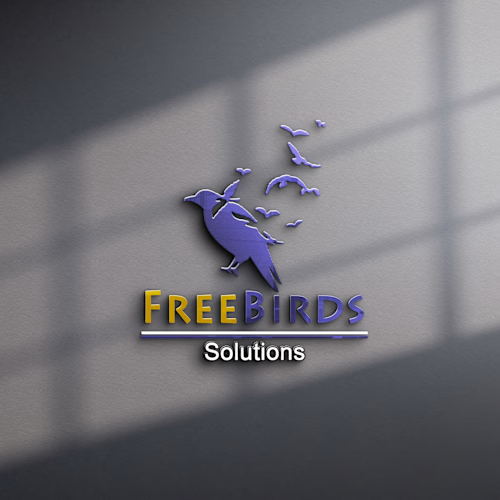
---*Mockup Presentations*---: Visual mockups displaying how the logo would appear on different real-world applications, such as business cards, letterheads, websites, and products.
---*Source Files*---: The editable source files of the logo design (e.g., Adobe Illustrator files) for potential future modifications.
---*Copyright and Ownership*--: A document stating the transfer of copyright and ownership of the logo design to the client, ensuring they have full legal rights to use the logo.
---*Revision Files*--: Any intermediate design files created during the design process, showcasing the evolution of the logo and the designer's creative process.
---*Brand Guidelines*---: A basic brand identity guideline document that outlines logo usage, colors, fonts, and design principles to maintain a consistent brand image.



Contact for pricing
Tags
Adobe Illustrator

Adobe Photoshop

Brand Designer
Graphic Designer
Logo Designer
Service provided by
Ali Raza Lahore, Pakistan
Transforming Your Logo Ideas: Where Creativity Meets Design.Ali Raza
Contact for pricing
Tags
Adobe Illustrator
Adobe Photoshop
Brand Designer
Graphic Designer
Logo Designer
Experienced graphic and logo designer with over 10+ years of perfection in offline markets, now making my journey on freelance. I am good at turning content into attractive brand-related designs. Equipped with a rich portfolio showcasing diverse industry collaborations. Committed to delivering innovative solutions that resonate with clients' visions and audiences.
What's included
Full details what I'm going to provide
----*Logo Files*---:- Different formats of the finalized logo, such as high-resolution vector files (AI, EPS, SVG) and raster files (JPEG, PNG), to ensure versatility and scalability.
---*Color Palette*---: A detailed color palette used in the logo design, including both primary and secondary colors, along with their hexadecimal or RGB values.
---*Typography Guidelines*---: Information about the fonts used in the logo, including font names, weights, and sizes, to maintain consistency across branding materials.
---*Logo Variations*---: Various versions of the logo, like horizontal and vertical orientations, monochrome versions, and alternate versions for different backgrounds.
---*Usage Guidelines*---: Instructions on how to properly use the logo, including minimum size requirements, clear space, and restrictions on altering the logo.
---*Mockup Presentations*---: Visual mockups displaying how the logo would appear on different real-world applications, such as business cards, letterheads, websites, and products.
---*Source Files*---: The editable source files of the logo design (e.g., Adobe Illustrator files) for potential future modifications.
---*Copyright and Ownership*--: A document stating the transfer of copyright and ownership of the logo design to the client, ensuring they have full legal rights to use the logo.
---*Revision Files*--: Any intermediate design files created during the design process, showcasing the evolution of the logo and the designer's creative process.
---*Brand Guidelines*---: A basic brand identity guideline document that outlines logo usage, colors, fonts, and design principles to maintain a consistent brand image.
Contact for pricing