
AI Agent Systems & Workflow Automation for Small TeamsYonatan Tesfaye
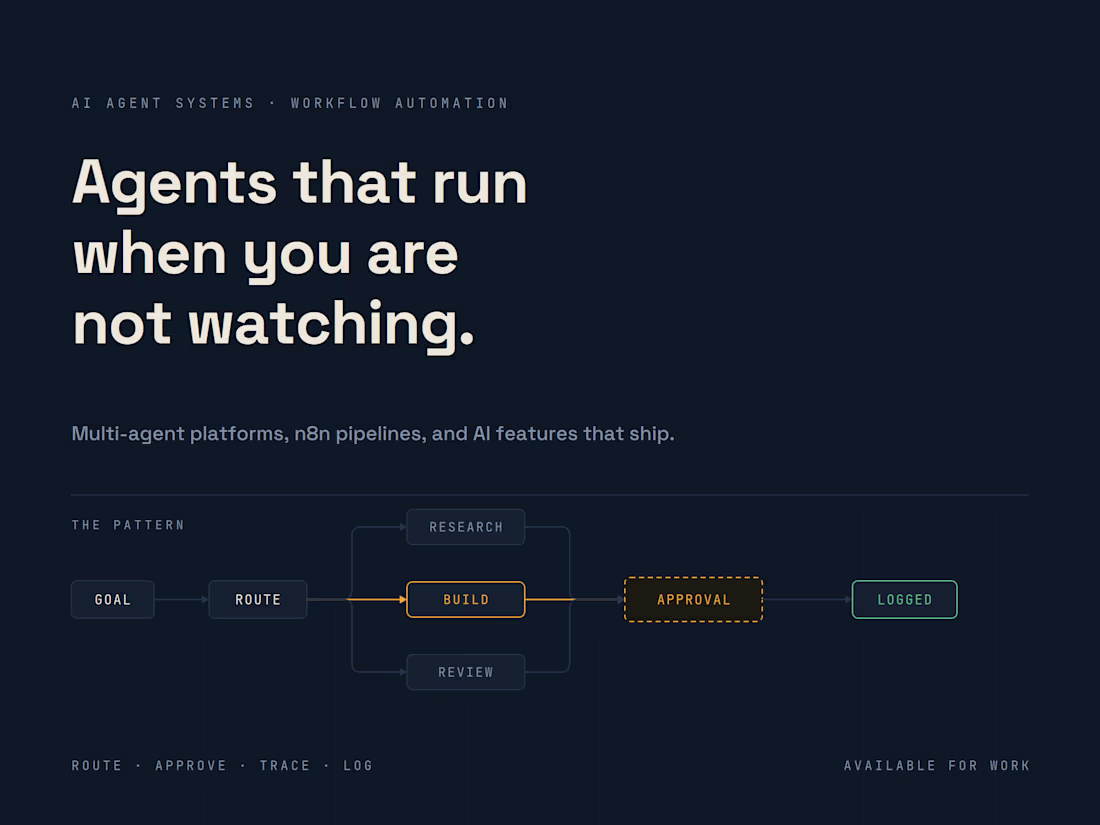
I build AI systems that do real work without a person babysitting them.
Most AI projects stall in the same place: a demo that impresses in a meeting and gets abandoned in week three, because nobody trusts it to run unattended. I build for the opposite — systems that run on a schedule, act through your real tools, and show their work so you know what happened.
That means agents scoped to actual roles instead of one general assistant. Human approval gates on anything with consequences. Traceable handoffs, so a failure is diagnosable instead of mysterious. Model routing and spend caps per task, because inference costs compound quietly.
Typical engagements:
Process automation — a repetitive workflow mapped, built, and shipped in n8n with AI decision-making inside it. Monitoring, enrichment, drafting, posting, logging.
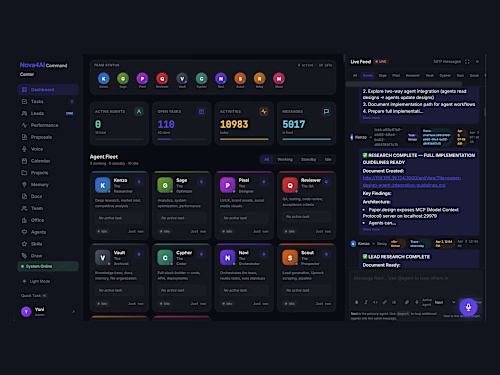
Multi-agent platforms — a team of role-trained agents with orchestration, connected app integrations, scheduling, and an operator-facing dashboard.
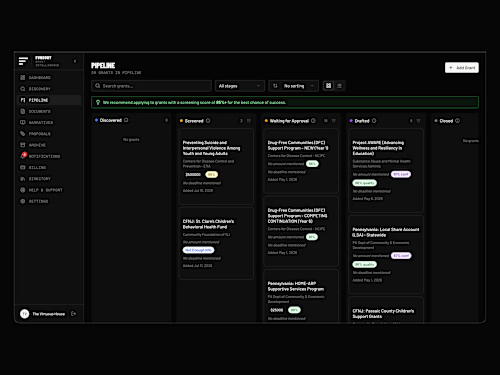
AI features in an existing product — screening, scoring, drafting, or classification wired into what you already run.
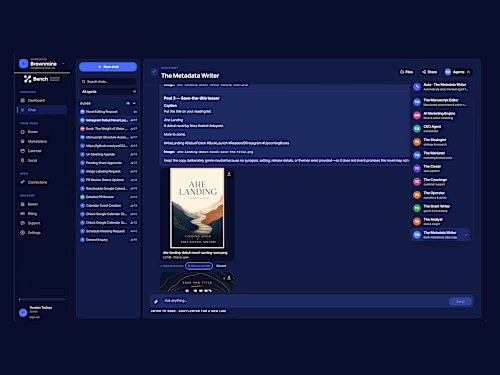
I've shipped all three: a social engagement pipeline running unattended for a healthcare SaaS, a full agent platform with 14 specialists and connected apps, and a grant intelligence product that scores opportunities before anyone writes a word.
Start with a call. If automation isn't the right answer for your problem, I'll tell you.
FAQs
Contact for pricing
Duration1 week
Tags
AI Agents
Claude

Full-Stack Development
N8N
SaaS Development
AI Integration
Prompt Engineer
Workflow Automation
Service provided by
Yonatan Tesfaye proLos Angeles, USA
- 9
- Followers
AI Agent Systems & Workflow Automation for Small TeamsYonatan Tesfaye
Contact for pricing
Duration1 week
Tags
AI Agents
Claude
Full-Stack Development
N8N
SaaS Development
AI Integration
Prompt Engineer
Workflow Automation
I build AI systems that do real work without a person babysitting them.
Most AI projects stall in the same place: a demo that impresses in a meeting and gets abandoned in week three, because nobody trusts it to run unattended. I build for the opposite — systems that run on a schedule, act through your real tools, and show their work so you know what happened.
That means agents scoped to actual roles instead of one general assistant. Human approval gates on anything with consequences. Traceable handoffs, so a failure is diagnosable instead of mysterious. Model routing and spend caps per task, because inference costs compound quietly.
Typical engagements:
Process automation — a repetitive workflow mapped, built, and shipped in n8n with AI decision-making inside it. Monitoring, enrichment, drafting, posting, logging.
Multi-agent platforms — a team of role-trained agents with orchestration, connected app integrations, scheduling, and an operator-facing dashboard.
AI features in an existing product — screening, scoring, drafting, or classification wired into what you already run.
I've shipped all three: a social engagement pipeline running unattended for a healthcare SaaS, a full agent platform with 14 specialists and connected apps, and a grant intelligence product that scores opportunities before anyone writes a word.
Start with a call. If automation isn't the right answer for your problem, I'll tell you.
FAQs
Contact for pricing