
Product UX DesignerChinenye Ikebudu
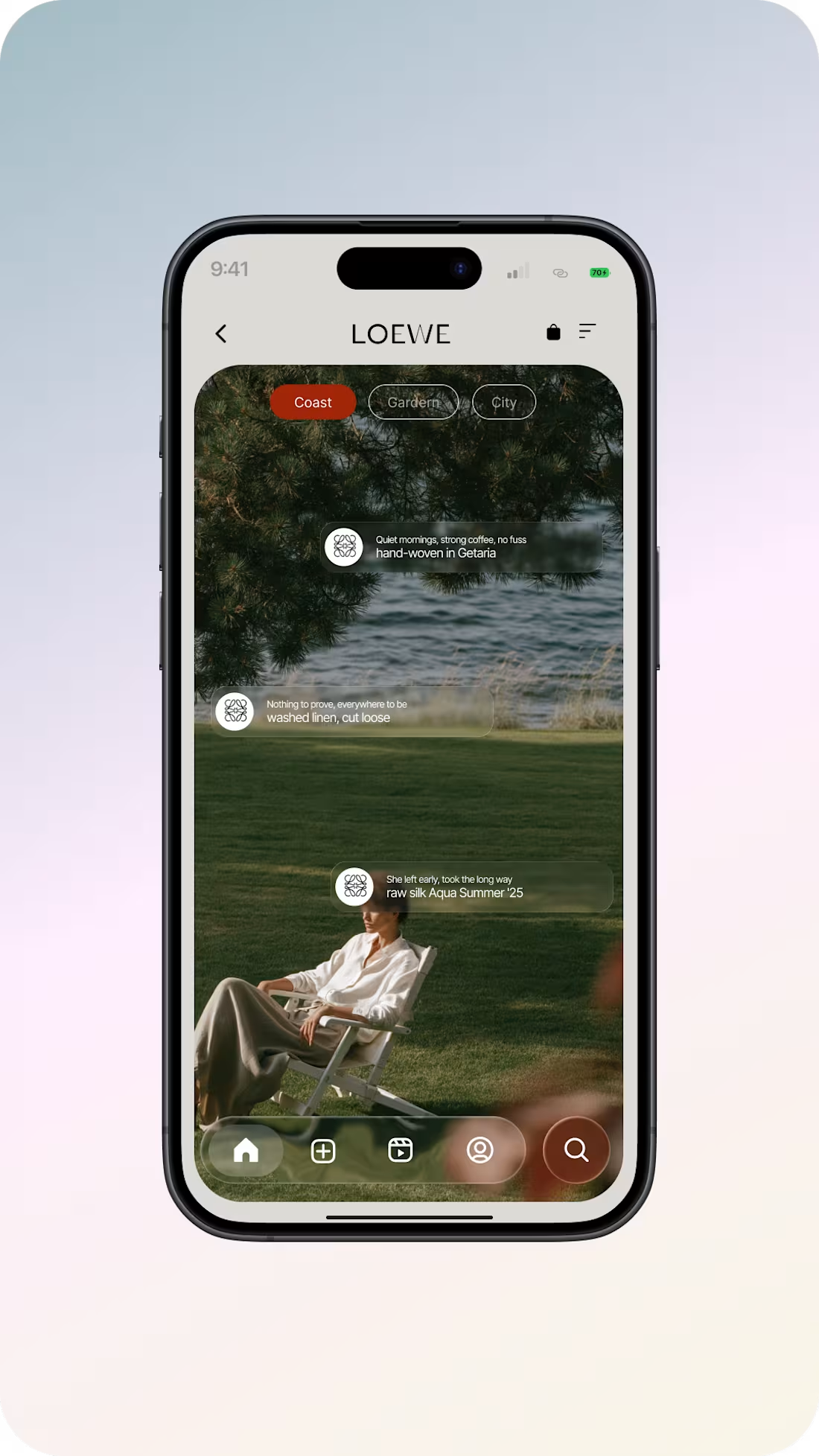
Most product work loses its intent at the handoff. The strategist hands to the UX designer, the UX designer hands to the UI designer, and by the time it reaches a screen the original thinking has been laundered through people who did not write it. What gets designed is competent but inert.
This engagement collapses that handoff. One person owns the strategy, the structure, and the design. The same brand logic that informs the wireframes informs the final surfaces and the system behind them. No translation loss, no relay. What reaches your developers is a single coherent point of view, specified tightly enough that the build has nothing left to guess.
Four weeks to a first launch: six surfaces plus a design system, fully designed and prototyped in Figma and delivered developer-ready. From there it can stay a one-off, or continue as an ongoing design partnership where the system, the research, and the product deepen month over month.
Why this engagement model exists
I started in brand and narrative, illustration included, so I care about what a product says as much as what it does. Working across strategy, UX, UI, and brand in one pair of hands means the story does not fracture as it moves from positioning to pixels. One point of view carries the whole way through, which is the thing that usually gets lost when three specialists each own a slice.
The profile lists five design titles. Those are mechanical. The actual differentiator is that strategy, interface, brand, and system are decided by one person, so every design decision is a brand decision, and because I understand how these products get built, the handoff to your developers is clean rather than a second translation.
Who this is for
Editorial and luxury brands, design-led studios, and brand-experience teams who care how a product feels, not only whether it works, and who have a developer or build team ready to take a considered design and run with it. Teams replacing something competent with something considered, for a launch, relaunch, or upmarket move, and, when the work is ongoing, teams who want one designer who knows their product cold rather than a new freelancer every sprint.
Not for: teams who need the product built and shipped in code as part of this engagement (I design and hand off to your developers, I do not deliver the build), or teams who only need a quick single-screen tidy-up.
What you walk away with
A strategic intake: audience, positioning, the job each surface has to do, competitive read, information architecture.
A six-surface hi-fi design in Figma: home, product or work, about, plus three supporting surfaces of your choice. Each designed to do a specific job, not just exist.
A reusable design system: components, type, colour, and a motion language, all built to extend.
Interaction and motion specification, so the feel is defined rather than left to chance in the build.
A clickable Figma prototype for stakeholder sign-off and user testing.
A developer-ready handoff: annotated files, tokens, specs, and a walkthrough with your build team so nothing is lost in translation.
Design QA during the build: I review the developers' work against the design so the craft survives to launch.
Two weeks of post-handoff design support.
If it becomes ongoing
By six months: a live design system your team designs against, every core flow designed and specified, and a research and testing foundation that replaces guesswork.
By a year: a mature, extensible system your team could run without me, the whole core product carried by one point of view, and design input at the roadmap level rather than brief by brief. By then your team is more self-sufficient, so staying is a choice, not a dependency. Scope tracks the days you book, so the depth matches the commitment.
How it ships
Week 1: strategy and architecture (intake, sitemap, wireframe direction). Weeks 2-3: design pass (every surface, the system, the components, the motion). Week 4: prototype, specification, and developer handoff, followed by a design-QA window as your team builds. If it continues, the retainer runs in monthly cycles: design, specify, QA, repeat, scoped to the days you book.
The credit mechanic
If your engagement starts with a Positioning and Brand Audit, £1,200, that credits. If it starts with a Brand and Identity engagement, £3,000, that credits too. The product design is the high-impact surface at the end of that path, so moving from any earlier engagement into this one is built in.
Recent reference
Caela Space, Sudan Digital, and Terranova, spanning systems design, hand-drawn narrative, and research-led product thinking, with usability testing scoring 81.2 on the System Usability Scale, and a digital planner that raised £3,000 for a non-profit. Same logic across all of them: brand-anchored design that does not lose anything on the way to the screen. Full work at chinenye.design.

Starting at$5,000 /mo
Tags
Product Designer
UI Designer
UX Designer
Web Designer
Interation Designer
Service provided by
Chinenye Ikebudu Manchester, UK
- 2
- Followers
Product UX DesignerChinenye Ikebudu
Starting at$5,000 /mo
Tags
Product Designer
UI Designer
UX Designer
Web Designer
Interation Designer
Most product work loses its intent at the handoff. The strategist hands to the UX designer, the UX designer hands to the UI designer, and by the time it reaches a screen the original thinking has been laundered through people who did not write it. What gets designed is competent but inert.
This engagement collapses that handoff. One person owns the strategy, the structure, and the design. The same brand logic that informs the wireframes informs the final surfaces and the system behind them. No translation loss, no relay. What reaches your developers is a single coherent point of view, specified tightly enough that the build has nothing left to guess.
Four weeks to a first launch: six surfaces plus a design system, fully designed and prototyped in Figma and delivered developer-ready. From there it can stay a one-off, or continue as an ongoing design partnership where the system, the research, and the product deepen month over month.
Why this engagement model exists
I started in brand and narrative, illustration included, so I care about what a product says as much as what it does. Working across strategy, UX, UI, and brand in one pair of hands means the story does not fracture as it moves from positioning to pixels. One point of view carries the whole way through, which is the thing that usually gets lost when three specialists each own a slice.
The profile lists five design titles. Those are mechanical. The actual differentiator is that strategy, interface, brand, and system are decided by one person, so every design decision is a brand decision, and because I understand how these products get built, the handoff to your developers is clean rather than a second translation.
Who this is for
Editorial and luxury brands, design-led studios, and brand-experience teams who care how a product feels, not only whether it works, and who have a developer or build team ready to take a considered design and run with it. Teams replacing something competent with something considered, for a launch, relaunch, or upmarket move, and, when the work is ongoing, teams who want one designer who knows their product cold rather than a new freelancer every sprint.
Not for: teams who need the product built and shipped in code as part of this engagement (I design and hand off to your developers, I do not deliver the build), or teams who only need a quick single-screen tidy-up.
What you walk away with
A strategic intake: audience, positioning, the job each surface has to do, competitive read, information architecture.
A six-surface hi-fi design in Figma: home, product or work, about, plus three supporting surfaces of your choice. Each designed to do a specific job, not just exist.
A reusable design system: components, type, colour, and a motion language, all built to extend.
Interaction and motion specification, so the feel is defined rather than left to chance in the build.
A clickable Figma prototype for stakeholder sign-off and user testing.
A developer-ready handoff: annotated files, tokens, specs, and a walkthrough with your build team so nothing is lost in translation.
Design QA during the build: I review the developers' work against the design so the craft survives to launch.
Two weeks of post-handoff design support.
If it becomes ongoing
By six months: a live design system your team designs against, every core flow designed and specified, and a research and testing foundation that replaces guesswork.
By a year: a mature, extensible system your team could run without me, the whole core product carried by one point of view, and design input at the roadmap level rather than brief by brief. By then your team is more self-sufficient, so staying is a choice, not a dependency. Scope tracks the days you book, so the depth matches the commitment.
How it ships
Week 1: strategy and architecture (intake, sitemap, wireframe direction). Weeks 2-3: design pass (every surface, the system, the components, the motion). Week 4: prototype, specification, and developer handoff, followed by a design-QA window as your team builds. If it continues, the retainer runs in monthly cycles: design, specify, QA, repeat, scoped to the days you book.
The credit mechanic
If your engagement starts with a Positioning and Brand Audit, £1,200, that credits. If it starts with a Brand and Identity engagement, £3,000, that credits too. The product design is the high-impact surface at the end of that path, so moving from any earlier engagement into this one is built in.
Recent reference
Caela Space, Sudan Digital, and Terranova, spanning systems design, hand-drawn narrative, and research-led product thinking, with usability testing scoring 81.2 on the System Usability Scale, and a digital planner that raised £3,000 for a non-profit. Same logic across all of them: brand-anchored design that does not lose anything on the way to the screen. Full work at chinenye.design.
$5,000 /mo