5-Day Design Sprint: Problem to Validated PrototypeJennie M
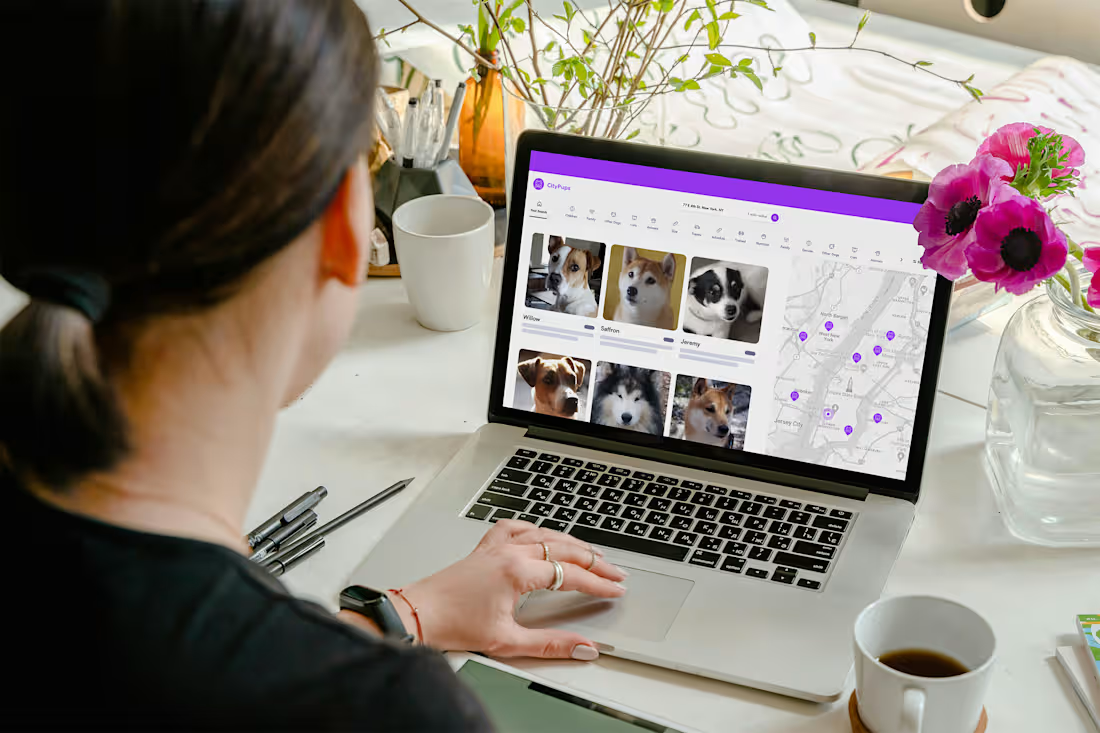
Get from problem to tested prototype in one week, focused on a single core user flow.
Design sprints compress months of debate into 5 structured days. You'll walk away with a validated, clickable prototype and clear evidence of what works (and what doesn't) before writing a single line of code.
How it works:
Day 1: Map & Scope — We align on the problem, map the user journey, and lock in the single user flow we're solving. This scoping session is collaborative and sets the boundary for the sprint.
Day 2: Sketch & Ideate — Structured sketching exercises to generate a range of solutions. No groupthink, just focused individual ideation.
Day 3: Decide — We review solutions together, pick the strongest direction, and build a storyboard for the prototype.
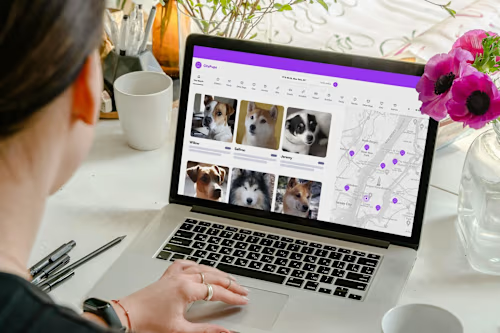
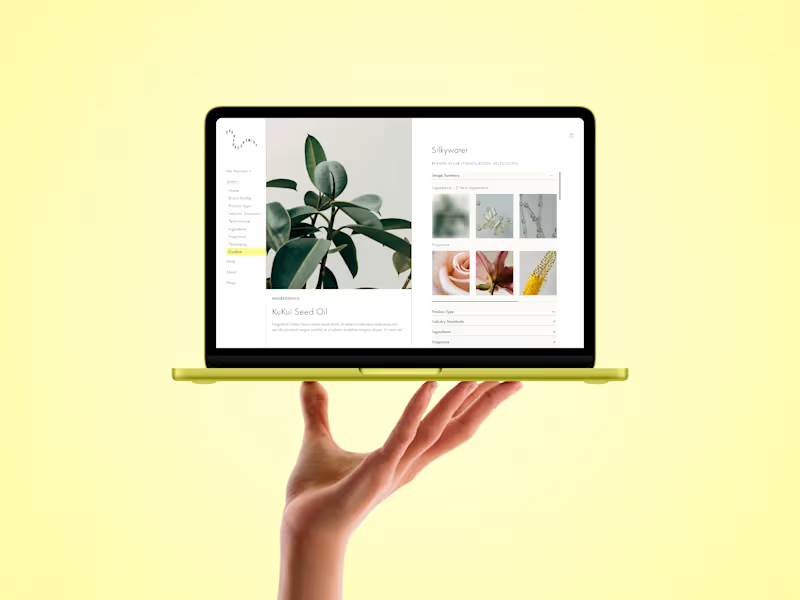
Day 4: Prototype — I build a realistic, clickable Figma prototype that looks and feels like a real product.
Day 5: Test & Learn — Usability testing with 5 real users. You watch the sessions and get a findings report with clear next steps.
What counts as "one user flow"?
A user flow is a single end-to-end task: onboarding, search, checkout, booking, etc. If your project spans multiple flows, we can run sequential sprints. This keeps each sprint focused and the output actionable.
Who this is for:
Founders, product teams, and startups who need to validate an idea fast, de-risk a feature before building, or break through a design deadlock. Works for both new products (0-to-1) and existing products exploring a new direction.
FAQs
Starting at$2,500
Duration5 days
Tags
Figma

Usability Testing
Product Designer
Prototyper
User Researcher
UX Designer
Design Sprint
Service provided by
Jennie M Charlotte, USA
- 3
- Followers
5-Day Design Sprint: Problem to Validated PrototypeJennie M
Starting at$2,500
Duration5 days
Tags
Figma
Usability Testing
Product Designer
Prototyper
User Researcher
UX Designer
Design Sprint
Get from problem to tested prototype in one week, focused on a single core user flow.
Design sprints compress months of debate into 5 structured days. You'll walk away with a validated, clickable prototype and clear evidence of what works (and what doesn't) before writing a single line of code.
How it works:
Day 1: Map & Scope — We align on the problem, map the user journey, and lock in the single user flow we're solving. This scoping session is collaborative and sets the boundary for the sprint.
Day 2: Sketch & Ideate — Structured sketching exercises to generate a range of solutions. No groupthink, just focused individual ideation.
Day 3: Decide — We review solutions together, pick the strongest direction, and build a storyboard for the prototype.
Day 4: Prototype — I build a realistic, clickable Figma prototype that looks and feels like a real product.
Day 5: Test & Learn — Usability testing with 5 real users. You watch the sessions and get a findings report with clear next steps.
What counts as "one user flow"?
A user flow is a single end-to-end task: onboarding, search, checkout, booking, etc. If your project spans multiple flows, we can run sequential sprints. This keeps each sprint focused and the output actionable.
Who this is for:
Founders, product teams, and startups who need to validate an idea fast, de-risk a feature before building, or break through a design deadlock. Works for both new products (0-to-1) and existing products exploring a new direction.
FAQs
$2,500