
Full-Stack Next.js DevelopmentSameer Sabir
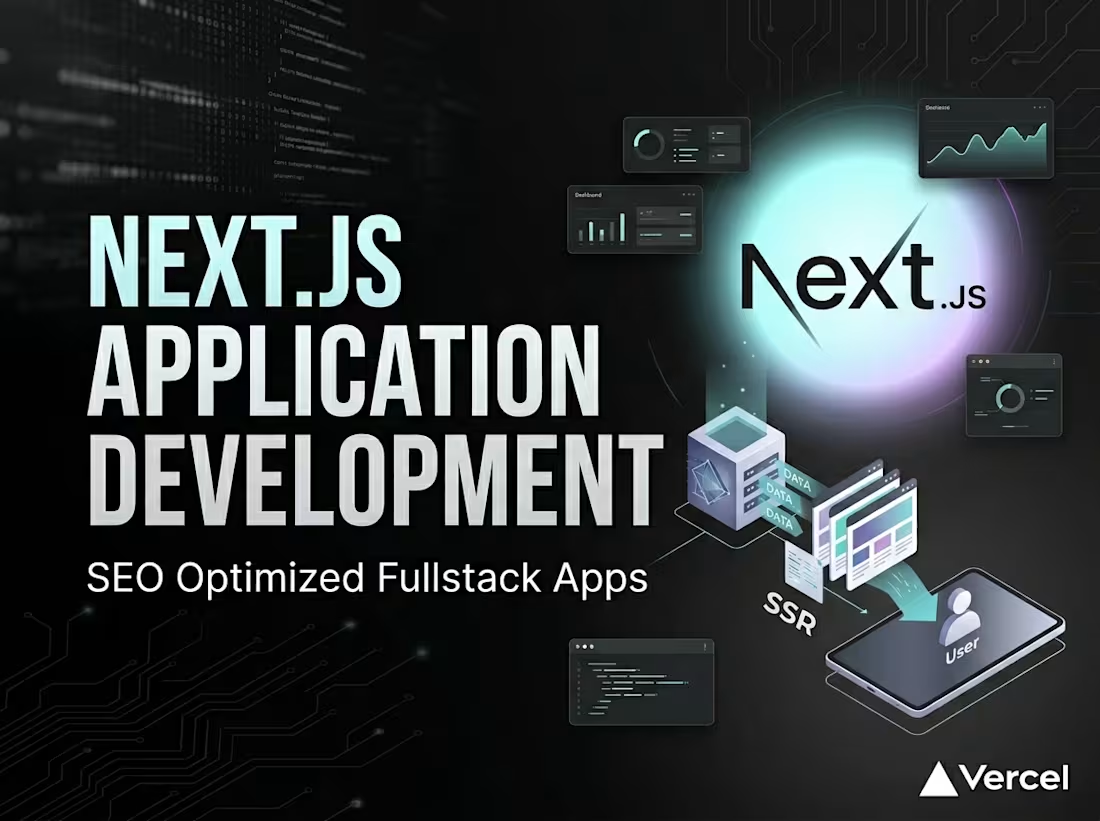
Most Next.js projects I see either underuse the framework or get it wrong in the other direction - SSR everywhere when static generation would've been faster and cheaper, or client-side rendering on pages where SEO actually matters. I'll tell you what fits before writing a single route.
I've built multi-tenant SaaS platforms, converted Figma designs into pixel-perfect production code, wired up REST and GraphQL APIs with proper caching and error handling, and shipped real-time features with WebSockets. Four years, 7+ production apps, used by real teams every day.
Whether you're starting from a Figma file, an existing codebase, or just an idea - I handle the full frontend lifecycle from architecture decisions to deployment.
What's included:
Next.js with TypeScript throughout
App Router and Pages Router - I know both, and I won't push you toward one just because it's newer
Server Components and Client Components placed correctly, not just scattered
SSR, SSG, and ISR configured per route based on how fresh the data actually needs to be
Pixel-perfect Figma to code conversion with responsive layouts across all devices
REST and GraphQL API integration with loading states, error handling, caching, and retry logic
OAuth 2.0 and social login flows (Google, GitHub, LinkedIn, Auth0, Clerk, Firebase)
Third-party service integration (Twilio, SendGrid, HubSpot, Google Maps, Mapbox, and most services with a public API)
State management with Redux Toolkit or TanStack Query - chosen based on the project, not habit
Real-time data features using WebSockets or polling where needed
Multi-tenant architecture with per-tenant configuration support
Middleware for route protection, redirects, and edge-level logic
Code splitting, lazy loading, and performance review before delivery
Smooth animations and micro-interactions
Cross-browser testing across Chrome, Firefox, Safari, and Edge
Clean component architecture the next developer can actually follow
Deployment to Vercel or existing infrastructure
I write with the next developer in mind. Clear naming, predictable component boundaries, no clever shortcuts that take thirty minutes to untangle when something breaks at 2am.
Migrating from Pages Router to App Router? I've done that. It works best in stages - not a full rewrite.
FAQs
Example work


Sameer's other services


Starting at$30 /hr
Tags
GraphQL

Next.js

Node.js

React

Tailwind CSS

TypeScript

API Integration
Figma to Code
SaaS
Service provided by
Sameer Sabir Lahore, Pakistan
- 5
- Followers
Full-Stack Next.js DevelopmentSameer Sabir
Starting at$30 /hr
Tags
GraphQL
Next.js
Node.js
React
Tailwind CSS
TypeScript
API Integration
Figma to Code
SaaS
Most Next.js projects I see either underuse the framework or get it wrong in the other direction - SSR everywhere when static generation would've been faster and cheaper, or client-side rendering on pages where SEO actually matters. I'll tell you what fits before writing a single route.
I've built multi-tenant SaaS platforms, converted Figma designs into pixel-perfect production code, wired up REST and GraphQL APIs with proper caching and error handling, and shipped real-time features with WebSockets. Four years, 7+ production apps, used by real teams every day.
Whether you're starting from a Figma file, an existing codebase, or just an idea - I handle the full frontend lifecycle from architecture decisions to deployment.
What's included:
Next.js with TypeScript throughout
App Router and Pages Router - I know both, and I won't push you toward one just because it's newer
Server Components and Client Components placed correctly, not just scattered
SSR, SSG, and ISR configured per route based on how fresh the data actually needs to be
Pixel-perfect Figma to code conversion with responsive layouts across all devices
REST and GraphQL API integration with loading states, error handling, caching, and retry logic
OAuth 2.0 and social login flows (Google, GitHub, LinkedIn, Auth0, Clerk, Firebase)
Third-party service integration (Twilio, SendGrid, HubSpot, Google Maps, Mapbox, and most services with a public API)
State management with Redux Toolkit or TanStack Query - chosen based on the project, not habit
Real-time data features using WebSockets or polling where needed
Multi-tenant architecture with per-tenant configuration support
Middleware for route protection, redirects, and edge-level logic
Code splitting, lazy loading, and performance review before delivery
Smooth animations and micro-interactions
Cross-browser testing across Chrome, Firefox, Safari, and Edge
Clean component architecture the next developer can actually follow
Deployment to Vercel or existing infrastructure
I write with the next developer in mind. Clear naming, predictable component boundaries, no clever shortcuts that take thirty minutes to untangle when something breaks at 2am.
Migrating from Pages Router to App Router? I've done that. It works best in stages - not a full rewrite.
FAQs
Example work
Sameer's other services
$30 /hr