
Test Automation Framework DevelopmentThananjayan Rajasekaran
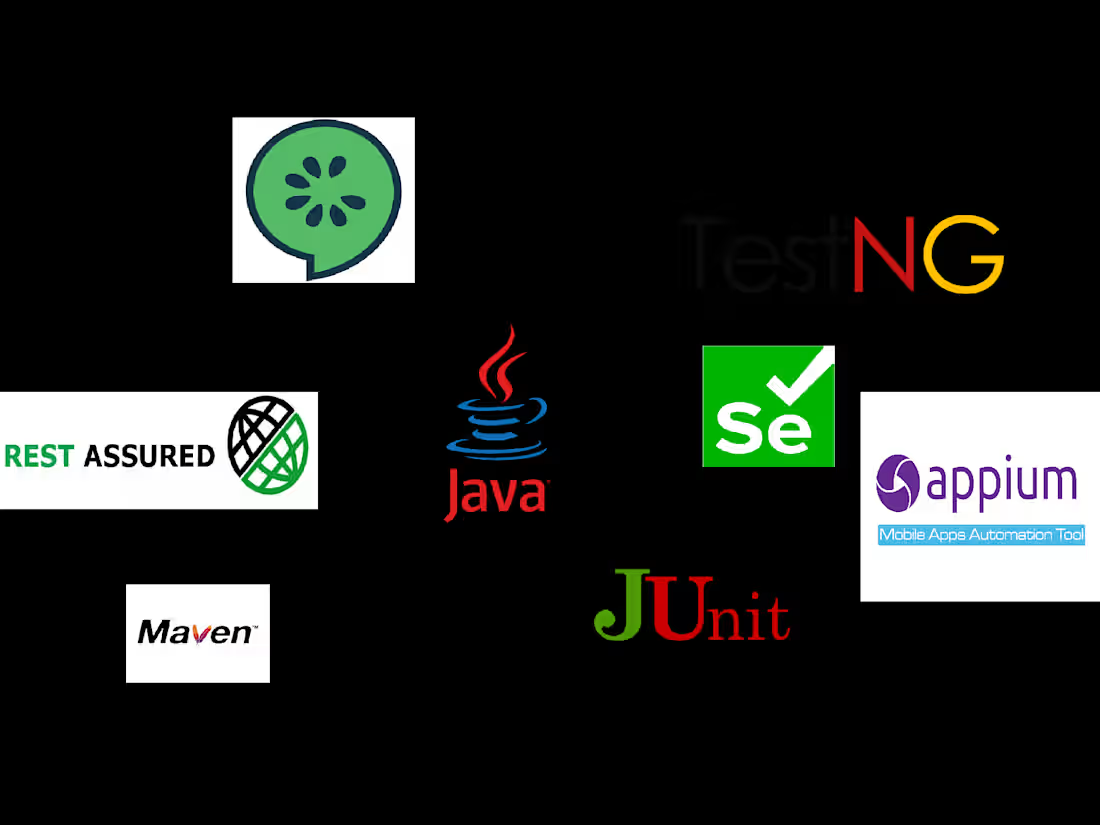
I provide custom framework development services tailored to your specific needs, ensuring your project's success. What makes me unique is my dedication to understanding your requirements in depth and crafting innovative solutions that perfectly align with your goals, delivering exceptional value and empowering your business for long-term growth
What's included
Build a framework from scratch
Requirements Analysis: Understanding the project's needs and objectives to define the framework's scope and functionalities.
Architecture Design: Creating a robust architecture that outlines the framework's components, interactions, and scalability to support current and future requirements.
Implementation: Developing the framework's core modules and features using appropriate programming languages and design patterns, ensuring clean, modular, and maintainable code.
Testing: Conducting rigorous testing, including unit tests, integration tests, and user acceptance tests, to validate the framework's functionality, performance, and reliability.
Documentation: Writing comprehensive documentation covering installation, configuration, usage guidelines, and API references to facilitate seamless adoption and integration by developers.
Deployment: Packaging the framework for distribution and deploying it to relevant platforms or repositories for easy access and utilization by the target audience
Contact for pricing
Tags
Java

JavaScript

Python

TypeScript

Consultant
QA Engineer
Service provided by
Thananjayan Rajasekaran Chennai, India
Test Automation Framework DevelopmentThananjayan Rajasekaran
Contact for pricing
Tags
Java
JavaScript
Python
TypeScript
Consultant
QA Engineer
I provide custom framework development services tailored to your specific needs, ensuring your project's success. What makes me unique is my dedication to understanding your requirements in depth and crafting innovative solutions that perfectly align with your goals, delivering exceptional value and empowering your business for long-term growth
What's included
Build a framework from scratch
Requirements Analysis: Understanding the project's needs and objectives to define the framework's scope and functionalities.
Architecture Design: Creating a robust architecture that outlines the framework's components, interactions, and scalability to support current and future requirements.
Implementation: Developing the framework's core modules and features using appropriate programming languages and design patterns, ensuring clean, modular, and maintainable code.
Testing: Conducting rigorous testing, including unit tests, integration tests, and user acceptance tests, to validate the framework's functionality, performance, and reliability.
Documentation: Writing comprehensive documentation covering installation, configuration, usage guidelines, and API references to facilitate seamless adoption and integration by developers.
Deployment: Packaging the framework for distribution and deploying it to relevant platforms or repositories for easy access and utilization by the target audience
Contact for pricing