
App developmentKiprono Ngetich
What's included
Mobile App Development: Crafting Innovative Solutions
Functional Requirements Document (FRD): A detailed document outlining the app's features, functionalities, user flows, and technical requirements.
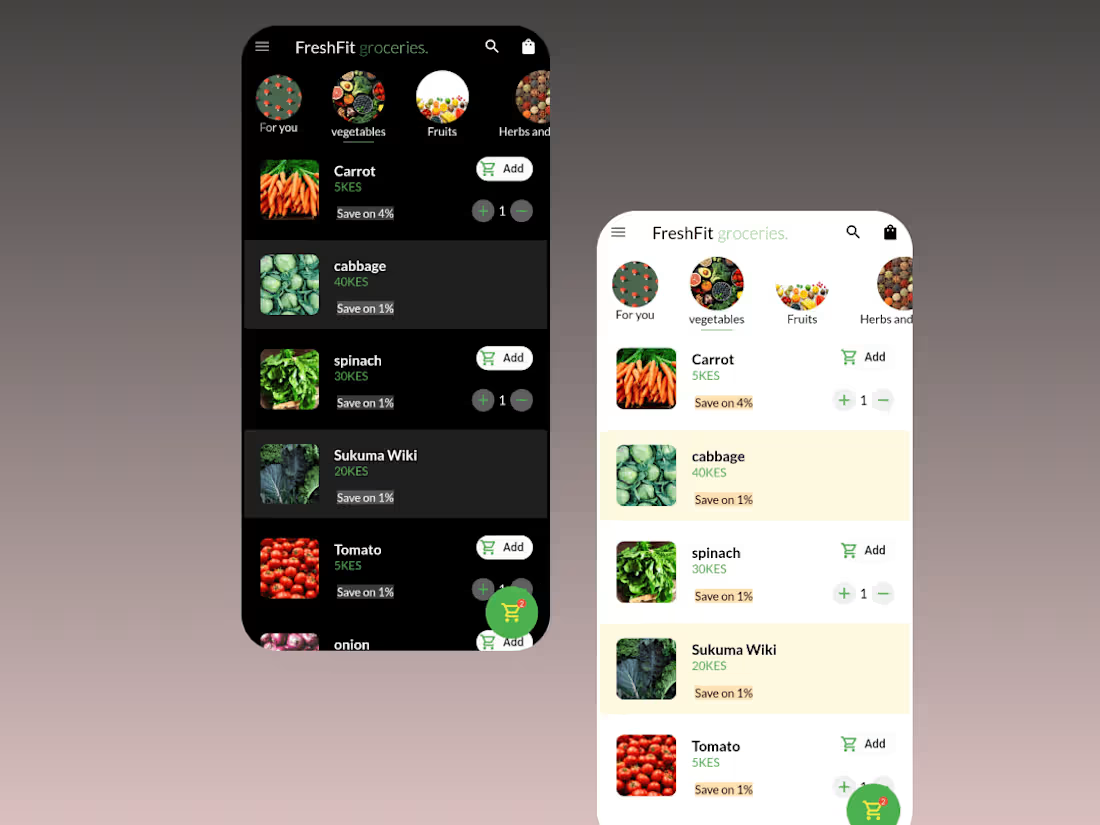
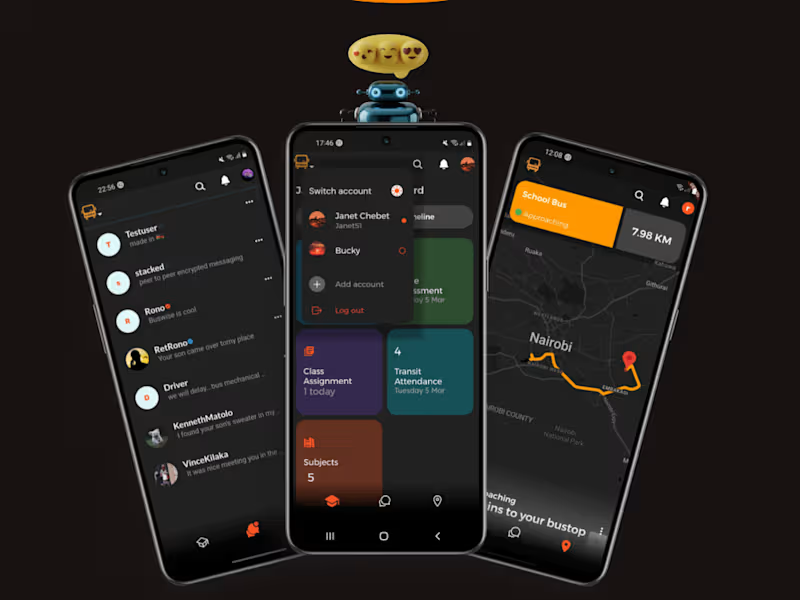
Wireframes and Mockups: Visual representations of the app's user interface, including screen layouts, navigation flow, and interaction designs.
User Interface (UI) Design: High-fidelity designs for the app's user interface, including color schemes, typography, icons, and other visual elements.
App Architecture and Data Flow Diagrams: Diagrams and documentation illustrating the app's overall architecture, data flow, and integration with external services or APIs.
Source Code: The complete, well-documented, and version-controlled source code for the mobile app, including all necessary libraries, dependencies, and third-party integrations.
Unit Tests and Test Cases: A comprehensive suite of unit tests and test cases to ensure the app's functionality, stability, and reliability.
Build and Deployment Scripts: Scripts or automation tools to build, package, and deploy the app for different platforms (e.g., iOS, Android) and environments (e.g., development, staging, production).
App Icons and Launch Screens: Visual assets for the app's icons, launch screens, and splash screens, adhering to platform-specific guidelines.
Documentation: Detailed documentation covering the app's features, architecture, installation instructions, deployment processes, and troubleshooting guides.
App Store/Play Store Assets: Marketing assets and metadata required for app store submissions, such as app descriptions, screenshots, and promotional videos.
Analytics and Monitoring Setup: Integration of analytics and monitoring tools (e.g., Firebase Analytics, Crashlytics) to track app usage, performance, and crash reports.
User Acceptance Testing (UAT) Report: A report documenting the user acceptance testing process, including test cases, results, and any identified issues or bugs.
Kiprono's other services
Starting at$500
Duration3 weeks
Tags
Android Studio

C#
Java

React Native

Android Developer
Mobile Engineer
Software Engineer
Service provided by
Kiprono Ngetich Nairobi, Kenya
App developmentKiprono Ngetich
Starting at$500
Duration3 weeks
Tags
Android Studio
C#
Java
React Native
Android Developer
Mobile Engineer
Software Engineer
What's included
Mobile App Development: Crafting Innovative Solutions
Functional Requirements Document (FRD): A detailed document outlining the app's features, functionalities, user flows, and technical requirements.
Wireframes and Mockups: Visual representations of the app's user interface, including screen layouts, navigation flow, and interaction designs.
User Interface (UI) Design: High-fidelity designs for the app's user interface, including color schemes, typography, icons, and other visual elements.
App Architecture and Data Flow Diagrams: Diagrams and documentation illustrating the app's overall architecture, data flow, and integration with external services or APIs.
Source Code: The complete, well-documented, and version-controlled source code for the mobile app, including all necessary libraries, dependencies, and third-party integrations.
Unit Tests and Test Cases: A comprehensive suite of unit tests and test cases to ensure the app's functionality, stability, and reliability.
Build and Deployment Scripts: Scripts or automation tools to build, package, and deploy the app for different platforms (e.g., iOS, Android) and environments (e.g., development, staging, production).
App Icons and Launch Screens: Visual assets for the app's icons, launch screens, and splash screens, adhering to platform-specific guidelines.
Documentation: Detailed documentation covering the app's features, architecture, installation instructions, deployment processes, and troubleshooting guides.
App Store/Play Store Assets: Marketing assets and metadata required for app store submissions, such as app descriptions, screenshots, and promotional videos.
Analytics and Monitoring Setup: Integration of analytics and monitoring tools (e.g., Firebase Analytics, Crashlytics) to track app usage, performance, and crash reports.
User Acceptance Testing (UAT) Report: A report documenting the user acceptance testing process, including test cases, results, and any identified issues or bugs.
Kiprono's other services
$500