
Indonesia Market Entry Intelligence ReportRyan Fadhila Novandika
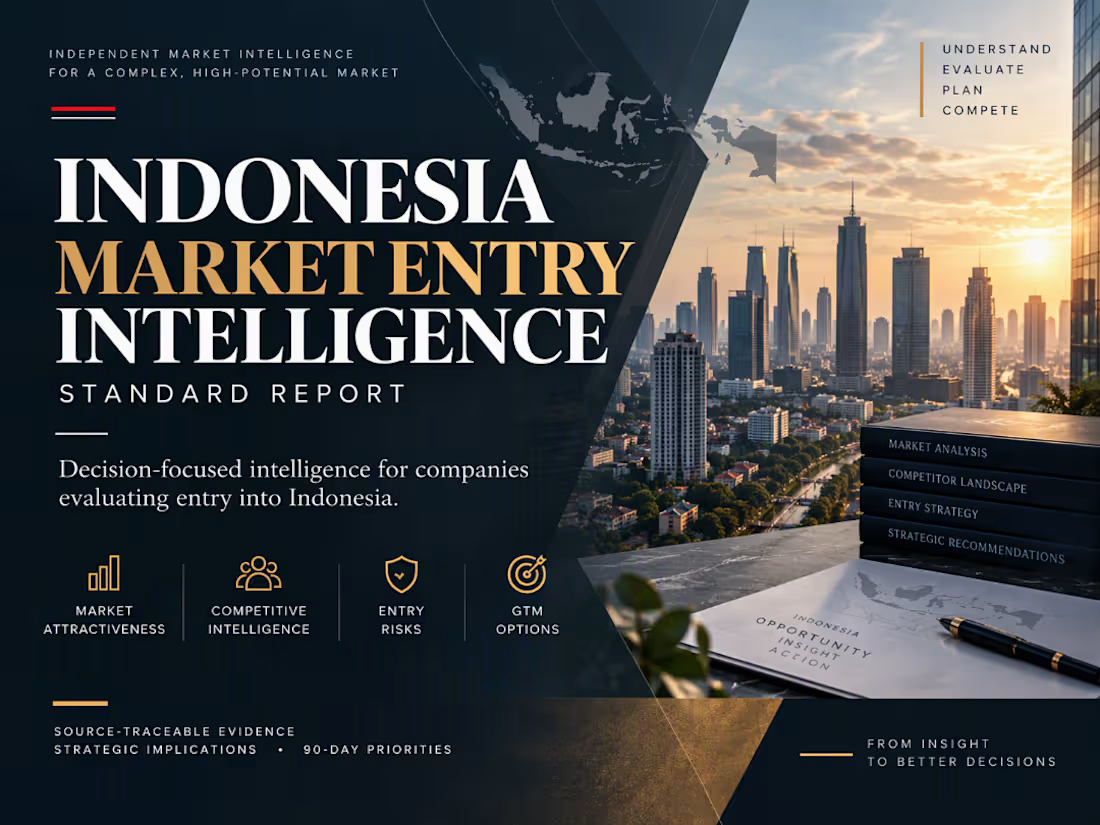
Evaluating Indonesia requires more than market data. It requires understanding whether the opportunity is attractive, what competitive dynamics matter, what could constrain entry, and how the company could realistically approach the market.
The Indonesia Market Entry Intelligence Report is a structured, decision-focused research engagement for companies seriously evaluating entry or expansion into Indonesia.
What the engagement covers:
Market Entry Overview
Defines the market-entry question, company context, strategic objectives, and key assumptions shaping the assessment.
Market Attractiveness
Evaluates relevant market signals, structural drivers, demand dynamics, and other indicators affecting the opportunity.
Competitive Intelligence
Assesses relevant competitors, positioning, propositions, strategic strengths and weaknesses, and competitive implications for a potential entrant.
Entry Environment
Examines structural, regulatory, operational, localization, and market-access considerations relevant to the entry decision.
Risks & Barriers:
Identifies factors that could materially weaken, delay, or complicate the market-entry thesis.
Go-to-Market Options:
Evaluates potential entry approaches, positioning considerations, and initial commercial priorities.
90-Day Priorities:
Provides a structured sequence of actions, validation priorities, and issues to investigate before deeper market commitment.
Conclusions & Recommendations:
Synthesizes the evidence into decision-relevant implications and recommended next steps.
Research methodology:
Research is primarily based on relevant secondary and publicly available sources. The analysis emphasizes source traceability and distinguishes, where appropriate, between facts, interpretations, hypotheses, and recommendations.
Deliverable:
A structured market-entry intelligence report designed to support strategic discussion and further decision-making, including an assumptions register and source-traceable evidence framework where relevant.
To get started
• Company and product/service overview
• Target customer or industry
• Strategic reason for evaluating Indonesia
• Key questions or assumptions to investigate
• Relevant company and product links
• Existing research or internal context you would like considered
Scope note
This engagement is based primarily on secondary research. Primary interviews, consumer surveys, legal opinions, financial due diligence, exhaustive regulatory analysis, and other specialized work require separate scoping.
FAQs
Example work

Ryan's other services
Starting at$750
Duration10 days
Tags
Business Analyst
Business Strategist
Competitive Analysis
Go-to-Market Strategy
Market Analysis
Market Researcher
Competitive Intelligence
Service provided by
Ryan Fadhila Novandika Bogor, Indonesia
Indonesia Market Entry Intelligence ReportRyan Fadhila Novandika
Starting at$750
Duration10 days
Tags
Business Analyst
Business Strategist
Competitive Analysis
Go-to-Market Strategy
Market Analysis
Market Researcher
Competitive Intelligence
Evaluating Indonesia requires more than market data. It requires understanding whether the opportunity is attractive, what competitive dynamics matter, what could constrain entry, and how the company could realistically approach the market.
The Indonesia Market Entry Intelligence Report is a structured, decision-focused research engagement for companies seriously evaluating entry or expansion into Indonesia.
What the engagement covers:
Market Entry Overview
Defines the market-entry question, company context, strategic objectives, and key assumptions shaping the assessment.
Market Attractiveness
Evaluates relevant market signals, structural drivers, demand dynamics, and other indicators affecting the opportunity.
Competitive Intelligence
Assesses relevant competitors, positioning, propositions, strategic strengths and weaknesses, and competitive implications for a potential entrant.
Entry Environment
Examines structural, regulatory, operational, localization, and market-access considerations relevant to the entry decision.
Risks & Barriers:
Identifies factors that could materially weaken, delay, or complicate the market-entry thesis.
Go-to-Market Options:
Evaluates potential entry approaches, positioning considerations, and initial commercial priorities.
90-Day Priorities:
Provides a structured sequence of actions, validation priorities, and issues to investigate before deeper market commitment.
Conclusions & Recommendations:
Synthesizes the evidence into decision-relevant implications and recommended next steps.
Research methodology:
Research is primarily based on relevant secondary and publicly available sources. The analysis emphasizes source traceability and distinguishes, where appropriate, between facts, interpretations, hypotheses, and recommendations.
Deliverable:
A structured market-entry intelligence report designed to support strategic discussion and further decision-making, including an assumptions register and source-traceable evidence framework where relevant.
To get started
• Company and product/service overview
• Target customer or industry
• Strategic reason for evaluating Indonesia
• Key questions or assumptions to investigate
• Relevant company and product links
• Existing research or internal context you would like considered
Scope note
This engagement is based primarily on secondary research. Primary interviews, consumer surveys, legal opinions, financial due diligence, exhaustive regulatory analysis, and other specialized work require separate scoping.
FAQs
Example work
Ryan's other services
$750