
ARE YOU LOOKING FOR DATA ANALYTICSAryan Gupta
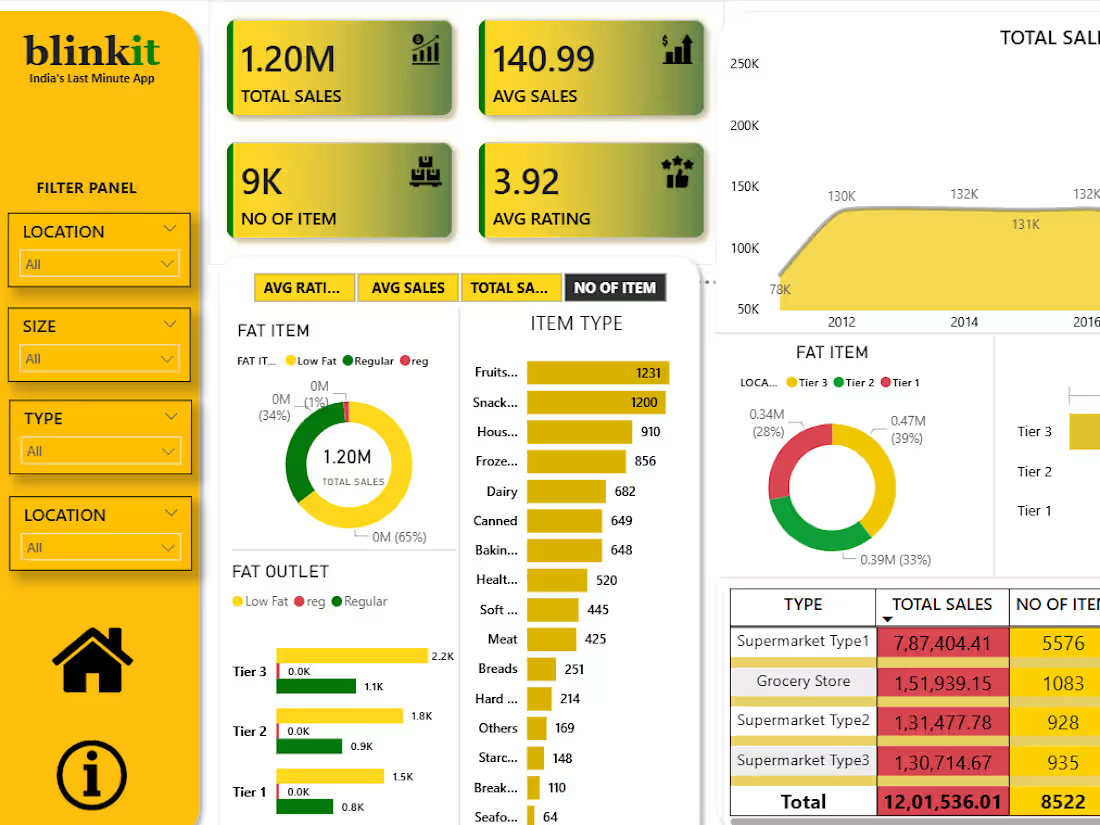
I offer expert guidance and hands-on training in data analytics, helping you master data cleaning, visualization, and interpretation using real-world datasets. What makes me unique is my personalized, step-by-step approach—I don’t just teach concepts, I ensure you understand how to apply them practically through interactive examples, coding exercises, and analytical problem-solving.
What's included
I'M DELIVER THE FINAL PROJECT IN CLIENT LAST TIME.
At the end of a Data Analytics project, the client can expect a comprehensive set of deliverables that provide both insights and actionable outcomes. These typically include:
Data Collection and Preparation Documentation
Cleaned, validated, and well-structured datasets.
Data dictionary and metadata describing variables, sources, and formats.
Documentation of data cleaning, transformation, and integration processes.
Exploratory Data Analysis (EDA) Report
Summary statistics, visualizations, and key trends identified during analysis.
Insights into data distributions, correlations, and outliers.
Analytical Models / Predictive Models
Developed models (e.g., regression, classification, clustering) with performance metrics.
Model documentation detailing assumptions, methods, and validation results.
Code scripts or notebooks for model development and deployment.
Dashboards and Visual Reports
Interactive dashboards (e.g., Power BI, Tableau, or Python dashboards).
Visual reports highlighting KPIs, patterns, and insights relevant to business goals.
Insight Summary and Recommendations
Concise, data-driven insights aligned with project objectives.
Business recommendations or strategies based on analytical findings.
Technical Documentation and Reproducibility Assets
Codebase and analysis scripts (Python, R, SQL, etc.).
Environment setup instructions or reproducibility guide.
Versioned datasets and scripts for transparency.
Final Presentation / Executive Summary
A client-facing presentation summarizing approach, findings, and next steps.
Actionable insights translated into business language for decision-makers.
Contact for pricing
Tags
MATLAB

Microsoft Excel

pandas

Tableau

Data Analyst
Data Modelling Analyst
Data Scientist
Service provided by
Aryan Gupta Noida, India
ARE YOU LOOKING FOR DATA ANALYTICSAryan Gupta
Contact for pricing
Tags
MATLAB
Microsoft Excel
pandas
Tableau
Data Analyst
Data Modelling Analyst
Data Scientist
I offer expert guidance and hands-on training in data analytics, helping you master data cleaning, visualization, and interpretation using real-world datasets. What makes me unique is my personalized, step-by-step approach—I don’t just teach concepts, I ensure you understand how to apply them practically through interactive examples, coding exercises, and analytical problem-solving.
What's included
I'M DELIVER THE FINAL PROJECT IN CLIENT LAST TIME.
At the end of a Data Analytics project, the client can expect a comprehensive set of deliverables that provide both insights and actionable outcomes. These typically include:
Data Collection and Preparation Documentation
Cleaned, validated, and well-structured datasets.
Data dictionary and metadata describing variables, sources, and formats.
Documentation of data cleaning, transformation, and integration processes.
Exploratory Data Analysis (EDA) Report
Summary statistics, visualizations, and key trends identified during analysis.
Insights into data distributions, correlations, and outliers.
Analytical Models / Predictive Models
Developed models (e.g., regression, classification, clustering) with performance metrics.
Model documentation detailing assumptions, methods, and validation results.
Code scripts or notebooks for model development and deployment.
Dashboards and Visual Reports
Interactive dashboards (e.g., Power BI, Tableau, or Python dashboards).
Visual reports highlighting KPIs, patterns, and insights relevant to business goals.
Insight Summary and Recommendations
Concise, data-driven insights aligned with project objectives.
Business recommendations or strategies based on analytical findings.
Technical Documentation and Reproducibility Assets
Codebase and analysis scripts (Python, R, SQL, etc.).
Environment setup instructions or reproducibility guide.
Versioned datasets and scripts for transparency.
Final Presentation / Executive Summary
A client-facing presentation summarizing approach, findings, and next steps.
Actionable insights translated into business language for decision-makers.
Contact for pricing