
Full-Stack Website Development — Next.js, Supabase, VercelVyankatesh Gadge
Most website projects fail at the handoff. A designer hands off to a developer / a developer inherits someone else's spec / by the time it ships, half the original thinking got lost in translation.
This engagement collapses that handoff. One person owns the strategy, the build, and the backend — same logic that shapes the sitemap shapes the database schema. No relay, no reinterpretation.
What you get:
Structured intake (goals / audience / core features) / a responsive, production-grade site built in Next.js / Supabase backend for auth, database, and real-time data where needed / clean, reusable component architecture / multi-language support if required / deployment via Vercel with automatic CI/CD from GitHub / performance tuning (image optimization / lazy loading / clean Lighthouse scores) / SEO foundation (meta tags / sitemap / semantic structure / OG images) / third-party integrations (forms / OAuth / analytics / APIs) / full ownership — your repo, your domain, nothing locked to me.
Who this is for:
Founders and small businesses who need real functionality — accounts, dashboards, search, admin tools — not just a static brochure page.
How it ships
Week 1: Strategy and architecture
Intake call to nail down goals, audience, and core features. Sitemap and information architecture. Technical planning — what needs a database, what needs auth, what's static versus dynamic.
Weeks 2–3: Design and structure
Every page laid out and designed — UI, components, layout system. If you already have brand guidelines or a Figma file, I build to match; if not, I design it as part of this phase.
Weeks 4–5: Build
Frontend built in Next.js, backend set up in Supabase — authentication, database, real-time data where needed. Core pages and functionality wired end to end. Third-party integrations — forms, OAuth, analytics, APIs — and content populated across all pages.
Week 6: Polish, performance, and launch
Performance tuning, SEO foundation, cross-device testing, deployment via Vercel, and full handoff — your repo, your domain, your accounts.
Recent reference:
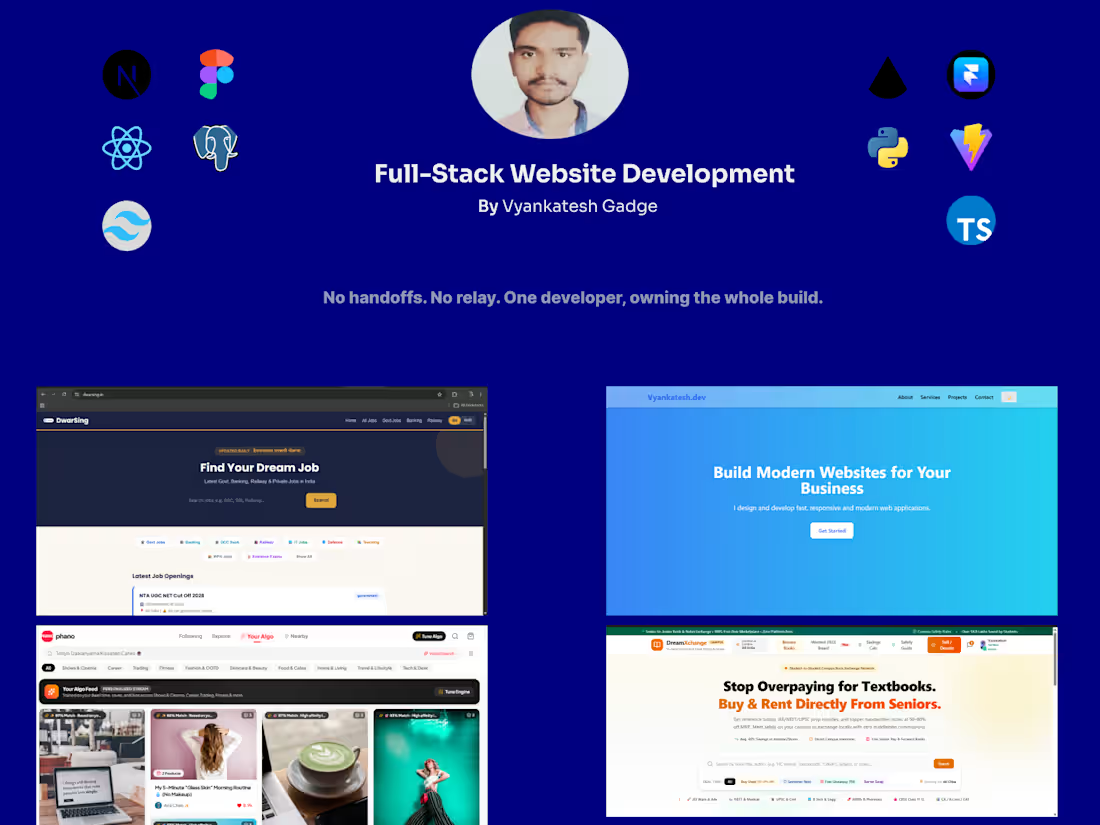
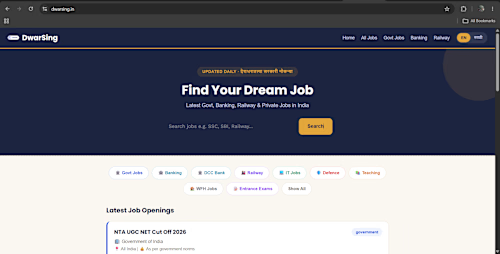
Built and independently maintain DwarSing, a bilingual (English/Marathi) job portal for Maharashtra with authentication, a secure exam system, and live production traffic — solo, start to finish.
FAQs
Example work
Starting at$3,000
Duration6 weeks
Tags
Full-Stack Development
Next.js

PostgreSQL

React

SEO
Supabase

Vercel

Web Application Development
Web Developer
Service provided by
Vyankatesh Gadge Pune, India
- 5
- Followers
Full-Stack Website Development — Next.js, Supabase, VercelVyankatesh Gadge
Starting at$3,000
Duration6 weeks
Tags
Full-Stack Development
Next.js
PostgreSQL
React
SEO
Supabase
Vercel
Web Application Development
Web Developer
Most website projects fail at the handoff. A designer hands off to a developer / a developer inherits someone else's spec / by the time it ships, half the original thinking got lost in translation.
This engagement collapses that handoff. One person owns the strategy, the build, and the backend — same logic that shapes the sitemap shapes the database schema. No relay, no reinterpretation.
What you get:
Structured intake (goals / audience / core features) / a responsive, production-grade site built in Next.js / Supabase backend for auth, database, and real-time data where needed / clean, reusable component architecture / multi-language support if required / deployment via Vercel with automatic CI/CD from GitHub / performance tuning (image optimization / lazy loading / clean Lighthouse scores) / SEO foundation (meta tags / sitemap / semantic structure / OG images) / third-party integrations (forms / OAuth / analytics / APIs) / full ownership — your repo, your domain, nothing locked to me.
Who this is for:
Founders and small businesses who need real functionality — accounts, dashboards, search, admin tools — not just a static brochure page.
How it ships
Week 1: Strategy and architecture
Intake call to nail down goals, audience, and core features. Sitemap and information architecture. Technical planning — what needs a database, what needs auth, what's static versus dynamic.
Weeks 2–3: Design and structure
Every page laid out and designed — UI, components, layout system. If you already have brand guidelines or a Figma file, I build to match; if not, I design it as part of this phase.
Weeks 4–5: Build
Frontend built in Next.js, backend set up in Supabase — authentication, database, real-time data where needed. Core pages and functionality wired end to end. Third-party integrations — forms, OAuth, analytics, APIs — and content populated across all pages.
Week 6: Polish, performance, and launch
Performance tuning, SEO foundation, cross-device testing, deployment via Vercel, and full handoff — your repo, your domain, your accounts.
Recent reference:
Built and independently maintain DwarSing, a bilingual (English/Marathi) job portal for Maharashtra with authentication, a secure exam system, and live production traffic — solo, start to finish.
FAQs
Example work
$3,000