
Website Development ServiceBrimesh Desai
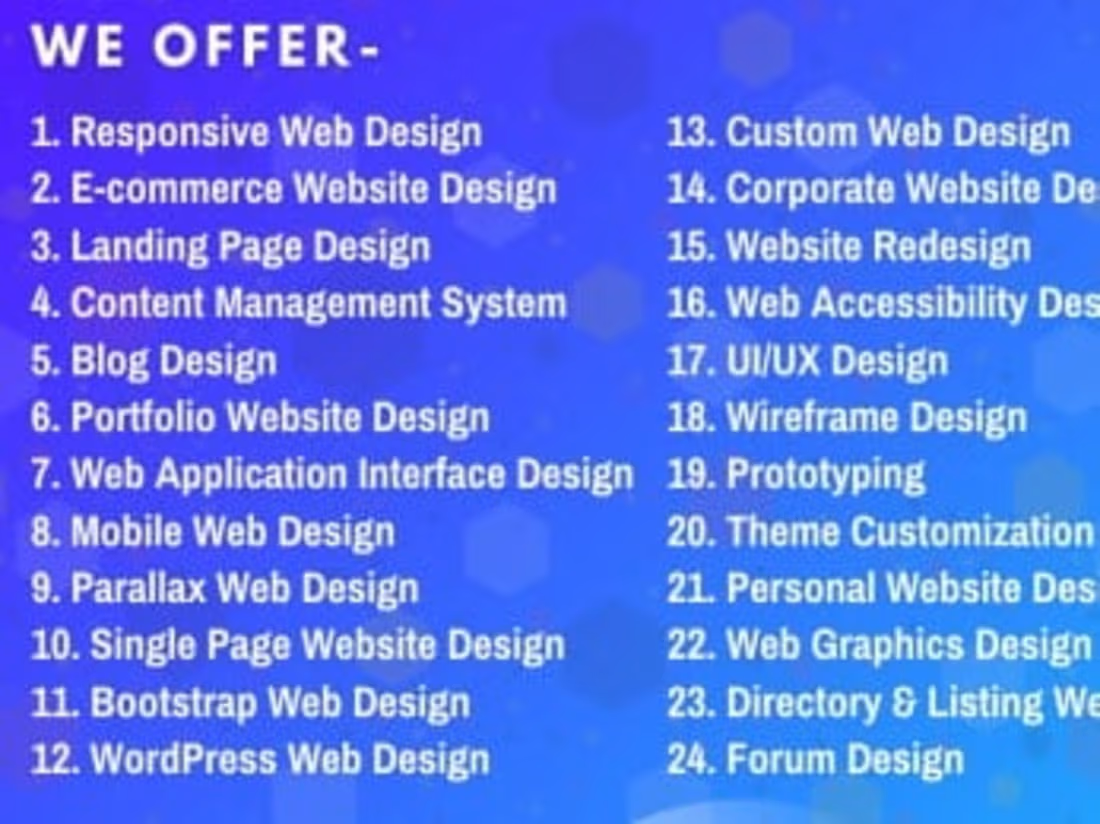
When offering custom website services, it's important to clearly define the deliverables that a client can expect at the end of the project. This ensures clarity and satisfaction for both parties. Here’s a list of typical deliverables for a custom website project:
Final Website: A fully functional, live website that is accessible on the internet.
Responsive Design: The website should be responsive, providing an optimal viewing experience across various devices (desktops, tablets, smartphones).
Custom Design Files: All original design files (e.g., in Adobe XD, Figma, Photoshop) used to create the website.
Source Code: Complete source code of the website, including HTML, CSS, JavaScript, and other programming files, with proper documentation.
Content Management System (CMS): If a CMS like WordPress is used, provide full access to the backend for content editing and management.
SEO Features: Implementation of basic SEO elements like meta tags, alt tags for images, and semantic HTML.
User Manual/Documentation: A guide or documentation explaining how to update and manage the website, especially if the site has a CMS or unique features.
Training Sessions: Offer training sessions to the client or their team on how to use and manage the website.
Testing and Quality Assurance Reports: Documentation of the testing processes and results, including compatibility testing across different browsers and devices.
Analytics Integration: Set up of web analytics tools (like Google Analytics) for tracking website performance.
Web Hosting and Domain Setup: Assistance with hosting setup and domain registration if included in the service.
Website Maintenance Plan: Details of any ongoing maintenance services if offered.
Technical Support: A specified period of post-launch technical support.
Accessibility Compliance: Ensure the website meets relevant accessibility standards (like WCAG).
Security Features: Implementation of basic security measures such as SSL certificates, secure login, etc.
Legal Compliance: Ensuring the website complies with legal requirements, such as privacy policies, cookie policies, GDPR compliance if applicable.
What's included
Deliverables :
Final Website: A fully functional, live website that is accessible on the internet.
Responsive Design: The website should be responsive, providing an optimal viewing experience across various devices (desktops, tablets, smartphones).
Custom Design Files: All original design files (e.g., in Adobe XD, Figma, Photoshop) used to create the website.
Source Code: Complete source code of the website, including HTML, CSS, JavaScript, and other programming files, with proper documentation.
Content Management System (CMS): If a CMS like WordPress is used, provide full access to the backend for content editing and management.
SEO Features: Implementation of basic SEO elements like meta tags, alt tags for images, and semantic HTML.
User Manual/Documentation: A guide or documentation explaining how to update and manage the website, especially if the site has a CMS or unique features.
Training Sessions: Offer training sessions to the client or their team on how to use and manage the website.
Testing and Quality Assurance Reports: Documentation of the testing processes and results, including compatibility testing across different browsers and devices.
Analytics Integration: Set up of web analytics tools (like Google Analytics) for tracking website performance.
Web Hosting and Domain Setup: Assistance with hosting setup and domain registration if included in the service.
Website Maintenance Plan: Details of any ongoing maintenance services if offered.
Technical Support: A specified period of post-launch technical support.
Accessibility Compliance: Ensure the website meets relevant accessibility standards (like WCAG).
Security Features: Implementation of basic security measures such as SSL certificates, secure login, etc.
Brimesh's other services

Starting at$500
Duration1 week
Tags
HTML5

JavaScript

React

Shopify

WordPress

Frontend Engineer
Web Designer
Web Developer
Service provided by
Brimesh Desai Bengaluru, India
Website Development ServiceBrimesh Desai
Starting at$500
Duration1 week
Tags
HTML5
JavaScript
React
Shopify
WordPress
Frontend Engineer
Web Designer
Web Developer
When offering custom website services, it's important to clearly define the deliverables that a client can expect at the end of the project. This ensures clarity and satisfaction for both parties. Here’s a list of typical deliverables for a custom website project:
Final Website: A fully functional, live website that is accessible on the internet.
Responsive Design: The website should be responsive, providing an optimal viewing experience across various devices (desktops, tablets, smartphones).
Custom Design Files: All original design files (e.g., in Adobe XD, Figma, Photoshop) used to create the website.
Source Code: Complete source code of the website, including HTML, CSS, JavaScript, and other programming files, with proper documentation.
Content Management System (CMS): If a CMS like WordPress is used, provide full access to the backend for content editing and management.
SEO Features: Implementation of basic SEO elements like meta tags, alt tags for images, and semantic HTML.
User Manual/Documentation: A guide or documentation explaining how to update and manage the website, especially if the site has a CMS or unique features.
Training Sessions: Offer training sessions to the client or their team on how to use and manage the website.
Testing and Quality Assurance Reports: Documentation of the testing processes and results, including compatibility testing across different browsers and devices.
Analytics Integration: Set up of web analytics tools (like Google Analytics) for tracking website performance.
Web Hosting and Domain Setup: Assistance with hosting setup and domain registration if included in the service.
Website Maintenance Plan: Details of any ongoing maintenance services if offered.
Technical Support: A specified period of post-launch technical support.
Accessibility Compliance: Ensure the website meets relevant accessibility standards (like WCAG).
Security Features: Implementation of basic security measures such as SSL certificates, secure login, etc.
Legal Compliance: Ensuring the website complies with legal requirements, such as privacy policies, cookie policies, GDPR compliance if applicable.
What's included
Deliverables :
Final Website: A fully functional, live website that is accessible on the internet.
Responsive Design: The website should be responsive, providing an optimal viewing experience across various devices (desktops, tablets, smartphones).
Custom Design Files: All original design files (e.g., in Adobe XD, Figma, Photoshop) used to create the website.
Source Code: Complete source code of the website, including HTML, CSS, JavaScript, and other programming files, with proper documentation.
Content Management System (CMS): If a CMS like WordPress is used, provide full access to the backend for content editing and management.
SEO Features: Implementation of basic SEO elements like meta tags, alt tags for images, and semantic HTML.
User Manual/Documentation: A guide or documentation explaining how to update and manage the website, especially if the site has a CMS or unique features.
Training Sessions: Offer training sessions to the client or their team on how to use and manage the website.
Testing and Quality Assurance Reports: Documentation of the testing processes and results, including compatibility testing across different browsers and devices.
Analytics Integration: Set up of web analytics tools (like Google Analytics) for tracking website performance.
Web Hosting and Domain Setup: Assistance with hosting setup and domain registration if included in the service.
Website Maintenance Plan: Details of any ongoing maintenance services if offered.
Technical Support: A specified period of post-launch technical support.
Accessibility Compliance: Ensure the website meets relevant accessibility standards (like WCAG).
Security Features: Implementation of basic security measures such as SSL certificates, secure login, etc.
Brimesh's other services
$500