
Web App & SaaS Design — Usability, Scale & ConversionSamuel Akinbode
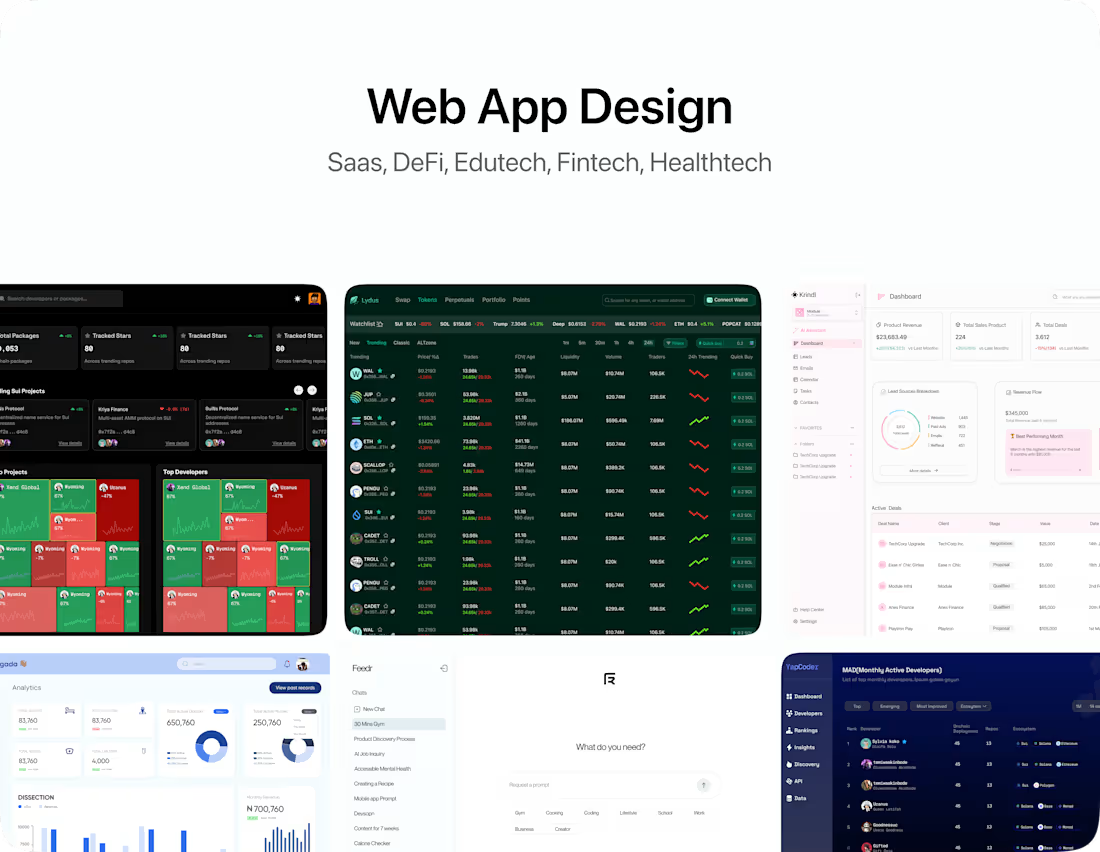
Web App Design for Products Where Complexity Is the Problem
Fintech dashboards. DeFi platforms. AI-powered tools. These aren't products you can design on instinct, as they carry real user stakes, dense information, and zero tolerance for confusion.
I design web apps where the complexity is the challenge. My job is to make your product feel simple without making it shallow, so power users get what they need and new users aren't left behind.
I bring UX research, product thinking, and an engineering-aware design process to every project. That means your team isn't just getting beautiful screens. They're getting a product that's been thought through from the user's first question to your developer's last commit.
What's included
Discovery & UX Research
User interviews, competitor analysis, and flow mapping, before a single wireframe. We design from evidence, not assumptions.
Information Architecture & System Mapping
For complex products, structure is everything. I map out how data, roles, and workflows connect before designing how they look.
Responsive Web App Design
High-fidelity screens for all key states: empty, loading, error, edge cases. The screens your engineers actually need, not just the happy path.
Scalable Design System
A component library built for your product, not a generic UI kit. Tokens, variants, documentation, and patterns your team can build on independently.
Interactive Prototype
Clickable flows for stakeholder alignment, user testing, and investor demos. Test the experience before committing to the build.
Developer-Ready Handoff
Annotated Figma files with specs, states, and assets. Structured so your frontend team ships faster and asks fewer questions.
Built for
Fintech and banking platforms where trust, clarity, and compliance matter
Web3 and DeFi products where onboarding is the hardest UX problem
AI tools where the interface has to make powerful outputs feel approachable
SaaS teams where the product has outgrown its original design
Founders who've been burned by designers who didn't understand the domain
Optional add-ons
UX audit of an existing product (with prioritized recommendations)
Design QA during development (catching implementation drift early)
Ongoing design retainer (monthly, post-launch)
The hardest part of building in fintech, Web3, or AI isn't the technology , it's making it feel human. That's what I design for.
FAQs
Samuel's other services
Starting at$2,800
Duration3 weeks
Tags
Claude

Figma

Figma Make

Product Designer
UX Designer
Web App
Web Designer
UX
Website App
Service provided by
Samuel Akinbode Lagos, Nigeria
- 5.00
- Rating
- 5
- Followers
Web App & SaaS Design — Usability, Scale & ConversionSamuel Akinbode
Starting at$2,800
Duration3 weeks
Tags
Claude
Figma
Figma Make
Product Designer
UX Designer
Web App
Web Designer
UX
Website App
Web App Design for Products Where Complexity Is the Problem
Fintech dashboards. DeFi platforms. AI-powered tools. These aren't products you can design on instinct, as they carry real user stakes, dense information, and zero tolerance for confusion.
I design web apps where the complexity is the challenge. My job is to make your product feel simple without making it shallow, so power users get what they need and new users aren't left behind.
I bring UX research, product thinking, and an engineering-aware design process to every project. That means your team isn't just getting beautiful screens. They're getting a product that's been thought through from the user's first question to your developer's last commit.
What's included
Discovery & UX Research
User interviews, competitor analysis, and flow mapping, before a single wireframe. We design from evidence, not assumptions.
Information Architecture & System Mapping
For complex products, structure is everything. I map out how data, roles, and workflows connect before designing how they look.
Responsive Web App Design
High-fidelity screens for all key states: empty, loading, error, edge cases. The screens your engineers actually need, not just the happy path.
Scalable Design System
A component library built for your product, not a generic UI kit. Tokens, variants, documentation, and patterns your team can build on independently.
Interactive Prototype
Clickable flows for stakeholder alignment, user testing, and investor demos. Test the experience before committing to the build.
Developer-Ready Handoff
Annotated Figma files with specs, states, and assets. Structured so your frontend team ships faster and asks fewer questions.
Built for
Fintech and banking platforms where trust, clarity, and compliance matter
Web3 and DeFi products where onboarding is the hardest UX problem
AI tools where the interface has to make powerful outputs feel approachable
SaaS teams where the product has outgrown its original design
Founders who've been burned by designers who didn't understand the domain
Optional add-ons
UX audit of an existing product (with prioritized recommendations)
Design QA during development (catching implementation drift early)
Ongoing design retainer (monthly, post-launch)
The hardest part of building in fintech, Web3, or AI isn't the technology , it's making it feel human. That's what I design for.
FAQs
Samuel's other services
$2,800