
Brand Identity DesignMd Ashraful Islam
Brand guidelines include rules and standards that outline how a company's brand should be used and represented consistently across all communication materials. A brand guideline document includes the following elements:
Introduction: An overview of the company's brand, mission, and values.
Logo usage: Rules for using the company's logo, including size, placement, and color specifications.
Typography: Guidelines for using typefaces and font styles, including size, weight, and spacing.
Color palette: A defined set of colors used in the brand, including the RGB, CMYK, and Pantone values.
Imagery: Guidelines for using imagery, including photo styles, illustration styles, and graphic elements.
The tone of voice: A description of the brand's tone of voice and messaging, including keywords and phrases.
Social media: Guidelines for using social media platforms, including profile images, cover photos, and content types.
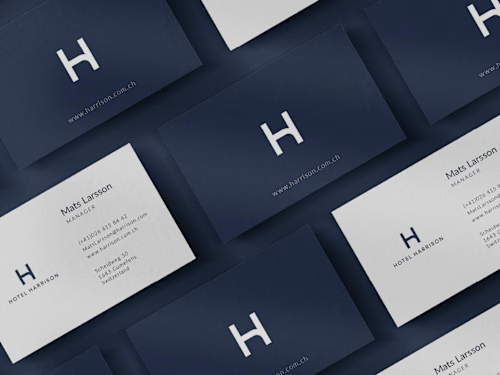
Communication materials: Guidelines for creating specific communication materials, such as business cards, brochures, and websites.
Templates: Examples of how the brand should be represented in different materials.
Approval process: A description of the approval process for using the brand, including who should approve materials and when.
A comprehensive and well-defined set of brand guidelines helps ensure that a company's brand is consistently represented across all communication materials, which helps build credibility and trust with consumers.
What's included
Brand Identity Deliverables
What you will receive:
1. A minimal and distinctive logo design
2. A complete brand guideline
3. All source files and in multiple file formats

Md Ashraful's other services

Starting at$1,200
Tags
Adobe Illustrator

Adobe InDesign

Adobe Photoshop

Brand Designer
Logo Designer
Packaging Designer
Service provided by
Md Ashraful Islam Pabna, Bangladesh
- 1
- Followers
Brand Identity DesignMd Ashraful Islam
Starting at$1,200
Tags
Adobe Illustrator
Adobe InDesign
Adobe Photoshop
Brand Designer
Logo Designer
Packaging Designer
Brand guidelines include rules and standards that outline how a company's brand should be used and represented consistently across all communication materials. A brand guideline document includes the following elements:
Introduction: An overview of the company's brand, mission, and values.
Logo usage: Rules for using the company's logo, including size, placement, and color specifications.
Typography: Guidelines for using typefaces and font styles, including size, weight, and spacing.
Color palette: A defined set of colors used in the brand, including the RGB, CMYK, and Pantone values.
Imagery: Guidelines for using imagery, including photo styles, illustration styles, and graphic elements.
The tone of voice: A description of the brand's tone of voice and messaging, including keywords and phrases.
Social media: Guidelines for using social media platforms, including profile images, cover photos, and content types.
Communication materials: Guidelines for creating specific communication materials, such as business cards, brochures, and websites.
Templates: Examples of how the brand should be represented in different materials.
Approval process: A description of the approval process for using the brand, including who should approve materials and when.
A comprehensive and well-defined set of brand guidelines helps ensure that a company's brand is consistently represented across all communication materials, which helps build credibility and trust with consumers.
What's included
Brand Identity Deliverables
What you will receive:
1. A minimal and distinctive logo design
2. A complete brand guideline
3. All source files and in multiple file formats
Md Ashraful's other services
$1,200