
AI & Workflow Automation for BusinessMohammad Arshad
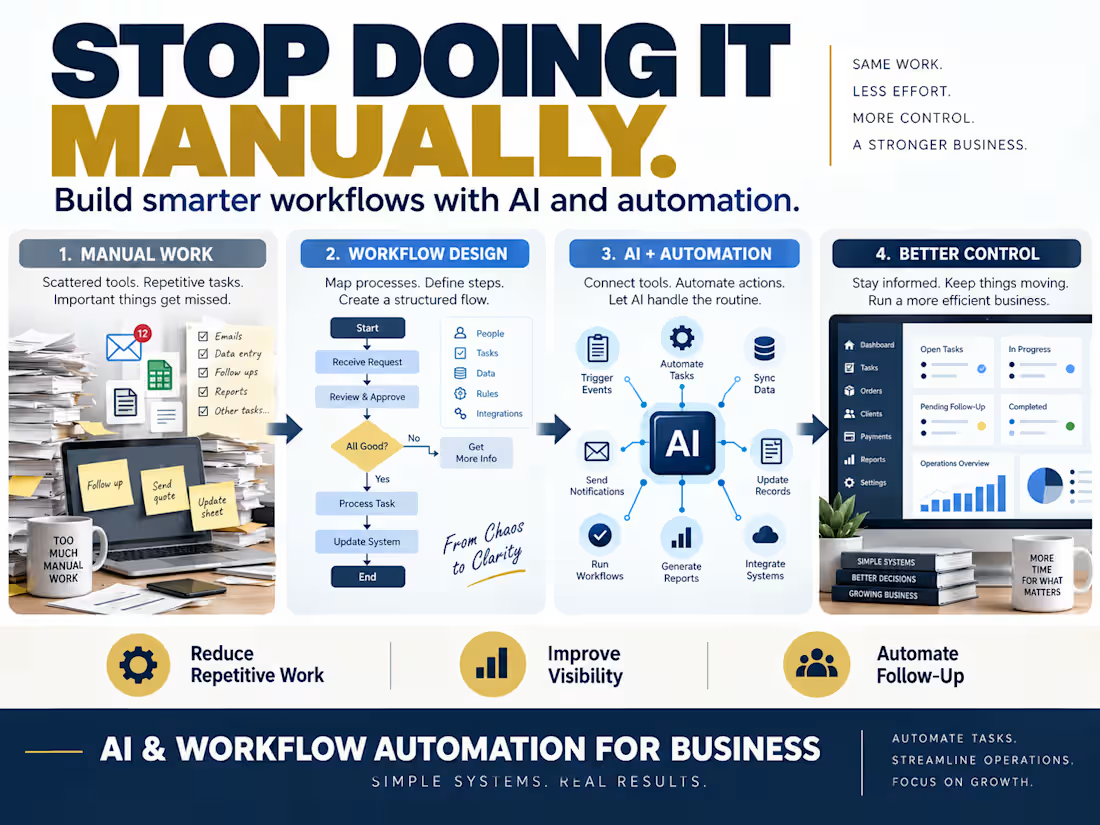
Still managing repetitive business work manually?
I help businesses identify repetitive workflows, simplify the process, and use AI and automation to reduce manual effort and improve operational visibility.
The focus is not on adding technology for the sake of technology.
The focus is on finding the right workflow to improve.
What I can help automate
• Lead capture and follow-up
• CRM workflows
• Customer follow-up
• Payment reminder workflows
• Order tracking
• Inventory visibility
• Vendor follow-up
• Task and approval workflows
• Reporting and recurring updates
• Data collection and organization
• Repetitive administrative tasks
• AI-assisted business workflows
Where businesses often lose time
Many growing businesses still depend on:
• Manual spreadsheet updates
• Repeated follow-up messages
• Copying information between systems
• Manually checking payment status
• Searching for order information
• Creating recurring reports
• Tracking tasks through disconnected tools
• Following up with leads one by one
These are often good candidates for workflow improvement or automation.
How it works
1. Map the workflow
We first understand how the process currently works, including the people, tools, information, decisions, and repetitive tasks involved.
2. Find the friction
I identify unnecessary manual work, duplicated steps, delays, missing information, and opportunities for better control.
3. Design the solution
I structure a practical workflow using appropriate business tools, automation, and AI where it adds real value.
4. Implement and test
Where implementation is included in the project, the workflow is built, tested, refined, and documented.
What you receive
Depending on the project, deliverables may include:
• Current workflow assessment
• Process map
• Automation opportunity analysis
• Future-state workflow
• Automation logic and workflow design
• AI-assisted workflow design
• CRM or lead workflow structure
• Follow-up automation
• Reporting and dashboard structure
• SOP or workflow documentation
• Implementation support
Examples of practical automation
Lead management
New lead → CRM → qualification → follow-up → reminder → status update
Payment follow-up
Invoice created → payment due date → reminder → escalation → status update
Order tracking
Order placed → supplier update → production status → dispatch → delivery → internal notification
Reporting
Data collected → processed → dashboard/report → scheduled update → relevant team notification
The exact workflow depends on your business and existing tools.
My approach
I believe automation should make a business easier to operate, not create another complicated system that nobody uses.
I therefore follow a simple principle:
Start with the workflow. Then choose the technology.
The result should be practical, understandable, and useful to the people who actually run the business.
This service is suitable for founders, SMEs, e-commerce businesses, agencies, and growing teams that want to reduce repetitive work and create better operational control.
Less manual work. Better workflows. More visibility.
FAQs
Contact for pricing
Duration1 week
Tags
CRM
AI Automation
AI Consulting
Business Operations
Business Workflow Automation
Process Automation
Process Improvement
Business Systems
Service provided by
Mohammad Arshad Ghaziabad, India
AI & Workflow Automation for BusinessMohammad Arshad
Contact for pricing
Duration1 week
Tags
CRM
AI Automation
AI Consulting
Business Operations
Business Workflow Automation
Process Automation
Process Improvement
Business Systems
Still managing repetitive business work manually?
I help businesses identify repetitive workflows, simplify the process, and use AI and automation to reduce manual effort and improve operational visibility.
The focus is not on adding technology for the sake of technology.
The focus is on finding the right workflow to improve.
What I can help automate
• Lead capture and follow-up
• CRM workflows
• Customer follow-up
• Payment reminder workflows
• Order tracking
• Inventory visibility
• Vendor follow-up
• Task and approval workflows
• Reporting and recurring updates
• Data collection and organization
• Repetitive administrative tasks
• AI-assisted business workflows
Where businesses often lose time
Many growing businesses still depend on:
• Manual spreadsheet updates
• Repeated follow-up messages
• Copying information between systems
• Manually checking payment status
• Searching for order information
• Creating recurring reports
• Tracking tasks through disconnected tools
• Following up with leads one by one
These are often good candidates for workflow improvement or automation.
How it works
1. Map the workflow
We first understand how the process currently works, including the people, tools, information, decisions, and repetitive tasks involved.
2. Find the friction
I identify unnecessary manual work, duplicated steps, delays, missing information, and opportunities for better control.
3. Design the solution
I structure a practical workflow using appropriate business tools, automation, and AI where it adds real value.
4. Implement and test
Where implementation is included in the project, the workflow is built, tested, refined, and documented.
What you receive
Depending on the project, deliverables may include:
• Current workflow assessment
• Process map
• Automation opportunity analysis
• Future-state workflow
• Automation logic and workflow design
• AI-assisted workflow design
• CRM or lead workflow structure
• Follow-up automation
• Reporting and dashboard structure
• SOP or workflow documentation
• Implementation support
Examples of practical automation
Lead management
New lead → CRM → qualification → follow-up → reminder → status update
Payment follow-up
Invoice created → payment due date → reminder → escalation → status update
Order tracking
Order placed → supplier update → production status → dispatch → delivery → internal notification
Reporting
Data collected → processed → dashboard/report → scheduled update → relevant team notification
The exact workflow depends on your business and existing tools.
My approach
I believe automation should make a business easier to operate, not create another complicated system that nobody uses.
I therefore follow a simple principle:
Start with the workflow. Then choose the technology.
The result should be practical, understandable, and useful to the people who actually run the business.
This service is suitable for founders, SMEs, e-commerce businesses, agencies, and growing teams that want to reduce repetitive work and create better operational control.
Less manual work. Better workflows. More visibility.
FAQs
Contact for pricing