Unique Branding Kit Design!Mercedes Janeiro
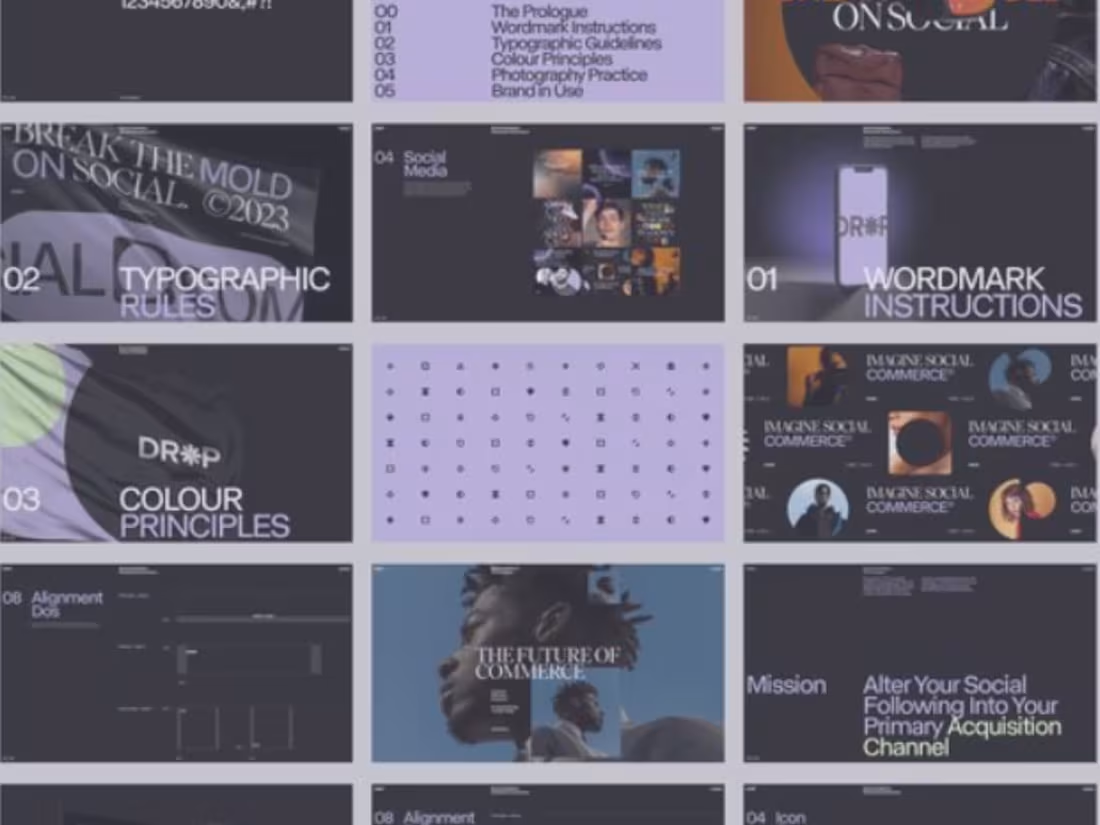
Launching a new venture or considering a rebranding?
Seeking a designer with a touch of creativity, efficiency, and affordability, all combined😎? Your search ends here! Dive into a transformative journey with MEME. Within a week, witness your brand evolve with a unique identity that resonates and amplifies your presence. As your dedicated Graphic & Brand Identity Designer, I'm all set to elevate your visual game. Let's elevate your brand's personality together!
What's included
Discovery Session and Strategy Development
* An online consultation where we delve into your brand, grasping its core values, principles, and offerings!
Client Portal on Notion
* Your dedicated space on Notion to track project progress, share insights, offer feedback, and meet all your branding needs. A comprehensive space for your brand journey and the final deliverables.
MoodBoard
* A curated visual guide showcasing inspirations, design concepts, and styles steering your brand's direction.
Unique Logo
1 - Logo Variations
* Primary Logo: This is the main version of the logo and should be used in most instances where the logo appears.
* Secondary Logo: This could be an alternative version of the logo, possibly with different proportions or layouts, to be used in specific cases where the primary logo doesn't fit.
* Horizontal and Vertical Versions: Depending on the space available, you might need both horizontal and vertical versions of the logo to ensure flexibility in placement.
2 - Logo Reductions:
* Large: Full-size logo for use in large format prints like banners, billboards, and posters.
* Medium: Scaled-down version for use in mediums like websites, brochures, and business cards.
* Small: Smallest version of the logo for use in favicons, social media icons, and other small-scale applications.
3 - Logo Spacing and Clear Space:
* Clear space around the logo to ensure it stands out and isn't crowded by other elements. This helps in maintaining the logo's visibility and impact.
4 - Color Variations:
* Full Color: The standard color version of the logo.
* One-Color: The logo in a single color, often used in scenarios where full-color printing is not possible or cost-effective.
* Reverse/White: A version of the logo designed to be placed on dark backgrounds.
5 - Logo Misuse:
* Examples of what not to do with the logo, such as distorting, altering colors, or adding effects that compromise its integrity.
6 - Digital Assets:
* High-resolution versions of the logo in various formats (PNG, JPG, SVG, etc.).
* Vector files of the logo for scalability without loss of quality (EPS, AI, PDF).
Additional Elements:
7 - Patterns, textures, and other graphic elements that can be used in brand materials while maintaining consistency.
Typography
* Primary Typeface: The main font(s) to be used in your brand communications system.
* Secondary Typeface: Additional fonts that complement the primary typeface, used for subheadings, captions and more!
* Typography Guidelines: You will be provided with instructions on font size, weight, line spacing, and other typographic elements to maintain consistency throughout the whole process.
Color Palette
* Creating the essence of your brand with a meticulously curated color palette, designed to evoke emotion, enhance recognition, and maintain consistency across all your brand's touchpoints!
* Brief descriptions or mood boards illustrating the psychological effects and associations of each color within the palette, helping to reinforce the brand's messaging and emotional connection with the audience.
Brand Graphics & Design Elements
* Tailored digital assets and branded visuals to amplify your brand's presence and kickstart your branding journey.
Revisions
Up to 3 rounds of revisions included in this package.
Starting at$850
Duration1 week
Tags
Adobe Illustrator
Adobe InDesign
Adobe Photoshop
Figma

Procreate
Graphic Designer
Social Content Designer
Web Designer
Service provided by
Mercedes Janeiro Buenos Aires, Argentina
Unique Branding Kit Design!Mercedes Janeiro
Starting at$850
Duration1 week
Tags
Adobe Illustrator
Adobe InDesign
Adobe Photoshop
Figma
Procreate
Graphic Designer
Social Content Designer
Web Designer
Launching a new venture or considering a rebranding?
Seeking a designer with a touch of creativity, efficiency, and affordability, all combined😎? Your search ends here! Dive into a transformative journey with MEME. Within a week, witness your brand evolve with a unique identity that resonates and amplifies your presence. As your dedicated Graphic & Brand Identity Designer, I'm all set to elevate your visual game. Let's elevate your brand's personality together!
What's included
Discovery Session and Strategy Development
* An online consultation where we delve into your brand, grasping its core values, principles, and offerings!
Client Portal on Notion
* Your dedicated space on Notion to track project progress, share insights, offer feedback, and meet all your branding needs. A comprehensive space for your brand journey and the final deliverables.
MoodBoard
* A curated visual guide showcasing inspirations, design concepts, and styles steering your brand's direction.
Unique Logo
1 - Logo Variations
* Primary Logo: This is the main version of the logo and should be used in most instances where the logo appears.
* Secondary Logo: This could be an alternative version of the logo, possibly with different proportions or layouts, to be used in specific cases where the primary logo doesn't fit.
* Horizontal and Vertical Versions: Depending on the space available, you might need both horizontal and vertical versions of the logo to ensure flexibility in placement.
2 - Logo Reductions:
* Large: Full-size logo for use in large format prints like banners, billboards, and posters.
* Medium: Scaled-down version for use in mediums like websites, brochures, and business cards.
* Small: Smallest version of the logo for use in favicons, social media icons, and other small-scale applications.
3 - Logo Spacing and Clear Space:
* Clear space around the logo to ensure it stands out and isn't crowded by other elements. This helps in maintaining the logo's visibility and impact.
4 - Color Variations:
* Full Color: The standard color version of the logo.
* One-Color: The logo in a single color, often used in scenarios where full-color printing is not possible or cost-effective.
* Reverse/White: A version of the logo designed to be placed on dark backgrounds.
5 - Logo Misuse:
* Examples of what not to do with the logo, such as distorting, altering colors, or adding effects that compromise its integrity.
6 - Digital Assets:
* High-resolution versions of the logo in various formats (PNG, JPG, SVG, etc.).
* Vector files of the logo for scalability without loss of quality (EPS, AI, PDF).
Additional Elements:
7 - Patterns, textures, and other graphic elements that can be used in brand materials while maintaining consistency.
Typography
* Primary Typeface: The main font(s) to be used in your brand communications system.
* Secondary Typeface: Additional fonts that complement the primary typeface, used for subheadings, captions and more!
* Typography Guidelines: You will be provided with instructions on font size, weight, line spacing, and other typographic elements to maintain consistency throughout the whole process.
Color Palette
* Creating the essence of your brand with a meticulously curated color palette, designed to evoke emotion, enhance recognition, and maintain consistency across all your brand's touchpoints!
* Brief descriptions or mood boards illustrating the psychological effects and associations of each color within the palette, helping to reinforce the brand's messaging and emotional connection with the audience.
Brand Graphics & Design Elements
* Tailored digital assets and branded visuals to amplify your brand's presence and kickstart your branding journey.
Revisions
Up to 3 rounds of revisions included in this package.
$850