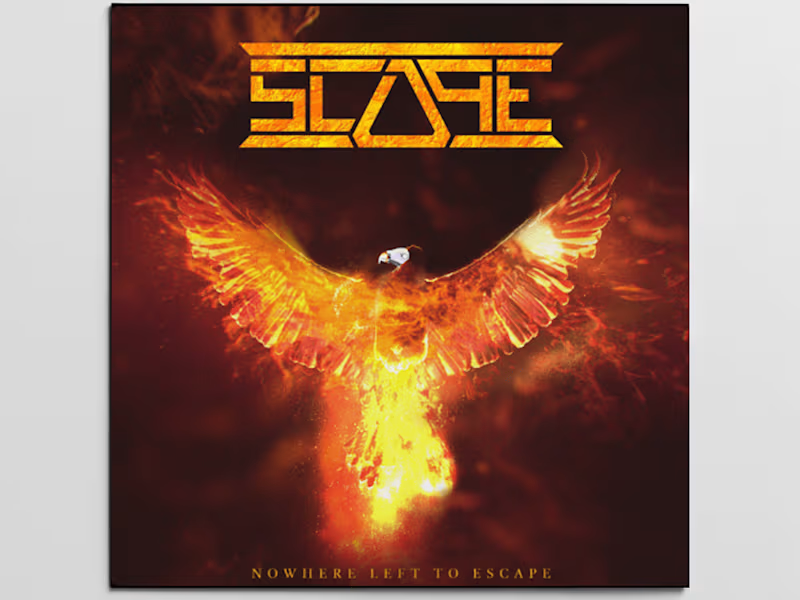
Logo design + starter brand book by Roco MedinaLogo design + starter brand book by Roco Medina
Logo design + starter brand bookRoco Medina
Cover image for Logo design + starter brand book
Establish a powerful brand identity with a logo design and starter brand book package. You'll receive high-resolution logo files in multiple formats (.JPG, .PNG, .SVG) along with a comprehensive brand book covering key elements like your brand story, logo usage, font selection, and color palette, all designed to ensure consistent and impactful brand presentation.

What's included

Logo Files
- .JPG, .PNG Files of the logo and logo variations - .SVG (scalable vector graphics) Files of the logo and logo variations
Starter Brand Book
- Starter Brand Book with the following chapters: 1 - start 2 - index 3 - about 4 - logo 6 - font 7 - color 8 - adaptations (If you need custom chapters, send me a message before purchasing)
FAQs
* Understand the business: What you do, your industry, your target audience, your competitors. * Define the brand personality: What values and feelings should the brand convey (e.g., professional, playful, modern, traditional)? * Identify the vision and preferences: Any existing ideas, inspiration, styles they like/dislike, specific colors or imagery to avoid. * Clarify project scope: Confirm the specific deliverables (logo variations, brand book chapters), timeline, and budget. * Establish communication protocols: How and how often will updates be provided? * Outcome: A clear, shared understanding of the project goals and requirements, documented in a design brief.
- Market Research: Analyze competitors' logos and branding to identify trends and opportunities for differentiation. - Target Audience Research: Understand the visual preferences and expectations of the target audience. - Inspiration Gathering: Collect visual examples (mood boards) that align with the desired brand personality and style. - Concept Sketching: Develop initial rough sketches and ideas for the logo, exploring different visual directions. - Outcome: logo concepts (usually 1-3) presented as rough sketches or low-fidelity mockups.
- Gather client feedback on the presented concepts: Which ones resonate most, what works well, what needs adjustment. - Identify a preferred direction: The client chooses one concept (or a combination of elements from different concepts) to move forward with. - Clarify specific revisions: The client provides detailed feedback on the chosen concept, requesting changes to colors, shapes, typography, etc. - Outcome: A clear direction for the logo design and specific instructions for revisions.
- Create higher-fidelity versions of the logo. - Experiment with different color palettes, fonts, and layouts. - Address the specific revisions requested by the client. - Prepare logo variations (e.g., horizontal, vertical, icon-only). - Outcome: A revised logo design (or a small set of refined variations) presented to the client. This step may be repeated (Round 3, Round 4, etc.) until the client is satisfied. The number of revision rounds should be agreed upon in the initial consultation.
- Create all necessary file formats (.JPG, .PNG, .SVG) for different applications (print, web, etc.). - Ensure the logo is properly optimized for each format. - Organize and deliver the final files to the client. - Outcome: Delivery of the complete set of logo files.
- Document the brand's visual identity. - Establish guidelines for consistent logo usage, color palette, typography, and overall brand style. - Create the defined chapters (Start, Index, About, Logo, Font, Color, Adaptations). - Outcome: A draft version of the brand book.
- Allow the client to give their input in the brand book. - Apply feedback, improve chapters. - Outcome: After the final revision round, the final Brand Book Version is rendered.
- Ensure the client has all the necessary files and documentation. - Confirm that the project is complete and meets the client's expectations. - The final payment is approved.
Of course, the brand book serves as a comprehensive guide outlining a brand's identity, ensuring consistency across all its expressions. Here are the types of collaterals that could be addressed or showcased within a brand book: I. Core Identity Collateral: These are fundamental pieces that directly carry the brand's core visual elements. Logo Usage, Color Palette, Typography, Imagery/Photography Style II. Marketing and Communication Collateral: These are materials used to promote the brand, products, or services. Print Materials: Business Card, Letterheads and Envelopes, Brochures and Flyers, Posters and Banners, Packaging, Signage, Digital Materials: Website Design, Social Media Templates, Email Templates, Presentations, Digital Ads, Ebooks and Guides, Promotional Items/Branded Merchandise III. Internal Communication Collateral: Internal Documents, Employee Handbooks, Email Signatures, Presentations IV. Other Potential Collateral: Vehicle Livery, Uniforms, Templates: Reusable templates for various documents and designs to ensure brand consistency. The brand book provides visual examples and clear instructions for each type of collateral, ensuring that anyone creating materials for the brand can do so in a consistent and on-brand manner. This consistency builds brand recognition, trust, and a cohesive brand experience across all touchpoints.
Contact for pricing
Schedule a call
Tags
Adobe Illustrator
Adobe Photoshop

Brand Designer
Logo Designer
Visual Designer
Service provided by
Roco Medina maxVenezuela
$5k+
Earned
2
Paid projects
5.00
Rating
54
Followers
Logo design + starter brand bookRoco Medina
Contact for pricing
Schedule a call
Tags
Adobe Illustrator
Adobe Photoshop
Brand Designer
Logo Designer
Visual Designer
Cover image for Logo design + starter brand book
Establish a powerful brand identity with a logo design and starter brand book package. You'll receive high-resolution logo files in multiple formats (.JPG, .PNG, .SVG) along with a comprehensive brand book covering key elements like your brand story, logo usage, font selection, and color palette, all designed to ensure consistent and impactful brand presentation.

What's included

Logo Files
- .JPG, .PNG Files of the logo and logo variations - .SVG (scalable vector graphics) Files of the logo and logo variations
Starter Brand Book
- Starter Brand Book with the following chapters: 1 - start 2 - index 3 - about 4 - logo 6 - font 7 - color 8 - adaptations (If you need custom chapters, send me a message before purchasing)
FAQs
* Understand the business: What you do, your industry, your target audience, your competitors. * Define the brand personality: What values and feelings should the brand convey (e.g., professional, playful, modern, traditional)? * Identify the vision and preferences: Any existing ideas, inspiration, styles they like/dislike, specific colors or imagery to avoid. * Clarify project scope: Confirm the specific deliverables (logo variations, brand book chapters), timeline, and budget. * Establish communication protocols: How and how often will updates be provided? * Outcome: A clear, shared understanding of the project goals and requirements, documented in a design brief.
- Market Research: Analyze competitors' logos and branding to identify trends and opportunities for differentiation. - Target Audience Research: Understand the visual preferences and expectations of the target audience. - Inspiration Gathering: Collect visual examples (mood boards) that align with the desired brand personality and style. - Concept Sketching: Develop initial rough sketches and ideas for the logo, exploring different visual directions. - Outcome: logo concepts (usually 1-3) presented as rough sketches or low-fidelity mockups.
- Gather client feedback on the presented concepts: Which ones resonate most, what works well, what needs adjustment. - Identify a preferred direction: The client chooses one concept (or a combination of elements from different concepts) to move forward with. - Clarify specific revisions: The client provides detailed feedback on the chosen concept, requesting changes to colors, shapes, typography, etc. - Outcome: A clear direction for the logo design and specific instructions for revisions.
- Create higher-fidelity versions of the logo. - Experiment with different color palettes, fonts, and layouts. - Address the specific revisions requested by the client. - Prepare logo variations (e.g., horizontal, vertical, icon-only). - Outcome: A revised logo design (or a small set of refined variations) presented to the client. This step may be repeated (Round 3, Round 4, etc.) until the client is satisfied. The number of revision rounds should be agreed upon in the initial consultation.
- Create all necessary file formats (.JPG, .PNG, .SVG) for different applications (print, web, etc.). - Ensure the logo is properly optimized for each format. - Organize and deliver the final files to the client. - Outcome: Delivery of the complete set of logo files.
- Document the brand's visual identity. - Establish guidelines for consistent logo usage, color palette, typography, and overall brand style. - Create the defined chapters (Start, Index, About, Logo, Font, Color, Adaptations). - Outcome: A draft version of the brand book.
- Allow the client to give their input in the brand book. - Apply feedback, improve chapters. - Outcome: After the final revision round, the final Brand Book Version is rendered.
- Ensure the client has all the necessary files and documentation. - Confirm that the project is complete and meets the client's expectations. - The final payment is approved.
Of course, the brand book serves as a comprehensive guide outlining a brand's identity, ensuring consistency across all its expressions. Here are the types of collaterals that could be addressed or showcased within a brand book: I. Core Identity Collateral: These are fundamental pieces that directly carry the brand's core visual elements. Logo Usage, Color Palette, Typography, Imagery/Photography Style II. Marketing and Communication Collateral: These are materials used to promote the brand, products, or services. Print Materials: Business Card, Letterheads and Envelopes, Brochures and Flyers, Posters and Banners, Packaging, Signage, Digital Materials: Website Design, Social Media Templates, Email Templates, Presentations, Digital Ads, Ebooks and Guides, Promotional Items/Branded Merchandise III. Internal Communication Collateral: Internal Documents, Employee Handbooks, Email Signatures, Presentations IV. Other Potential Collateral: Vehicle Livery, Uniforms, Templates: Reusable templates for various documents and designs to ensure brand consistency. The brand book provides visual examples and clear instructions for each type of collateral, ensuring that anyone creating materials for the brand can do so in a consistent and on-brand manner. This consistency builds brand recognition, trust, and a cohesive brand experience across all touchpoints.
Contact for pricing