
MLOps Pipeline on AWSSudarshan Angirash
If your machine learning models are deployed manually, take weeks to move from training to production, or have no monitoring in place — your ML investment is at risk.
At Amazon Web Services, I led a project that reduced model deployment time from two weeks to two days. That same architecture pattern — versioned models, automated promotion, drift detection, and full observability — is what I bring to your stack.
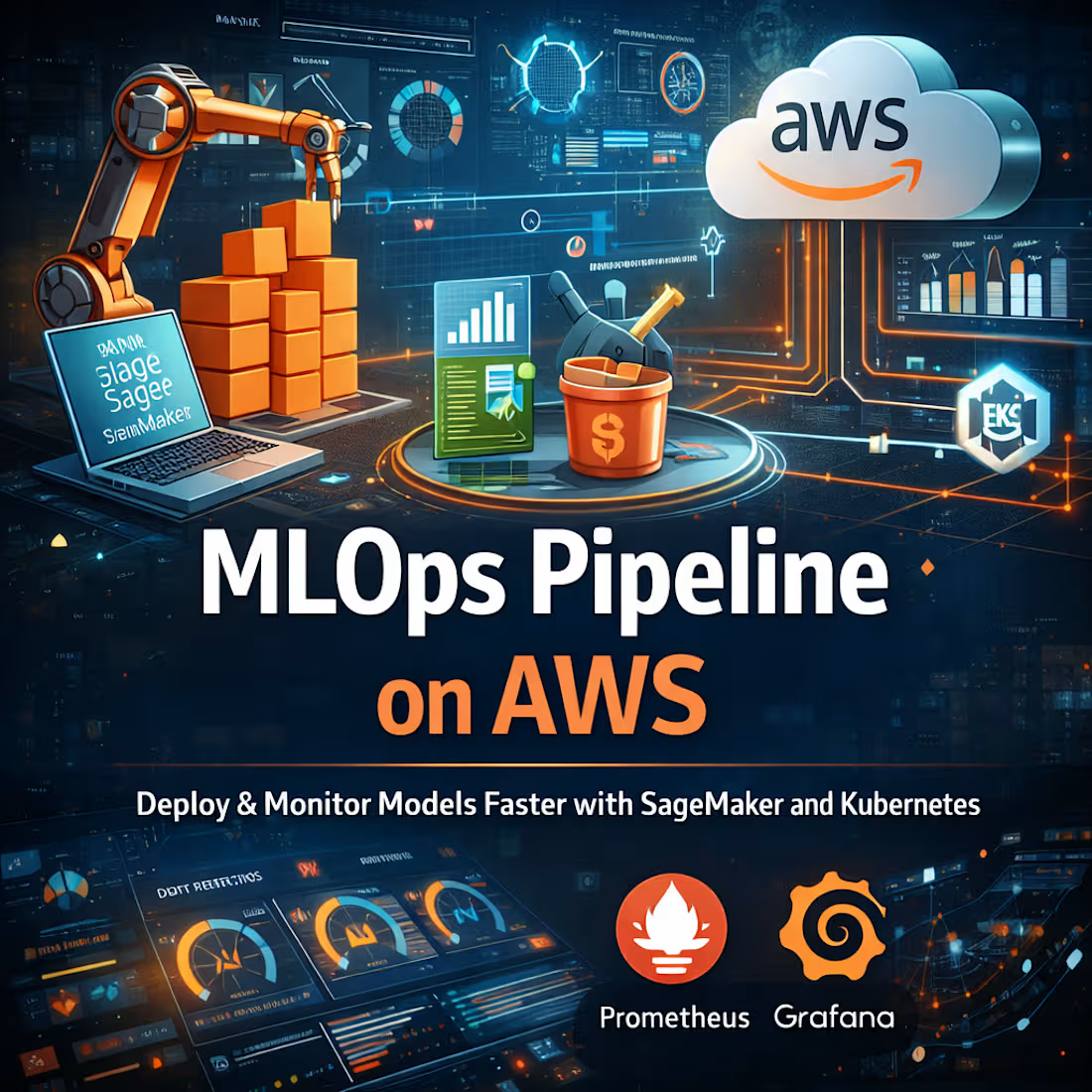
When I deliver this engagement, you get a complete MLOps pipeline: model versioning, training triggers, drift monitoring, CI/CD for model promotion, and Prometheus and Grafana dashboards so you can see exactly what is happening at all times.
WHAT'S INCLUDED
Model versioning and registry (AWS SageMaker Model Registry or MLflow)
Automated training trigger pipelines
Model promotion CI/CD (dev → staging → production gates)
Drift detection with configurable alerting thresholds
EKS or SageMaker deployment configuration
Prometheus metrics instrumentation and Grafana dashboards
Runbook for operating the pipeline post-delivery
Example work

Sudarshan's other services
Contact for pricing
Duration1 week
Tags
EKS
Grafana

Prometheus

Bedrock
MLOps
Sagemaker
Service provided by
Sudarshan Angirash Hyderabad, India
MLOps Pipeline on AWSSudarshan Angirash
Contact for pricing
Duration1 week
Tags
EKS
Grafana
Prometheus
Bedrock
MLOps
Sagemaker
If your machine learning models are deployed manually, take weeks to move from training to production, or have no monitoring in place — your ML investment is at risk.
At Amazon Web Services, I led a project that reduced model deployment time from two weeks to two days. That same architecture pattern — versioned models, automated promotion, drift detection, and full observability — is what I bring to your stack.
When I deliver this engagement, you get a complete MLOps pipeline: model versioning, training triggers, drift monitoring, CI/CD for model promotion, and Prometheus and Grafana dashboards so you can see exactly what is happening at all times.
WHAT'S INCLUDED
Model versioning and registry (AWS SageMaker Model Registry or MLflow)
Automated training trigger pipelines
Model promotion CI/CD (dev → staging → production gates)
Drift detection with configurable alerting thresholds
EKS or SageMaker deployment configuration
Prometheus metrics instrumentation and Grafana dashboards
Runbook for operating the pipeline post-delivery
Example work
Sudarshan's other services
Contact for pricing