
Website DesignNur .
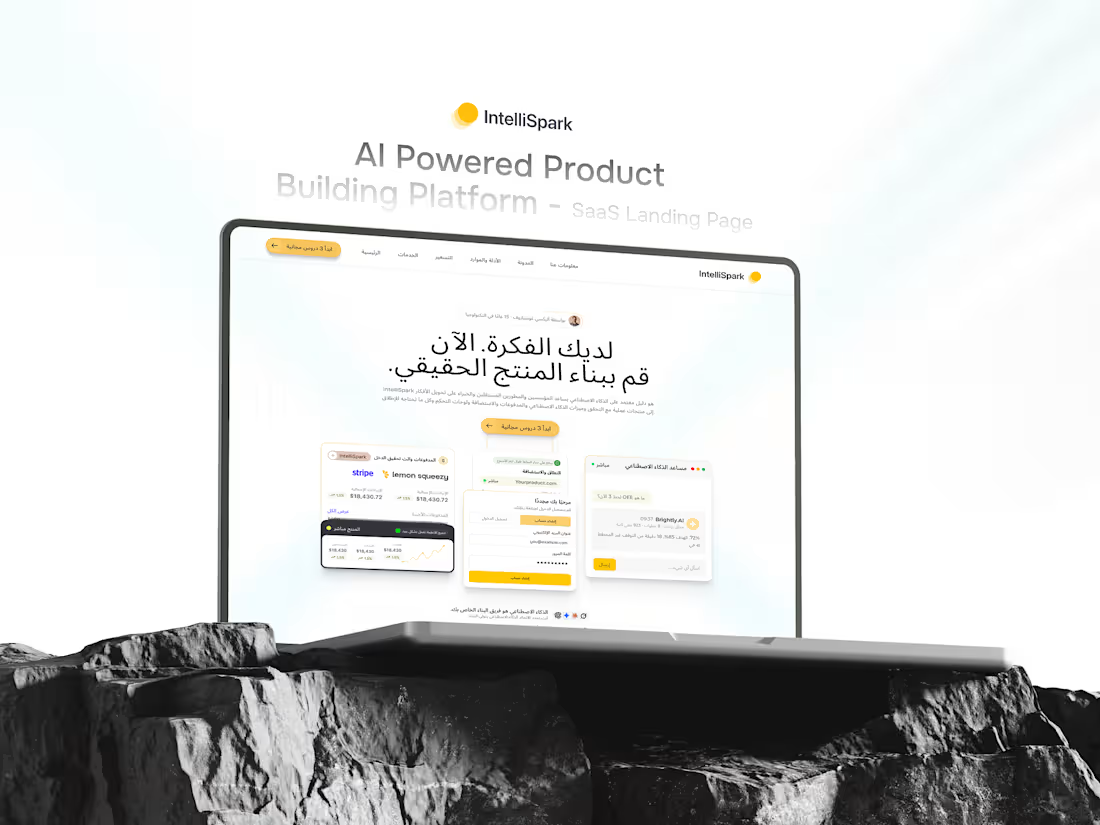
Most websites fail because the design process skips the thinking behind the design.
I don’t.
I design multi-page websites from strategy and wireframes through to the final UI—so when your developer opens the Figma file, every layout, component, and interaction has already been considered and designed with purpose.
What you get
Wireframes first — Align on structure, content, and user flow before visual design begins.
Complete UI design — Homepage first, followed by all inner pages with a consistent visual direction.
Design system — Typography, colors, spacing, components, and reusable patterns built for consistency.
Responsive layouts — Desktop and mobile designs ready for development.
Developer-ready Figma — Clean, organized files with clear components and handoff-ready screens.
How the process works
Weeks 1–2 — Strategy & Structure
Understand the business, define the information architecture, and establish the wireframe direction.
Weeks 3–4 — High-Fidelity Design
Transform the approved structure into a polished, conversion-focused visual system.
Weeks 5–6 — Polish & Handoff
Refine the UI, complete responsive layouts, finalize components, and prepare the Figma file for development.
Best suited for
Agencies building websites for clients
Service-based businesses
Creative studios
Startups and growing companies
Teams that want a thoughtful, development-ready design process
The goal isn’t just to make a website look good.
It’s to make every design decision intentional—from the first wireframe to the final pixel.
FAQs
Contact for pricing
Duration2 weeks
Tags
Figma

Product Designer
UI Designer
UX Researcher
Web Designer
Service provided by
Nur . Dhaka, Bangladesh
Website DesignNur .
Contact for pricing
Duration2 weeks
Tags
Figma
Product Designer
UI Designer
UX Researcher
Web Designer
Most websites fail because the design process skips the thinking behind the design.
I don’t.
I design multi-page websites from strategy and wireframes through to the final UI—so when your developer opens the Figma file, every layout, component, and interaction has already been considered and designed with purpose.
What you get
Wireframes first — Align on structure, content, and user flow before visual design begins.
Complete UI design — Homepage first, followed by all inner pages with a consistent visual direction.
Design system — Typography, colors, spacing, components, and reusable patterns built for consistency.
Responsive layouts — Desktop and mobile designs ready for development.
Developer-ready Figma — Clean, organized files with clear components and handoff-ready screens.
How the process works
Weeks 1–2 — Strategy & Structure
Understand the business, define the information architecture, and establish the wireframe direction.
Weeks 3–4 — High-Fidelity Design
Transform the approved structure into a polished, conversion-focused visual system.
Weeks 5–6 — Polish & Handoff
Refine the UI, complete responsive layouts, finalize components, and prepare the Figma file for development.
Best suited for
Agencies building websites for clients
Service-based businesses
Creative studios
Startups and growing companies
Teams that want a thoughtful, development-ready design process
The goal isn’t just to make a website look good.
It’s to make every design decision intentional—from the first wireframe to the final pixel.
FAQs
Contact for pricing