
n8n audit: find the workflows that quietly stopped workingSerhii Kunynets
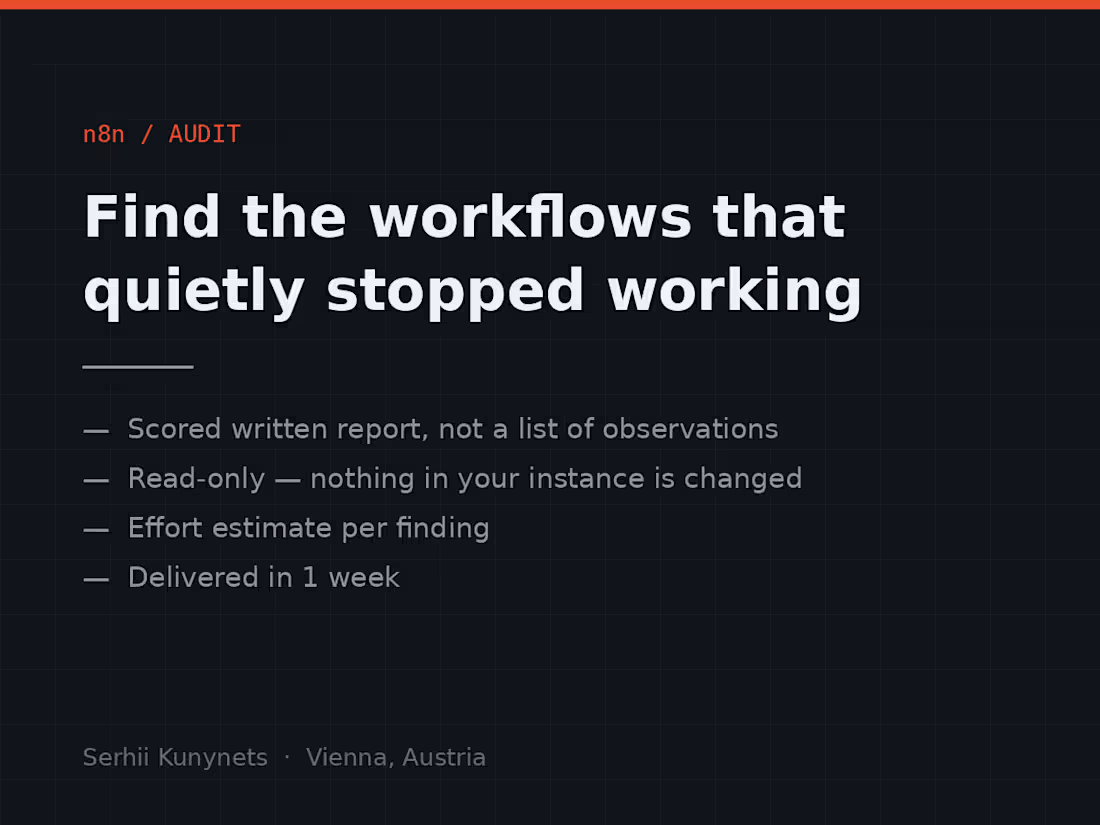
Most n8n instances have workflows that stopped running weeks ago and nobody knows. The toggle is still green. n8n will not tell you.
I check the things that do not announce themselves: active workflows that have not executed, separated into genuinely broken, no working trigger, and orphaned — so a webhook waiting for a call is not reported as a failure. API keys and tokens sitting in plain text inside workflow JSON, which is the most common finding and the most expensive one the day someone shares an export. Workflows with no error workflow set, where a failure is invisible. Failure rate per workflow over the recent execution window, so a workflow failing 40 percent of the time stops hiding behind one that runs hourly. HTTP calls with no retry, which drop data on the first network blip.
What you get is a written report, scored and ordered by what will hurt first. Not a list of observations — a list of decisions, with an effort estimate per item.
Read-only. Nothing in your instance is changed and nothing is written back.
I run my own self-hosted n8n: 50+ active workflows, Docker behind nginx on a server I administer. Everything above comes from breaking and fixing my own instance first.
Starting at$250
Duration1 week
Tags
N8N

Zapier

Automations
Service provided by
Serhii Kunynets Vienna, Austria
n8n audit: find the workflows that quietly stopped workingSerhii Kunynets
Starting at$250
Duration1 week
Tags
N8N
Zapier
Automations
Most n8n instances have workflows that stopped running weeks ago and nobody knows. The toggle is still green. n8n will not tell you.
I check the things that do not announce themselves: active workflows that have not executed, separated into genuinely broken, no working trigger, and orphaned — so a webhook waiting for a call is not reported as a failure. API keys and tokens sitting in plain text inside workflow JSON, which is the most common finding and the most expensive one the day someone shares an export. Workflows with no error workflow set, where a failure is invisible. Failure rate per workflow over the recent execution window, so a workflow failing 40 percent of the time stops hiding behind one that runs hourly. HTTP calls with no retry, which drop data on the first network blip.
What you get is a written report, scored and ordered by what will hurt first. Not a list of observations — a list of decisions, with an effort estimate per item.
Read-only. Nothing in your instance is changed and nothing is written back.
I run my own self-hosted n8n: 50+ active workflows, Docker behind nginx on a server I administer. Everything above comes from breaking and fixing my own instance first.
$250