
Flutter Developer (IOS/Android)Barnabas Ejeh
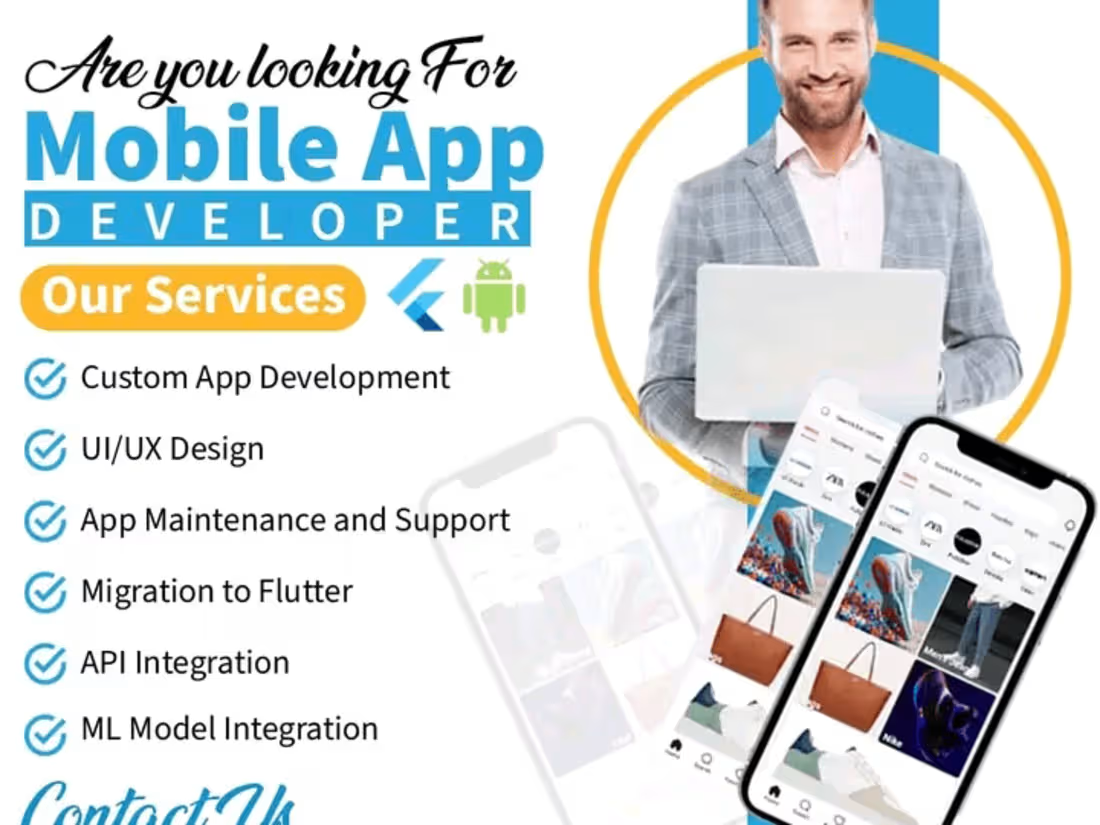
- Design and development of mobile apps for Android and iOS using Flutter
- Creation of cross-platform apps with a single codebase
- Fast development and hot reload capabilities
- Beautiful, customizable, and intuitive UI/UX
- Integration with various services and APIs
- Secure and efficient data storage and management
- Bug fixing and performance optimization
- Collaboration with designers, backend developers, and project managers
- Code review and testing to ensure high-quality deliverables
- Continuous learning and adaptation to new technologies and best practices
- Communication with clients and stakeholders to understand requirements and deliver solutions
- Development of custom plugins and packages as needed
- App store deployment and maintenance
What's included
Software Developer (Flutter App Developer)
1. Source Code:
- Well-organized, readable, and maintainable Flutter source code.
- Code should follow best practices and adhere to the official Flutter style guide.
2. Mobile App:
- A fully functional mobile app for Android and iOS platforms.
- App should be built using Flutter and meet the required features and functionalities.
3. Documentation:
- Clear and concise documentation of the code, including comments and explanations.
- Documentation should cover installation, setup, and usage instructions.
4. Testing:
- Thorough testing of the app to ensure it meets the required features and functionalities.
- Testing should cover both Android and iOS platforms.
5. Debugging:
- Identification and fixing of bugs and errors.
- Debugging should ensure the app is stable and performs smoothly.
6. App Store Preparation:
- Preparation of the app for release on the App Store (for iOS) and Google Play Store (for Android).
- Includes creating app icons, screenshots, and writing app descriptions.
7. Code Review:
- A thorough review of the code to ensure it meets industry standards and best practices.
- Code review should cover performance, security, and scalability aspects.
Barnabas's other services
Starting at$10 /hr
Tags
Android Studio

Firebase

Node.js

Android Developer
Mobile Engineer
Software Engineer
Service provided by
Barnabas Ejeh Port Harcourt, Nigeria
- 3
- Followers
Flutter Developer (IOS/Android)Barnabas Ejeh
Starting at$10 /hr
Tags
Android Studio
Firebase
Node.js
Android Developer
Mobile Engineer
Software Engineer
- Design and development of mobile apps for Android and iOS using Flutter
- Creation of cross-platform apps with a single codebase
- Fast development and hot reload capabilities
- Beautiful, customizable, and intuitive UI/UX
- Integration with various services and APIs
- Secure and efficient data storage and management
- Bug fixing and performance optimization
- Collaboration with designers, backend developers, and project managers
- Code review and testing to ensure high-quality deliverables
- Continuous learning and adaptation to new technologies and best practices
- Communication with clients and stakeholders to understand requirements and deliver solutions
- Development of custom plugins and packages as needed
- App store deployment and maintenance
What's included
Software Developer (Flutter App Developer)
1. Source Code:
- Well-organized, readable, and maintainable Flutter source code.
- Code should follow best practices and adhere to the official Flutter style guide.
2. Mobile App:
- A fully functional mobile app for Android and iOS platforms.
- App should be built using Flutter and meet the required features and functionalities.
3. Documentation:
- Clear and concise documentation of the code, including comments and explanations.
- Documentation should cover installation, setup, and usage instructions.
4. Testing:
- Thorough testing of the app to ensure it meets the required features and functionalities.
- Testing should cover both Android and iOS platforms.
5. Debugging:
- Identification and fixing of bugs and errors.
- Debugging should ensure the app is stable and performs smoothly.
6. App Store Preparation:
- Preparation of the app for release on the App Store (for iOS) and Google Play Store (for Android).
- Includes creating app icons, screenshots, and writing app descriptions.
7. Code Review:
- A thorough review of the code to ensure it meets industry standards and best practices.
- Code review should cover performance, security, and scalability aspects.
Barnabas's other services
$10 /hr